Talk to Norwegian Wood like its author wrote you back.
Get the ideas that fit your life — not generic summaries.
- Chat with the book
- Audiobook-style main ideas
- Adapts to your life and goals
- Helps you take action
Norwegian Wood, in detail
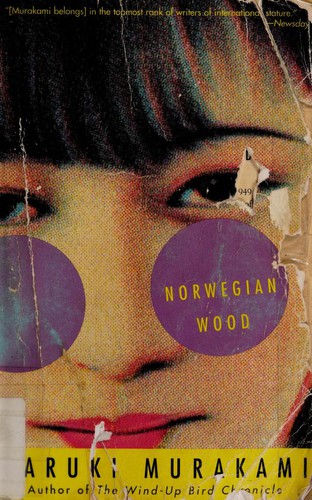
Norwegian Wood is Murakami's most straightforwardly realist novel and his most personal — a coming-of-age story set in late 1960s Tokyo, narrated by Toru Watanabe, who is recalling the year he was nineteen and the two women who shaped him. Naoko was the girlfriend of Toru's best friend Kizuki, who killed himself at seventeen. After Kizuki's death, Toru and Naoko find each other — not in the ordinary sense of falling together, but in the sense of two people who are each other's only witness to a grief no one else can share. Midori is almost Naoko's opposite: noisy, alive, demanding, funny, and deeply appealing in ways that feel like a threat to Toru's loyalty to the dead.
The novel is about grief as a landscape — the way loss can become a place you move into and eventually must decide whether to leave. Naoko is increasingly unable to function in the world; she retreats to a sanatorium in the mountains that Murakami renders as a kind of beautiful, still anteroom to disappearance. Toru visits her. He also keeps failing not to fall for Midori, which the novel frames as a moral problem even as it presents it as inevitable.
Murakami wrote Norwegian Wood in a style quite different from his other work — there are no talking cats, no alternate worlds, no surrealist ruptures. The prose is quieter, more melancholy, more conventional in structure. This is his Catcher in the Rye, his Norwegian Wood is The Beatles song that plays at the novel's opening — a piece of music that releases pure nostalgia, a specific grief for something you can barely name. The title is precisely right.
It became a phenomenon in Japan on publication, selling four million copies. Western readers came to it largely after Murakami's more fantastical work and often find it either more or less accessible as a result. Those who bounced off Kafka on the Shore or The Wind-Up Bird Chronicle may find Norwegian Wood an easier entry point. Those who love his magical realism may miss it here. Either way, this is a sadder book than it first looks, and the sadness keeps its shape long after you've finished.
The big ideas
- 1.
Grief in Norwegian Wood is not a crisis but a climate — the novel captures the way loss can become the atmosphere you live in rather than an event you move through.
- 2.
Naoko's retreat from life is presented with sympathy but not romanticization: Murakami understands that depression and damage can look like depth, and he resists that confusion while also not denying its appeal.
- 3.
Midori is the novel's most fully alive character — demanding, funny, and moral in a way that has nothing to do with conventionality. She is what the world outside grief looks like.
