Business · Book club
Obviously Awesome book club questions
Here are 11 book club questions for Obviously Awesome by April Dunford, ordered to open easily and end somewhere worth arguing about. Copy them, print them, or bring them up one at a time.
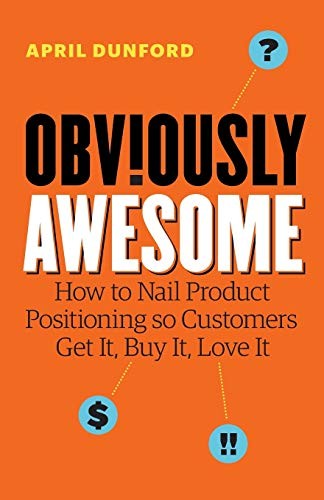
Obviously Awesome is April Dunford's practical guide to product positioning — the often misunderstood discipline of defining where your product fits in the competitive landscape so that the right customers immediately understand its value.
April Dunford · 2019 · 3h 0m
Full summary and key takeaways →The 11 questions
- 1.
What would customers in your market do if your product didn't exist? That's your real competitive alternative — and it might be more interesting than your named competitors.
- 2.
Dunford says most companies position by default rather than by design. Think of a product you know that seems to be positioned in the wrong category. What category would fit better?
- 3.
How does the market frame of reference affect what customers expect to pay? Have you seen a repositioning that changed pricing expectations dramatically?
- 4.
Which is harder: identifying your unique attributes or mapping them to something customers actually value? Where do companies most often get this wrong?
- 5.
Dunford argues that finding the right target customer segment is part of positioning, not separate from it. How does your choice of segment affect which attributes are unique and valuable?
- 6.
When does creating a new subcategory make more sense than positioning within an existing one? What are the conditions that favor category creation?
- 7.
Positioning affects not just marketing but also product roadmap and hiring. Give an example of how wrong positioning might lead to wrong product decisions.
- 8.
What is the difference between positioning and messaging? Why does getting the upstream positioning right before working on messaging matter?
- 9.
Have you seen a company whose positioning was obviously right — where you immediately understood what it was and why you'd want it? What made it work?
- 10.
Repositioning an existing product is harder than positioning a new one. What organizational resistance makes it difficult, and how would you manage it?
- 11.
The book focuses on positioning for technology companies. How much of the framework applies to consumer products, professional services, or physical goods?
How to run the discussion
- Pick six to eight, not all of them. An hour of real discussion covers fewer questions than anyone expects, and racing the list is what makes a book club feel like homework.
- Open with what people noticed, not what they concluded. Asking for a verdict first hardens opinions before anyone has heard each other.
- Let the disagreement run. The questions below that split a room are the ones worth the time; the ones everyone answers the same way can be skipped.
- Ask the quiet person a specific question. A direct, narrow question is far easier to answer than an open invitation to contribute.
Themes worth steering toward
If the conversation stalls, these are the threads that usually restart it.
Common questions
What are good book club questions for Obviously Awesome?
Here are 11 book club questions for Obviously Awesome by April Dunford, ordered to open easily and end somewhere worth arguing about. The strongest openers ask what each reader noticed rather than what they concluded, and the discussion usually turns on marketing, product positioning, startups.
How long should a book club discussion of Obviously Awesome last?
Most groups run 60 to 90 minutes of actual discussion. That is roughly six to eight questions, not all of them, so pick the ones that suit your group rather than working down the list in order.
What are the main themes in Obviously Awesome?
Marketing, Product positioning, Startups, Sales, Strategy. Those are the threads most likely to divide a room, which makes them the useful places to steer a discussion that has gone quiet.
Picking the next one? See books like Obviously Awesome or questions for other book club picks.
