Economics · Book club
Pound Foolish book club questions
Here are 12 book club questions for Pound Foolish by Helaine Olen, ordered to open easily and end somewhere worth arguing about. Copy them, print them, or bring them up one at a time.
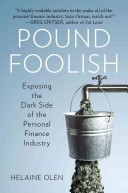
Helaine Olen's Pound Foolish is a sustained critique of the personal finance industry — its bestselling authors, its television personalities, its seminars, and the underlying ideology that suggests individual financial decisions are primarily responsible for financial security or its absence.
Helaine Olen · 2012 · 4h 40m
Full summary and key takeaways →The 12 questions
- 1.
Olen argues that individual financial behavior matters less than structural factors. Is that a reason to disengage from personal financial decision-making, or does it change what you should focus on?
- 2.
The latte factor has become widely cited as good advice. After reading Olen's critique, do you find the math convincing, unconvincing, or somewhere in between?
- 3.
She argues that 401(k) plans were a net negative for most workers compared to defined benefit pensions. Is there a version of the 401(k) system that you think could work better?
- 4.
Olen is a journalist who used to write personal finance columns. How does that history affect your confidence in her critique? Does someone need to be a former believer to effectively critique an industry?
- 5.
The book targets specific figures like Suze Orman and David Bach. Is it fair to hold popular authors to the standard of financial research, or are they offering inspiration rather than analysis?
- 6.
Most personal finance advice focuses on what individuals should do. What would financial advice that took structural factors seriously look like in practice?
- 7.
Financial literacy programs in schools are widely advocated. Olen is skeptical of their effectiveness. What evidence would convince you either way?
- 8.
The book implies that high mutual fund fees are a form of extraction. How do you determine whether a financial product's fees are proportionate to its value?
- 9.
Olen critiques financial television for generating conflict and excitement rather than useful advice. How much of your financial information comes from media, and how do you evaluate it?
- 10.
She describes attending wealth-creation seminars. What would make a consumer vulnerable to those environments, and what would protect them?
- 11.
If personal finance advice is largely ineffective against structural financial problems, what should individuals actually do with their energy and attention?
- 12.
Olen's argument is most persuasive for people with limited resources. Does the critique apply differently to people with above-average incomes?
How to run the discussion
- Pick six to eight, not all of them. An hour of real discussion covers fewer questions than anyone expects, and racing the list is what makes a book club feel like homework.
- Open with what people noticed, not what they concluded. Asking for a verdict first hardens opinions before anyone has heard each other.
- Let the disagreement run. The questions below that split a room are the ones worth the time; the ones everyone answers the same way can be skipped.
- Ask the quiet person a specific question. A direct, narrow question is far easier to answer than an open invitation to contribute.
Themes worth steering toward
If the conversation stalls, these are the threads that usually restart it.
Common questions
What are good book club questions for Pound Foolish?
Here are 12 book club questions for Pound Foolish by Helaine Olen, ordered to open easily and end somewhere worth arguing about. The strongest openers ask what each reader noticed rather than what they concluded, and the discussion usually turns on personal finance industry, financial media, consumer behavior.
How long should a book club discussion of Pound Foolish last?
Most groups run 60 to 90 minutes of actual discussion. That is roughly six to eight questions, not all of them, so pick the ones that suit your group rather than working down the list in order.
What are the main themes in Pound Foolish?
Personal finance industry, Financial media, Consumer behavior, Economic inequality, Financial advice. Those are the threads most likely to divide a room, which makes them the useful places to steer a discussion that has gone quiet.
Picking the next one? See books like Pound Foolish or questions for other book club picks.
