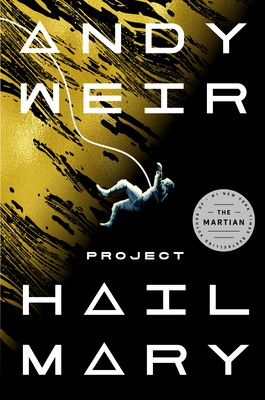
Project Hail Mary by Andy Weir is a 2021 science fiction book about survival and improvisation, friendship across difference, sacrifice and duty. The amnesia structure is not a gimmick — it lets Weir control information release and creates an unusual form of character discovery, where the protagonist is figuring out who he is at the same time the reader is.
Summary
Ryland Grace wakes up alone on a spacecraft with no memory of who he is, where he is, or why he's there. The answers come back slowly: he is the sole surviving crew member of a one-way mission launched as a last-ditch attempt to save Earth from a microorganism called Astrophage that is draining energy from the sun. Grace is a junior-college science teacher who was recruited against his will, and he wakes up in deep space with a dead crew, a functional spacecraft, and a problem that will require him to become someone capable of solving it.
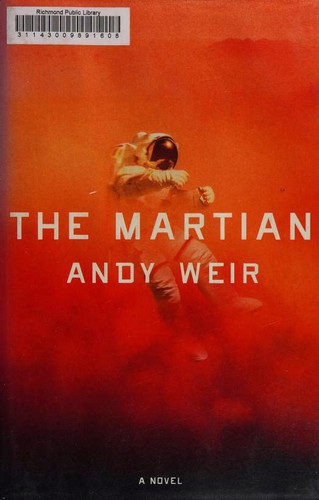
Project Hail Mary is structured as a problem-solving novel, like The Martian, but it has something The Martian doesn't: a relationship. About a third of the way through, Grace encounters another spacecraft — not human — and what follows is one of the most celebrated first-contact relationships in recent science fiction. Weir constructs an alien whose biology, physics, and communication work according to different rules, and the process of the two characters learning to understand each other becomes the emotional core of the novel. The friendship that develops is genuinely affecting in ways The Martian's isolation never quite was.
The novel's structure — alternating between Grace's present mission and recovered memory flashbacks of how he came to be on the ship — gives it a different texture from Weir's previous work. The flashbacks provide the political and scientific context (Earth in panic, governments cooperating under extreme duress, a scientist named Stratt who is essentially running a wartime command economy) while the present-tense sections are pure problem-solving and relationship. Both halves are strong, but the present-day sections, where Grace and his alien counterpart work together, are extraordinary.
For readers who liked The Martian, this is a better book: more emotionally generous, structurally more sophisticated, and willing to follow its emotional logic to an ending that is simultaneously devastating and right. For readers who found The Martian's tone too glib, Project Hail Mary's friendship gives it genuine stakes that the earlier book lacked. The main caveat is that some readers will find the science even denser here — Weir has grown more ambitious — but the payoff is proportional.
Talk to Project Hail Mary like its author wrote you back.
Get the ideas that fit your life — not generic summaries.
- Chat with the book
- Audiobook-style main ideas
- Adapts to your life and goals
- Helps you take action
Key takeaways
- 1.
The amnesia structure is not a gimmick — it lets Weir control information release and creates an unusual form of character discovery, where the protagonist is figuring out who he is at the same time the reader is.
- 2.
The first-contact relationship is built on physics and chemistry rather than language, which makes it feel more plausible than most SF alien communication scenarios.
- 3.
Sacrifice chosen freely, for someone you love, lands completely differently from sacrifice imposed by circumstance — Weir earns that distinction by building the relationship slowly.
- 4.
Grace's reluctant heroism — he explicitly did not want to be on this mission — is more interesting than a willing hero, because his competence exists in tension with his preferences.
- 5.
Cooperation between radically different kinds of minds, with completely different sensory experiences, is possible but requires building a shared language from scratch.
- 6.
The Stratt flashbacks show institutional problem-solving at civilizational scale: what it looks like when one person is genuinely given unlimited authority to solve an existential crisis.
- 7.
Weir's research is again meticulous — the stellar physics, the xenobiology, the orbital mechanics — and the precision is the source of the drama, not a distraction from it.
- 8.
Friendship at the extreme end of difference — different species, different physics, different everything — raises the question of what friendship actually requires, and Weir's answer is: shared problem and mutual regard.
Discussion questions
Use these on your own, with a book club, or as chat starters in Superbook. Book club version, ready to copy or print →
- 1.
Grace's memory returns gradually throughout the novel. How does that structure change your experience of him as a character compared to a conventional narrator?
- 2.
The alien's biology and communication system are constructed in detail. Did that detail make the friendship feel more real or did it create distance?
- 3.
Stratt is a fascinating secondary character — competent, ruthless, running a wartime command economy to save the world. Does the novel endorse her methods?
- 4.
Grace explicitly didn't volunteer for this mission. Does his involuntary heroism make him more or less sympathetic than a willing hero?
- 5.
The ending requires Grace to make a choice. Did you think the novel earned that choice, or did it feel manipulative?
- 6.
Compare Rocky (the alien) to any alien you've encountered in other fiction. What does Weir do differently, and does it work?
- 7.
The Astrophage microorganism behaves according to biological rules that have physical consequences. Is that scientific specificity what makes the threat feel real?
- 8.
The flashback sections show Earth's governments cooperating under extreme duress. Is that vision of international cooperation optimistic, naive, or something else?
- 9.
The Martian and Project Hail Mary both feature isolation as a condition. How does the arrival of Rocky change the novel's emotional register compared to Watney's solo ordeal?
- 10.
Weir has said he's not primarily interested in the 'what does it mean to be human' question. Does Project Hail Mary answer that question anyway, despite his intentions?
- 11.
The novel ends with a kind of peace rather than triumph. Was that the right ending for this story?
- 12.
If Project Hail Mary were adapted into a film — as The Martian was — what would be hardest to translate, and what might actually work better on screen?
Themes
Frequently asked questions
-
Do I need to read The Martian before Project Hail Mary?
No. Project Hail Mary is completely standalone, and many readers consider it the better book. Reading The Martian first will give you a sense of Weir's style and what to expect, but there's no shared plot or characters.
-
Is Project Hail Mary hard science fiction?
Yes, genuinely. Weir derives his Astrophage biology from thermodynamic and biological plausibility, and the orbital mechanics and stellar physics are researched seriously. Readers who engage with the science will find it rewarding; those who skip the technical sections will still follow the plot but miss what makes the book distinctive.
-
Is there a movie adaptation?
As of 2024 a film adaptation starring Ryan Gosling as Grace was in development. The casting drew significant discussion about how the alien first-contact relationship would be portrayed on screen.
-
Who shouldn't read Project Hail Mary?
Readers who want literary prose, moral ambiguity, or a dark emotional register. This is a novel of optimism, competence, and eventually warmth. It acknowledges death and sacrifice but isn't brooding about them. If you want Cormac McCarthy's version of a mission to save the sun, this isn't it.
-
Is the ending sad?
It's bittersweet in a way that feels earned rather than manipulative. Most readers report that the ending left them emotional in a way the novel's earlier chapters — more about problem-solving — didn't fully prepare them for.