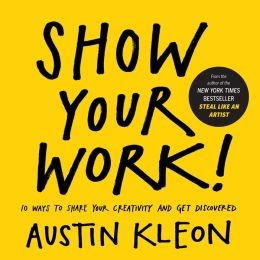
Show Your Work! by Austin Kleon is a 2014 self-help book about creativity, sharing, creative work. You don't have to be a finished expert to share what you do. The amateur's willingness to share the messy process creates connection that polished finished work often doesn't.
Summary
Show Your Work! is Austin Kleon's argument for making your creative process public — not the finished product only, but the messy, uncertain, in-progress work. The book is the second in his creativity trilogy and addresses the question of how creative people can share what they do without feeling like they're self-promoting or performing expertise they don't yet have.
Kleon's central premise is that the internet has made it possible for anyone to document and share their creative process with people who care about the same things. This is not about building a personal brand or marketing yourself — it's about participating in a community of people who are interested in the same questions and work. The sharing itself becomes part of the creative practice: writing about what you're making forces you to think about it differently.
The ten chapters are short and illustrated, consistent with the trilogy's design. The key ideas include: being an amateur (the freedom to be curious without credentials); thinking about process, not just output; sharing small things often rather than waiting for finished work; opening your cabinet of curiosities (sharing what you're inspired by); telling good stories; teaching what you know; don't turn into human spam (give more than you promote); learn to take a punch (develop a relationship with criticism); sell out on your own terms (there's no shame in making a living from your work); and stick around (longevity beats any single success).
The book is most useful for people who create things but feel uncomfortable sharing them — who believe they need more credentials, more polish, or more success before their process is worth showing. Kleon's answer is that the sharing comes first and the credentials follow.
Talk to Show Your Work! like its author wrote you back.
Get the ideas that fit your life — not generic summaries.
- Chat with the book
- Audiobook-style main ideas
- Adapts to your life and goals
- Helps you take action
Key takeaways
- 1.
You don't have to be a finished expert to share what you do. The amateur's willingness to share the messy process creates connection that polished finished work often doesn't.
- 2.
Share process, not just product. The work-in-progress is often more interesting and more connecting than the finished piece.
- 3.
Think of sharing as maintaining a cabinet of curiosities: showing what you're reading, who's influencing you, what questions you're working on, not just announcing finished achievements.
- 4.
Teaching what you know is one of the most reliable ways to find people who share your interests and to consolidate your own understanding.
- 5.
Don't turn into human spam. Sharing and giving generously builds audience; only promoting your own work alienates it.
- 6.
Developing a relationship with criticism is a professional skill. The ability to hear what's useful and discard what isn't is essential for anyone who shares work publicly.
- 7.
Longevity beats breakthrough. Consistent, patient sharing over years produces more opportunity and more community than any single piece of well-received work.
- 8.
There's no shame in making money from creative work. Figuring out how to sustain yourself through your work is part of the creative project.
Discussion questions
Use these on your own, with a book club, or as chat starters in Superbook. Book club version, ready to copy or print →
- 1.
Kleon says to share the process, not just the product. What would it look like if you shared your creative process publicly for the next month — whatever you're working on, as you're working on it?
- 2.
He argues that being an amateur — curious without credentials — is an asset, not a liability. Where are you treating your lack of credentials as a reason to stay quiet when it could be an advantage?
- 3.
What is your cabinet of curiosities — the things you're reading, watching, thinking about — that you could share that might connect you to people interested in the same things?
- 4.
Teaching what you know forces you to understand it more deeply. What do you know that you've never tried to teach or explain to someone else? What would that reveal about the limits of your own understanding?
- 5.
Kleon says 'don't turn into human spam.' Do you follow anyone online who does this? What does their approach cost them in your attention and goodwill?
- 6.
What's your current relationship with criticism of your work? Do you find it useful, paralyzing, or something in between? What would a healthier relationship look like?
- 7.
The book argues for longevity over breakthrough. Are you playing a short game or a long game with your creative work right now?
- 8.
What prevents you from sharing your work-in-progress publicly? What is the specific fear or concern?
- 9.
Kleon's books are themselves demonstrations of their principles — designed as creative objects. How does the form of Show Your Work! reinforce or undermine its argument?
- 10.
What is one thing you know or do well that you've never formally shared or written about? Who might benefit from that?
- 11.
If you committed to sharing one small thing about your creative practice online every week for a year, what would you share? What would you hope to find?
Themes
Frequently asked questions
-
Is Show Your Work worth reading?
Yes if you make things but feel reluctant to share them. The book makes a compelling case for why sharing your process is valuable — for you and for others — and addresses the most common fears about doing so. At about ninety pages it reads in an hour.
-
How long does it take to read Show Your Work?
About ninety minutes to two hours. Like Steal Like an Artist, it's illustrated and spaciously laid out. It is designed to be read quickly and returned to.
-
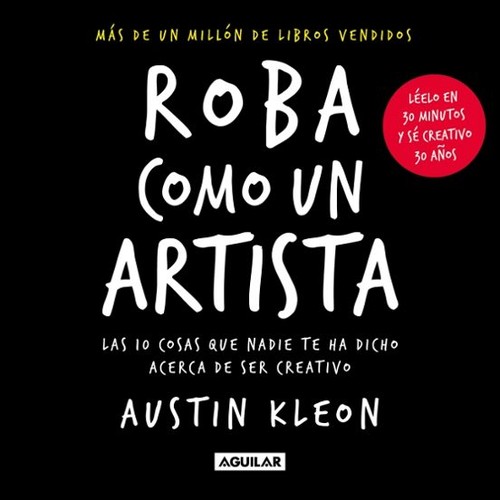
What is the main difference between Steal Like an Artist and Show Your Work?
Steal Like an Artist is about the creative process and influences. Show Your Work! is about sharing that process and connecting with an audience. They address consecutive stages of the creative life.
-
Do I need a large audience to benefit from Show Your Work?
No. Kleon's argument is that even a small audience of interested people changes the creative experience — it creates accountability, connection, and feedback. The sharing itself is the point, not the scale of the audience.
-
Who should read Show Your Work?
People who create things but feel uncomfortable sharing them until they're finished or until they feel credentialed enough. Also useful for anyone who wants to build an audience for their work but finds conventional self-promotion uncomfortable.
Similar books

Show Your Work! vs.
Deciding between two books? Show Your Work! vs Steal Like an Artist .
