Resonant Leadership by Richard Boyatzis and Annie McKee is a 2005 business book about emotional intelligence, leadership renewal, resonance. Resonant leaders create emotional climates where people feel engaged, motivated, and able to do their best work. Dissonant leaders produce anxiety, fear, or numbness — even when they're technically competent.
Summary
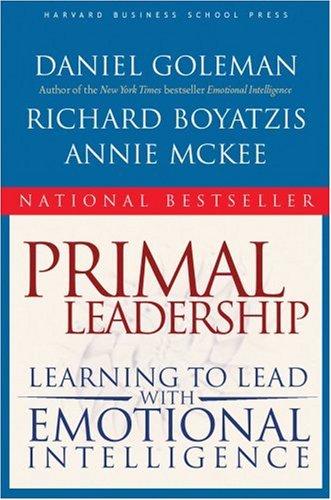
Resonant Leadership is a follow-up to Primal Leadership, the 2002 book where Boyatzis and McKee (with Daniel Goleman) introduced the concept of resonant and dissonant leadership. This book goes deeper into what sustains resonance over time — why some leaders remain energized and emotionally connected to their work and teams while others burn out, become cynical, or lose the qualities that made them effective in the first place.
The central concept is the "sacrifice syndrome." High-achieving leaders often succeed by giving a great deal of themselves over extended periods. Over time, the constant demands, stress, and lack of renewal produce dissonance — they become irritable, disconnected, or rigid — often without realizing it. Boyatzis and McKee argue that renewal is not optional or remedial but a continuous requirement of effective leadership. Three practices sustain it: mindfulness (developing ongoing self-awareness), hope (sustaining a compelling vision), and compassion (maintaining genuine concern for others).
The authors draw on neuroscience research on the brain's stress response and on case studies of leaders who successfully renewed themselves versus those who didn't. The science is lightly applied — this isn't a neuroscience textbook — but it gives the practical recommendations more grounding than standard self-help framing would provide.
The book is most useful for leaders who are high-functioning but running on empty — people who know they've become harder to work with or less engaged but attribute it to external circumstances rather than to the depletion that's happened to them internally. The practices Boyatzis and McKee recommend aren't complicated, but they require consistent attention and a willingness to stop treating renewal as a sign of weakness.
Talk to Resonant Leadership like its author wrote you back.
Get the ideas that fit your life — not generic summaries.
- Chat with the book
- Audiobook-style main ideas
- Adapts to your life and goals
- Helps you take action
Key takeaways
- 1.
Resonant leaders create emotional climates where people feel engaged, motivated, and able to do their best work. Dissonant leaders produce anxiety, fear, or numbness — even when they're technically competent.
- 2.
The sacrifice syndrome is the primary threat to sustained leadership effectiveness: high achievers deplete themselves through chronic stress and sacrifice until their resonance erodes from the inside.
- 3.
Renewal is not recovery — it's not something you do after you've burned out. It's a continuous practice required to maintain the emotional and cognitive capacity effective leadership demands.
- 4.
Mindfulness, in Boyatzis and McKee's model, means ongoing awareness of your own thoughts, feelings, and reactions — enough to choose your response rather than react automatically.
- 5.
Hope is not optimism. It's a grounded belief that the future can be different, combined with the capacity to plan paths toward it. Leaders who lose hope produce dissonance even when their execution remains strong.
- 6.
Compassion in leadership means genuinely caring about the people you work with, not as an obligation or a retention strategy, but as a quality that keeps you connected to why the work matters.
- 7.
Emotional contagion is real: a leader's mood spreads through a team faster than any explicit communication. Dissonant leaders infect their organizations whether or not they realize it.
Discussion questions
Use these on your own, with a book club, or as chat starters in Superbook. Book club version, ready to copy or print →
- 1.
Think of a leader who has clearly experienced the sacrifice syndrome. What were the visible signs, and how did the team respond?
- 2.
Where are you currently on the spectrum from resonant to dissonant in your own leadership? What's your evidence?
- 3.
The book argues that renewal isn't optional — it's a professional responsibility. What in your current life actually functions as renewal?
- 4.
Boyatzis and McKee distinguish hope from optimism. Do you currently lead from a vision of the future that energizes you, or from an obligation to execute against inherited goals?
- 5.
Think of a moment when your emotional state visibly affected your team's performance or morale. What happened, and what did you learn from it?
- 6.
The three practices — mindfulness, hope, compassion — are simple to describe and difficult to maintain under pressure. Which is hardest for you to sustain when things get difficult?
- 7.
Have you ever worked for a genuinely resonant leader? What made the experience different from working for someone more dissonant?
- 8.
The book says dissonance often develops gradually and leaders don't notice it. What would be the early warning signs in your case?
- 9.
Compassion, in this model, means genuine care — not as a performance but as a real quality. How honest are you about whether that's present in your leadership right now?
- 10.
What's the highest-stakes leadership situation you've faced in the past year? Were you resonant or dissonant during it, and what drove that?
- 11.
If the people on your team were asked privately whether you're currently resonant or dissonant, what would they say?
- 12.
The book argues that technical competence without emotional attunement produces limited results. Do you agree? Where has that shown up in your experience?
Themes
Frequently asked questions
-
Do I need to read Primal Leadership before Resonant Leadership?
No, but it helps. Resonant Leadership summarizes the key concepts from the earlier book in its opening chapters. If you're already familiar with emotional intelligence and resonant versus dissonant leadership, you can jump straight in.
-
What is the sacrifice syndrome?
It's Boyatzis and McKee's term for the depletion pattern that affects high-achieving leaders who give a lot of themselves over long periods. The chronic stress and sacrifice gradually erode the emotional attunement that made them effective, often without their noticing.
-
How long does Resonant Leadership take to read?
Around five hours at average pace. The book is about 230 pages and combines case studies with research summaries. It reads more easily than an academic text but is denser than most popular leadership books.
-
Is the neuroscience in this book solid?
The neuroscience is lightly applied and not the book's primary contribution. The claims about stress, mood contagion, and recovery are grounded in legitimate research, but readers looking for detailed neuroscientific evidence should read the referenced academic literature directly.
-
Who is this book most useful for?
Leaders who are highly capable but running on empty — people whose effectiveness has quietly declined under sustained pressure and who haven't taken the connection between renewal and performance seriously.