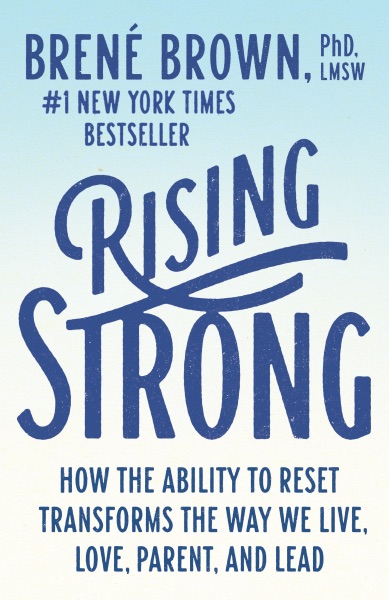
Rising Strong by Brené Brown is a 2015 self-help book about resilience, vulnerability, emotional courage. The Rising Strong process has three stages: the reckoning (noticing the fall), the rumble (interrogating your story), and the revolution (being transformed by the process).
Summary
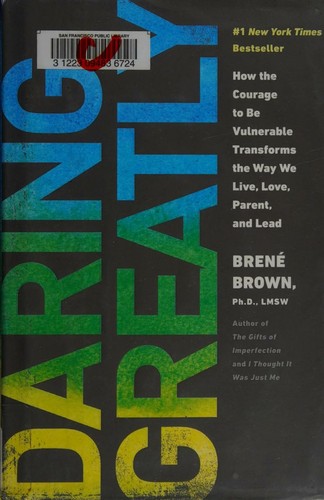
Rising Strong is the third book in Brené Brown's vulnerability-and-courage sequence, following The Gifts of Imperfection and Daring Greatly. Where those earlier books argued for the value of showing up vulnerably, this one addresses what happens when you do show up — and fall down. Brown frames the recovery process as a three-part sequence she calls the Rising Strong process: the reckoning, the rumble, and the revolution.
The reckoning is the moment of recognizing that you're in an emotional reaction — something happened, your body knows it, and you're tempted to either numb out or deflect. Brown draws on her own falls, on interviews conducted over years of research, and on literary examples to argue that most people skip this part. They tell themselves stories — often unconscious, often inaccurate — about why things went wrong and who is to blame, and then they act on those stories without ever examining them.
The rumble is the harder work: going back to those stories and interrogating them. Brown calls these unexamined narratives "the story I'm making up" — a phrase she recommends using literally in conversation to flag when you're about to act on interpretation rather than fact. This section of the book is the most practically useful: she offers frameworks for identifying the delta between what happened and what you told yourself about it, for recognizing when you're armoring up, and for sitting with difficult emotions long enough to learn from them.
The revolution is what happens when the reckoning and rumble change the story you carry about yourself and others. Brown argues that the rising-strong process, practiced over time, produces not just resilience but genuine transformation. She writes with warmth and uses her own experiences as data throughout, which makes the book readable and personal. The research underpinning it is real — Brown has a PhD in social work and spent years coding qualitative data — but the book doesn't lean heavily on citations, which some readers appreciate and others find frustrating.
Talk to Rising Strong like its author wrote you back.
Get the ideas that fit your life — not generic summaries.
- Chat with the book
- Audiobook-style main ideas
- Adapts to your life and goals
- Helps you take action
Key takeaways
- 1.
The Rising Strong process has three stages: the reckoning (noticing the fall), the rumble (interrogating your story), and the revolution (being transformed by the process).
- 2.
After a fall, the brain immediately generates a narrative to explain what happened. These narratives protect us in the short term but often distort what actually occurred.
- 3.
Using the phrase 'the story I'm making up' in real conversation signals to yourself and others that you're aware your interpretation may be wrong — it creates space for correction.
- 4.
Most people skip the rumble and go straight from pain to armor — distraction, numbing, blame, or perfectionism. The armor keeps you stuck.
- 5.
Vulnerability is not just emotional openness; it is also the willingness to be wrong about your own narrative and to revise it in the face of new information.
- 6.
Brown identifies common 'confabulations' — the self-protective stories we tell — including the 'magnanimity myth' (telling yourself you're better than you are) and 'gold-plating grit' (reframing suffering as virtue to avoid processing it).
- 7.
Curiosity is one of the key dispositions for rising strong: not asking 'Why did this happen to me?' but 'What does this tell me about myself?'
- 8.
The revolution is not a dramatic transformation but an accumulation of moments of integrity — choosing the harder, more honest path instead of the easier armored one.
Discussion questions
Use these on your own, with a book club, or as chat starters in Superbook. Book club version, ready to copy or print →
- 1.
Think of a recent fall — a failure, a rejection, a rupture in a relationship. What story did you immediately tell yourself about it? How accurate was that story?
- 2.
Brown's phrase 'the story I'm making up' is meant to be used in live conversation. How would it change a difficult conversation you've had recently if you'd said that?
- 3.
She distinguishes between numbing and self-soothing. What behaviors do you use to numb versus what actually helps you process difficult emotions?
- 4.
Brown argues that skipping the rumble leads to wearing armor. What form does your armor tend to take — perfectionism, cynicism, humor, overwork?
- 5.
Where in your life do you most resist uncertainty? What does the 'story you're making up' usually look like in that area?
- 6.
She writes that rising strong requires 'the willingness to be wrong.' Is that something you find genuinely difficult? What makes it hard?
- 7.
Brown talks about generosity of spirit toward others — assuming good intent. Where is that hardest for you, and why?
- 8.
The book argues that the people who are most resilient are not those who fall less, but those who have learned to get back up differently. Does that match your experience of the resilient people in your life?
- 9.
She identifies specific confabulations — common distorting narratives. Which of the patterns she describes feels most familiar in your own thinking?
- 10.
Brown's research is qualitative — based on thousands of interviews. Does that methodology feel credible to you? How do you evaluate claims made from qualitative research?
- 11.
The revolution stage is described as personal transformation through repeated practice, not a single event. What would accumulated integrity look like in your own life over the next year?
- 12.
She is both researcher and storyteller. Does the personal memoir quality strengthen or weaken the book for you?
Themes
Frequently asked questions
-
Is Rising Strong worth reading if I've already read Daring Greatly?
Yes, though there is some overlap in Brown's core vocabulary. Rising Strong is focused on a distinct phase — what to do after you've shown up vulnerably and been hurt — that Daring Greatly doesn't address in depth. If the ideas in Daring Greatly resonated, Rising Strong takes them further.
-
What is the main idea of Rising Strong?
That the ability to recover from failure or hurt requires a deliberate process: recognizing that you're in an emotional reaction, interrogating the story you're telling yourself about what happened, and revising it toward something more honest. Skipping that process leads to armoring and stagnation.
-
How long does it take to read Rising Strong?
Roughly five hours at average reading pace. The chapters are organized around the three stages of the process, and Brown illustrates each with personal stories, interview excerpts, and literary references. It's conversational and reads faster than its page count suggests.
-
Who should read Rising Strong?
Anyone trying to understand how they respond to failure, rejection, or rupture — and who wants tools for responding differently. It's also useful for therapists, coaches, and managers who work with people navigating difficult transitions.
-
What's the most actionable idea in the book?
The practice of saying 'the story I'm making up' before describing your interpretation of a situation. Brown recommends using it literally — in conversation, out loud — as a way of flagging when you're about to act on assumption rather than information.