Health · Book club
Roar book club questions
Here are 12 book club questions for Roar by Stacy Sims, ordered to open easily and end somewhere worth arguing about. Copy them, print them, or bring them up one at a time.
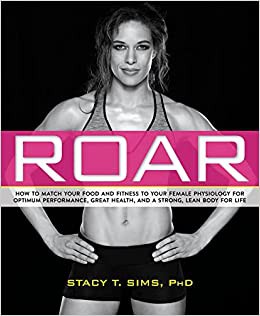
Roar is exercise physiologist Stacy Sims's argument that women are not small men, and that decades of sports science research conducted primarily on male subjects has produced nutrition and training advice that is systematically wrong for women.
Stacy Sims · 2016 · 5h 40m
Full summary and key takeaways →The 12 questions
- 1.
Sims argues that most sports science research has been done on men and the results have been applied to women without validation. How should that change how you interpret nutritional and training research?
- 2.
Have you ever tracked your training performance relative to your menstrual cycle? Does the idea of phase-based training feel practical or overly complicated?
- 3.
She argues that underfueling is the primary nutritional problem for active women. Is that consistent with the fitness culture messaging you've encountered, which often emphasizes eating less?
- 4.
The book covers hormonal contraceptives and their effects on training adaptation — some blunt the hormonal cycle that Sims's approach is built around. How do you weigh that trade-off?
- 5.
Sims is critical of low-carbohydrate approaches for active women. How does that square with the low-carb trend in fitness culture, which has had significant female followings?
- 6.
She covers the specific needs of women in perimenopause and menopause — a topic rarely addressed in mainstream fitness books. Does the absence of this material in other resources reflect the fitness industry's age and gender biases?
- 7.
Iron deficiency is common in active women and frequently missed. Have you ever been tested for it? What would it take to make routine micronutrient testing a standard part of athletic care?
- 8.
Roar is written for active women, but much of the hormonal information is relevant to any woman. Does the athletic framing make it more or less accessible to women who don't identify as athletes?
- 9.
Sims argues for phase-based nutrition — eating differently in the first and second halves of your cycle. How practical is that level of dietary customization in real life?
- 10.
The book challenges the direct application of male-centered research to women. What other domains of health or medicine do you think have similar gaps?
- 11.
She covers the physiology of female athletic performance in a way that is both validating and practically demanding. Does reading this make you feel more or less capable as an athlete?
- 12.
What aspect of the book is most relevant to your current training or health situation? What would acting on it actually require?
How to run the discussion
- Pick six to eight, not all of them. An hour of real discussion covers fewer questions than anyone expects, and racing the list is what makes a book club feel like homework.
- Open with what people noticed, not what they concluded. Asking for a verdict first hardens opinions before anyone has heard each other.
- Let the disagreement run. The questions below that split a room are the ones worth the time; the ones everyone answers the same way can be skipped.
- Ask the quiet person a specific question. A direct, narrow question is far easier to answer than an open invitation to contribute.
Themes worth steering toward
If the conversation stalls, these are the threads that usually restart it.
Common questions
What are good book club questions for Roar?
Here are 12 book club questions for Roar by Stacy Sims, ordered to open easily and end somewhere worth arguing about. The strongest openers ask what each reader noticed rather than what they concluded, and the discussion usually turns on women's health, exercise physiology, hormones.
How long should a book club discussion of Roar last?
Most groups run 60 to 90 minutes of actual discussion. That is roughly six to eight questions, not all of them, so pick the ones that suit your group rather than working down the list in order.
What are the main themes in Roar?
Women's health, Exercise physiology, Hormones, Nutrition for athletes, Menstrual cycle. Those are the threads most likely to divide a room, which makes them the useful places to steer a discussion that has gone quiet.
Picking the next one? See books like Roar or questions for other book club picks.
