Scarcity: Why Having Too Little Means So Much by Sendhil Mullainathan and Eldar Shafir is a 2013 psychology book about scarcity mindset, cognitive bandwidth, poverty. Scarcity — of money, time, food, or social connection — captures attention and focuses cognition on the scarce resource. This is partly useful (focus) and partly costly (tunnel vision).
Summary
Scarcity is Sendhil Mullainathan and Eldar Shafir's argument that the experience of having too little — of any resource — produces a predictable cognitive syndrome with consequences that extend far beyond the original deficit. A person short on money thinks about money constantly; a person short on time thinks about deadlines. This focused attention is partly adaptive (scarcity tunnels you toward what matters most) and partly destructive (it crowds out everything else). Mullainathan and Shafir call the cognitive cost of scarcity a tax on mental bandwidth.
The bandwidth concept is the book's most original contribution. Drawing on psychology and behavioral economics experiments, the authors show that poverty, time pressure, and loneliness all reduce cognitive capacity in measurable ways — affecting fluid intelligence test scores, self-control, and decision quality. The Indian sugarcane farmers who were tested before and after their annual harvest scored significantly higher on cognitive tests after receiving their income than before, not because they were different people but because the cognitive load of financial scarcity was removed. The poor are not making poor decisions because they lack intelligence or values; they are making decisions under conditions that would impair anyone's thinking.
The authors are careful to extend this beyond poverty. Busy professionals who are perpetually time-scarce show the same cognitive patterns: tunneling on the urgent, neglecting the important, making decisions that create future problems (the "borrowing" pattern, where solving today's crisis depletes tomorrow's resources). The feeling of being perpetually behind — common in knowledge work, parenting, and caregiving — is itself a form of scarcity with real cognitive effects.
The policy implications Mullainathan and Shafir draw are mostly about designing systems that account for impaired bandwidth rather than assuming people have unlimited cognitive resources. Reminders, defaults, simplified forms, timing of outreach — small design changes that reduce the decision burden on people already operating under scarcity. The book is more cautious about prescription than many behavioral economics books, which is a strength.
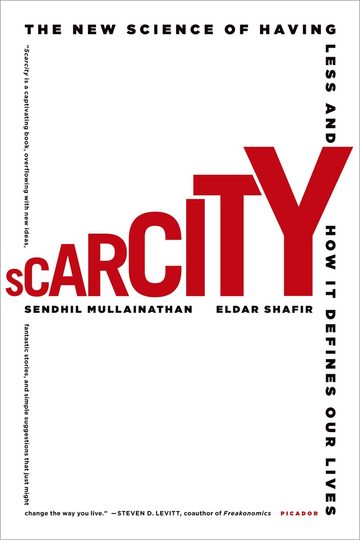
Talk to Scarcity: Why Having Too Little Means So Much like its author wrote you back.
Get the ideas that fit your life — not generic summaries.
- Chat with the book
- Audiobook-style main ideas
- Adapts to your life and goals
- Helps you take action
Key takeaways
- 1.
Scarcity — of money, time, food, or social connection — captures attention and focuses cognition on the scarce resource. This is partly useful (focus) and partly costly (tunnel vision).
- 2.
Scarcity imposes a cognitive bandwidth tax. People experiencing scarcity perform measurably worse on fluid intelligence and self-control tasks than when the same scarcity is removed.
- 3.
The tunneling effect of scarcity means important things outside the tunnel get neglected. Time-scarce people miss medical appointments; money-scarce people miss bill payments — not because they don't care but because they're not in the tunnel.
- 4.
Slack — unused capacity in time, money, or attention — is what allows people to absorb unexpected demands without entering a scarcity spiral. Eliminating slack for efficiency is a false economy.
- 5.
Scarcity leads to borrowing: solving today's problem by depleting tomorrow's resources. This creates a trap where scarcity is perpetuated by the decisions scarcity produces.
- 6.
Indian sugarcane farmers scored higher on cognitive tests after their annual harvest than before — the same people, better performance, once financial scarcity was temporarily lifted.
- 7.
Poverty is not primarily a character problem. It is a situation that produces predictable cognitive consequences. Blaming the poor for decisions made under bandwidth depletion misattributes cause.
- 8.
System design should account for limited bandwidth. Simplified forms, reminders, defaults, and reduced friction help people make better decisions regardless of their current cognitive state.
Discussion questions
Use these on your own, with a book club, or as chat starters in Superbook. Book club version, ready to copy or print →
- 1.
The authors argue that scarcity of any kind — money, time, social connection — produces the same cognitive syndrome. Which type of scarcity do you personally experience most acutely?
- 2.
The tunneling concept says that scarcity focuses you on the scarce resource at the cost of everything else. What important things are outside your tunnel right now?
- 3.
The sugarcane farmer study is the most striking single piece of evidence in the book. What does it change about how you think about the relationship between poverty and decision quality?
- 4.
Slack — unused capacity — is what protects you from scarcity spirals. How much slack do you have in your time, finances, and attention? Is it enough?
- 5.
The borrowing trap says scarcity leads to decisions that perpetuate scarcity. Where in your own life do you see that pattern?
- 6.
They argue poverty is partly a design problem — systems that assume unlimited bandwidth impose disproportionate costs on people with less. What systems in your life assume more bandwidth than most people have?
- 7.
Time scarcity affects knowledge workers as well as the poor. Does framing 'always busy' as a form of cognitive impairment change how you think about your own work patterns?
- 8.
The book is careful not to oversimplify policy implications. Do you think it goes far enough in drawing practical conclusions, or is the restraint appropriate given the research?
- 9.
They distinguish between how scarcity feels (focused, urgent) and what it costs (impaired bandwidth, tunneling). Have you ever confused the feeling of urgency with good performance?
- 10.
Where do you see organizations, governments, or institutions designing as if people have unlimited cognitive bandwidth? What would a bandwidth-aware design look like instead?
- 11.
The authors extend their framework beyond poverty to explain why busy professionals, dieters, and lonely people show similar cognitive patterns. Does unifying those experiences feel insightful or like it risks trivializing poverty?
- 12.
What is one concrete change in your environment or schedule that would increase your cognitive slack?
Themes
Frequently asked questions
-
Is Scarcity about poverty specifically or something broader?
Both. The research on poverty is central and the most policy-relevant part of the book, but the authors explicitly extend the framework to time scarcity, dieting, and loneliness. The core claim is that having too little of any valued resource produces the same cognitive consequences regardless of what is scarce.
-
What is cognitive bandwidth as the book defines it?
The mental capacity available for thinking, deciding, and exercising self-control. The authors argue scarcity reduces this capacity in measurable ways — not permanently, but as a function of current circumstances. When scarcity is relieved, bandwidth returns.
-
Is this book accessible to non-economists?
Yes. Mullainathan and Shafir write for a general audience, and the book is structured around experiments and case studies rather than technical economics. Readers of Thinking Fast and Slow or Nudge will find the style familiar.
-
What are the main policy implications of scarcity research?
Design systems that reduce the decision burden on people operating under scarcity: simplified forms, automatic enrollment in benefits, timed reminders, reduced friction in accessing services. The key insight is that asking more cognitive effort from people who have less of it produces worse outcomes and deeper inequality.
-
What's the most surprising finding in the book?
The sugarcane farmer study, in which the same individuals scored significantly higher on cognitive tests after receiving their harvest payment than before. It demonstrates that the cognitive costs of financial scarcity are real and reversible, not stable traits of the individuals experiencing them.
Similar books
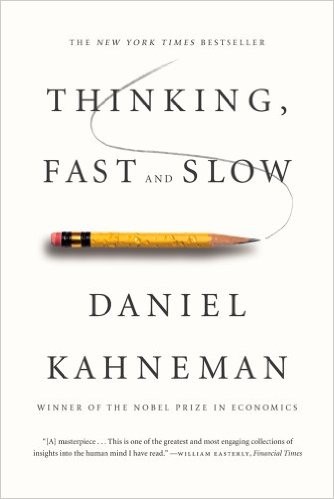
Thinking, Fast and Slow
Daniel Kahneman
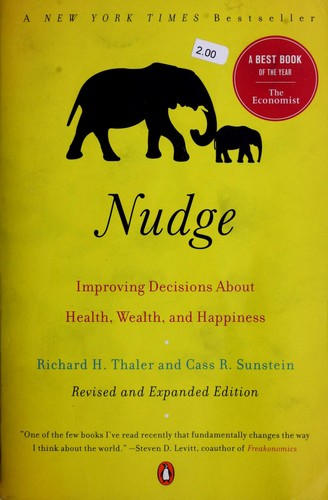
Nudge: Improving Decisions About Health, Wealth, and Happiness
Richard H. Thaler and Cass R. Sunstein
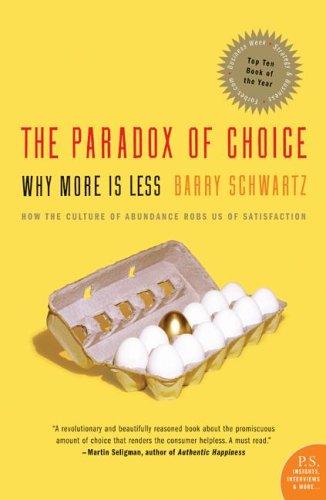
The Paradox of Choice: Why More Is Less
Barry Schwartz
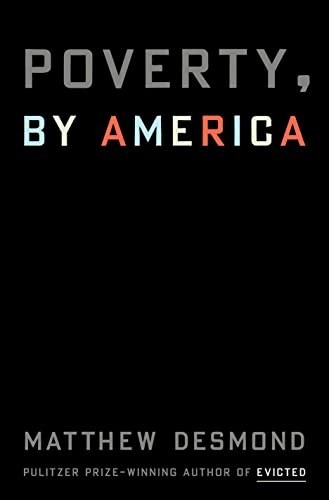
Poverty, by America
Matthew Desmond
