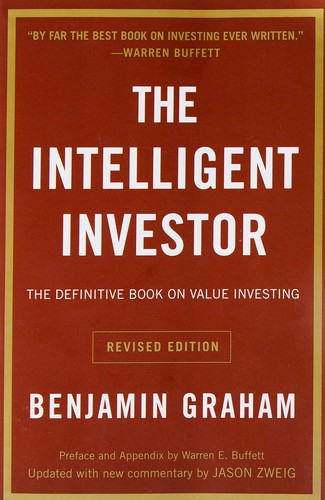
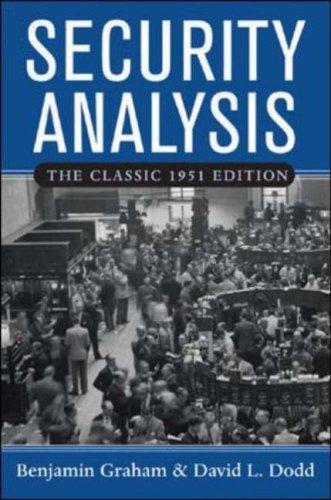
Security Analysis by Benjamin Graham is a 1934 economics book about value investing, financial analysis, intrinsic value. Investment requires a thorough analysis that promises safety of principal and an adequate return. Anything else is speculation, regardless of what name it carries.
Summary
Security Analysis is Benjamin Graham and David Dodd's comprehensive textbook on the analysis of stocks and bonds, first published in 1934 in the aftermath of the Great Crash of 1929. It is the foundational text of value investing and remains assigned reading in graduate finance programs over ninety years after its initial publication. The book is not designed to be read like a general-audience personal finance book — it is a professional reference — but understanding what it contains and why it matters is valuable for any serious investor.
Graham and Dodd's project was to establish a rigorous analytical framework that could distinguish between genuine investment and speculation. Writing in the immediate aftermath of a market that had collapsed catastrophically partly because investors had confused the two, they set out to define what an analyst should examine, how financial statements should be read and adjusted, what constitutes adequate coverage for bonds, and how to estimate intrinsic value for common stocks. The margin of safety concept — buying at a price well below estimated intrinsic value to protect against errors in analysis — emerged from this framework and became the book's most lasting contribution.
The scope is intentional and comprehensive. Graham and Dodd cover bonds, preferred stocks, and common stocks in turn, with extensive discussion of the financial statement adjustments required to see through accounting differences to underlying economic reality. The fixed income sections, which take up roughly half the book, are particularly demanding and dated in their specifics — the bond market of 1934 was different from today's — but the principles for evaluating coverage ratios, seniority, and covenant protections remain relevant. The common stock sections are where the ideas most directly applicable to individual investors appear.
Later editions (1940, 1951, 1962, 1988, 2008) updated the content to address changed market conditions, and the sixth edition includes commentary from contemporary value investors. Reading the original alongside a modern edition reveals how much the analytical principles have endured and how much the specific applications have had to evolve. For most individual investors, The Intelligent Investor — Graham's distillation for a general audience — is the right starting point; Security Analysis is the reference work that the serious practitioner eventually needs.
Talk to Security Analysis like its author wrote you back.
Get the ideas that fit your life — not generic summaries.
- Chat with the book
- Audiobook-style main ideas
- Adapts to your life and goals
- Helps you take action
Key takeaways
- 1.
Investment requires a thorough analysis that promises safety of principal and an adequate return. Anything else is speculation, regardless of what name it carries.
- 2.
Intrinsic value is the value justified by the facts — assets, earnings, dividends, prospects — as distinct from the current market price, which reflects sentiment.
- 3.
Margin of safety is the central concept: buy at a price significantly below intrinsic value so that errors in analysis don't produce losses.
- 4.
Financial statements require adjustment before analysis. Accounting conventions obscure real economic performance, and the analyst's job is to see through them.
- 5.
Bond analysis requires evaluating coverage — whether earnings reliably cover interest and principal obligations — not just the coupon rate or credit rating.
- 6.
Earnings quality matters as much as earnings quantity. Understanding whether reported earnings are sustainable and accurately reflect economic reality is the core analytical task.
- 7.
The book distinguishes between normal earning power and cyclical peaks and troughs. Analysis that uses peak earnings or trough earnings without adjustment produces misleading conclusions.
- 8.
A market that collapsed in 1929 was not an anomaly — it was the result of treating price appreciation as a substitute for analytical rigor. The framework Graham and Dodd built was specifically designed to prevent that confusion.
Discussion questions
Use these on your own, with a book club, or as chat starters in Superbook. Book club version, ready to copy or print →
- 1.
Security Analysis was written immediately after the 1929 crash. How does the historical context shape the framework? Would Graham and Dodd have built the same approach in a different era?
- 2.
The book runs over 700 pages and covers material that most individual investors will never need. What is the appropriate depth of financial analysis for a non-professional investor?
- 3.
Graham's distinction between investment and speculation seems clear in theory but blurry in practice. By his definition, what percentage of activity in today's stock market would he classify as speculation?
- 4.
The fixed income sections are the most dated parts of the book. Does the analytical framework for bonds — coverage ratios, covenant analysis, seniority — still apply in the current era of near-zero real rates and passive bond investing?
- 5.
Graham and Dodd emphasize adjusting reported financials to reflect economic reality. How much of that work is still necessary given improved accounting standards and disclosure requirements?
- 6.
The 2008 edition includes commentary from prominent value investors. Does the expert commentary help make the original text more accessible, or does it create a dialogue that distracts from the original framework?
- 7.
Security Analysis and The Intelligent Investor present the same fundamental framework at different levels of depth. When does an investor need to move from the general framework to the detailed analytical work?
- 8.
Graham wrote both books from the perspective of someone who had survived a catastrophic market crash. Does the trauma-informed approach to risk make more sense to you after experiencing a significant market downturn yourself?
- 9.
Modern quantitative tools can screen millions of stocks for Graham-Dodd criteria in seconds. Does that change the competitive value of the framework, or does knowing what to look for remain the harder problem?
- 10.
The book was written when individual investors could directly analyze corporate financials that were not widely available. Has the democratization of information changed the value of deep fundamental analysis?
- 11.
Graham and Dodd's framework was developed for the public equity markets of the 1930s. What asset classes or market structures today require a genuinely new analytical framework rather than an extension of theirs?
- 12.
Is Security Analysis a book you would recommend to a friend who is just beginning to invest? If not, what would they need to know before it becomes useful?
Themes
Frequently asked questions
-
Is Security Analysis the same as The Intelligent Investor?
No. Security Analysis is the comprehensive professional reference — hundreds of pages of detailed analytical methodology for analysts and portfolio managers. The Intelligent Investor is Graham's distillation of the same ideas for a general audience. Most individual investors should start with The Intelligent Investor and read Security Analysis only if they want much greater depth.
-
Do I need an accounting background to read Security Analysis?
A working knowledge of financial statements is helpful but not strictly required — Graham explains the accounting concepts as he uses them. What makes the book demanding is not accounting complexity but the analytical rigor and volume of material. It is a reference work, not a narrative, and benefits from being read slowly with examples at hand.
-
Which edition of Security Analysis should I read?
The sixth edition (2008) is the most accessible, with commentary from contemporary practitioners including Seth Klarman, Bruce Greenwald, and Howard Marks. The 1934 first edition is historically important but difficult and dated. The 1940 second edition is often considered the best pure Graham text. Most new readers should start with the sixth edition.
-
How long does Security Analysis take to read?
The full text runs over 700 pages and is dense. Cover-to-cover reading takes many weeks. Most practitioners use it as a reference rather than reading it straight through. If you read the introductory sections and the common stock chapters, you get most of the value most relevant to individual investors in considerably less time.
-
Does Security Analysis still apply to modern markets?
The core framework — intrinsic value, margin of safety, earnings quality, financial statement analysis — translates well to modern markets. The specific techniques require updating for current accounting standards, market structures, and asset classes. The fixed income sections are the most dated. The principles underlying the equity analysis remain foundational.