Psychology · Book club
Social: Why Our Brains Are Wired to Connect book club questions
Here are 11 book club questions for Social: Why Our Brains Are Wired to Connect by Matthew D. Lieberman, ordered to open easily and end somewhere worth arguing about. Copy them, print them, or bring them up one at a time.
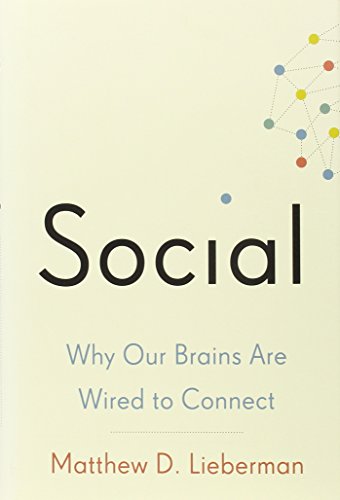
Matthew Lieberman is one of the founders of social neuroscience, the field that uses brain imaging and neuroscience methods to study social behavior.
Matthew D. Lieberman · 2013 · 5h 0m
Full summary and key takeaways →The 11 questions
- 1.
The default network finding suggests that the resting brain is social by default. Does that match your experience of what your mind drifts to when it has no task?
- 2.
Lieberman argues that social pain and physical pain use the same neural circuits. Does that change how you think about experiences of rejection or exclusion — your own or others'?
- 3.
He argues that mentalizing and analytic thinking are in tension — activating one tends to suppress the other. What does that suggest about the design of work that requires both technical skill and social sensitivity?
- 4.
The belonging-as-need framework puts social connection at the same level as hunger and pain. What does that imply about the costs of social isolation that are probably being underestimated?
- 5.
Lieberman argues for social learning designs in schools — connecting content to social relevance and relationship. Does that match your experience of what made education engaging versus disengaging?
- 6.
The fairness aversion finding shows people reject objectively beneficial outcomes they consider unfair. Where do you see this operating in workplaces or relationships you know?
- 7.
He discusses how social feedback shapes our own beliefs and preferences via the harmonizing system. Can you identify a belief or preference of yours that has been shaped by social environment rather than direct experience?
- 8.
The book argues that social motivation is often stronger than individual motivation. What would it mean to design your own goals to harness social motivation rather than treat it as a distraction?
- 9.
Lieberman is optimistic that neuroscience insights can improve education and organizations. How sceptical are you of the translation from brain imaging to institutional design?
- 10.
What does the social neuroscience perspective add to more traditional social psychology — or does it mostly confirm what social psychology already knew?
- 11.
If the resting brain is thinking about social life, what does that suggest about what matters most to us at a level below our stated preferences?
How to run the discussion
- Pick six to eight, not all of them. An hour of real discussion covers fewer questions than anyone expects, and racing the list is what makes a book club feel like homework.
- Open with what people noticed, not what they concluded. Asking for a verdict first hardens opinions before anyone has heard each other.
- Let the disagreement run. The questions below that split a room are the ones worth the time; the ones everyone answers the same way can be skipped.
- Ask the quiet person a specific question. A direct, narrow question is far easier to answer than an open invitation to contribute.
Themes worth steering toward
If the conversation stalls, these are the threads that usually restart it.
Common questions
What are good book club questions for Social: Why Our Brains Are Wired to Connect?
Here are 11 book club questions for Social: Why Our Brains Are Wired to Connect by Matthew D. Lieberman, ordered to open easily and end somewhere worth arguing about. The strongest openers ask what each reader noticed rather than what they concluded, and the discussion usually turns on social neuroscience, connection, empathy.
How long should a book club discussion of Social: Why Our Brains Are Wired to Connect last?
Most groups run 60 to 90 minutes of actual discussion. That is roughly six to eight questions, not all of them, so pick the ones that suit your group rather than working down the list in order.
What are the main themes in Social: Why Our Brains Are Wired to Connect?
Social neuroscience, Connection, Empathy, Default network, Belonging. Those are the threads most likely to divide a room, which makes them the useful places to steer a discussion that has gone quiet.
Picking the next one? See books like Social: Why Our Brains Are Wired to Connect or questions for other book club picks.
