Business · Book club
SPIN Selling book club questions
Here are 11 book club questions for SPIN Selling by Neil Rackham, ordered to open easily and end somewhere worth arguing about. Copy them, print them, or bring them up one at a time.
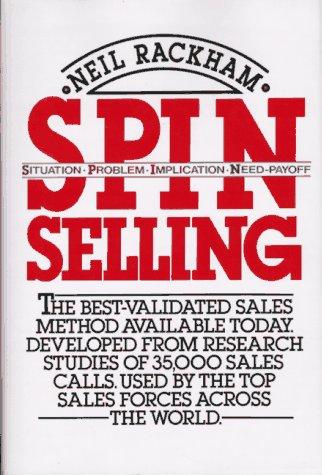
SPIN Selling is Neil Rackham's distillation of twelve years of research and over 35,000 sales calls analyzed to determine what separates effective salespeople in complex, high-value B2B transactions from their less successful counterparts.
Neil Rackham · 1988 · 4h 20m
Full summary and key takeaways →The 11 questions
- 1.
Rackham found that techniques effective in small sales actively hurt in large ones. Where else in business do you see a skill or approach that scales in the wrong direction as stakes increase?
- 2.
Think of a time you were persuaded to buy something expensive. Which of the SPIN question types best describes what made you feel urgency about the decision?
- 3.
What makes a well-constructed implication question different from just making the customer feel bad about their current situation?
- 4.
Need-payoff questions invite the buyer to state the value themselves. Why is this more persuasive than the salesperson stating it, and when does it feel manipulative rather than natural?
- 5.
SPIN Selling was researched in the 1970s and 1980s. Buyers now arrive more informed than they were then. What changes in the SPIN sequence make sense for a modern selling environment?
- 6.
The book distinguishes Advances from Closes. What's the right set of Advances to design for a complex B2B sales process you know well?
- 7.
How do you adapt the SPIN framework for discovery calls where you're gathering information rather than building urgency?
- 8.
What are the conditions under which a salesperson should not attempt to sell using SPIN — where the framework adds friction rather than removing it?
- 9.
Rackham found that high performers ask fewer total questions but more implication questions. What does that tell you about question quality versus quantity in a sales conversation?
- 10.
How does the SPIN framework interact with Challenger Sale-style teaching? Can you lead with insight and then use SPIN, or do they require different conversation structures?
- 11.
If you were training a new B2B salesperson, at what stage of their development would you introduce SPIN Selling, and what would you prioritize before it?
How to run the discussion
- Pick six to eight, not all of them. An hour of real discussion covers fewer questions than anyone expects, and racing the list is what makes a book club feel like homework.
- Open with what people noticed, not what they concluded. Asking for a verdict first hardens opinions before anyone has heard each other.
- Let the disagreement run. The questions below that split a room are the ones worth the time; the ones everyone answers the same way can be skipped.
- Ask the quiet person a specific question. A direct, narrow question is far easier to answer than an open invitation to contribute.
Themes worth steering toward
If the conversation stalls, these are the threads that usually restart it.
Common questions
What are good book club questions for SPIN Selling?
Here are 11 book club questions for SPIN Selling by Neil Rackham, ordered to open easily and end somewhere worth arguing about. The strongest openers ask what each reader noticed rather than what they concluded, and the discussion usually turns on sales, b2b, customer discovery.
How long should a book club discussion of SPIN Selling last?
Most groups run 60 to 90 minutes of actual discussion. That is roughly six to eight questions, not all of them, so pick the ones that suit your group rather than working down the list in order.
What are the main themes in SPIN Selling?
Sales, B2B, Customer discovery, Persuasion, Research. Those are the threads most likely to divide a room, which makes them the useful places to steer a discussion that has gone quiet.
Picking the next one? See books like SPIN Selling or questions for other book club picks.
