Science · Book club
Stiff: The Curious Lives of Human Cadavers book club questions
Here are 12 book club questions for Stiff: The Curious Lives of Human Cadavers by Mary Roach, ordered to open easily and end somewhere worth arguing about. Copy them, print them, or bring them up one at a time.
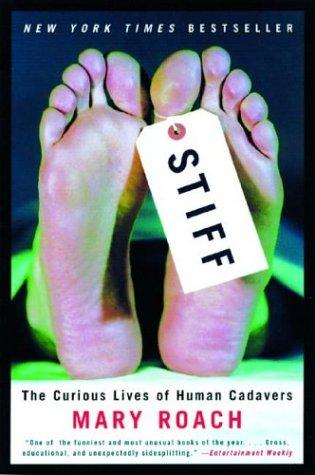
Stiff follows the human body after death — through anatomy labs, crash-test facilities, forensic research farms, military ballistics testing, and the history of surgical education.
Mary Roach · 2003 · 5h 0m
Full summary and key takeaways →The 12 questions
- 1.
Roach opens with the observation that most people know almost nothing about what happens to donated bodies. Did anything in the book surprise you most?
- 2.
How do you think about your own body after death? Has reading Stiff shifted that at all?
- 3.
The anatomy riot era was partly driven by class: the bodies of the poor were taken while the wealthy were protected. Does that history feel distant or still relevant?
- 4.
Roach interviews people who work with cadavers daily. How did their attitudes toward death compare with your own?
- 5.
The book discusses several uses of cadavers — surgical training, crash testing, military ballistics, forensic research — that most people find uncomfortable to think about. Are some uses more acceptable to you than others, and why?
- 6.
Roach writes with humor about a subject many people treat as off-limits for comedy. Did that approach work for you, or were there moments where it felt inappropriate?
- 7.
What would it take to change your mind about whole-body donation, in either direction?
- 8.
The book argues that donated bodies are a form of service to strangers. Is that framing persuasive to you?
- 9.
Roach visits a forensic research facility where bodies decompose outdoors for research. How did you react to reading about that, and what does your reaction tell you about your own relationship to the subject?
- 10.
If you were designing a medical school anatomy curriculum, what ethical obligations would you want to build into how donated bodies are treated?
- 11.
The book briefly addresses religious objections to dissection and donation. How do you think communities with strong religious prohibitions should navigate a shortage of cadavers for medical education?
- 12.
What surprised you most about the role of cadavers in automotive or military research?
How to run the discussion
- Pick six to eight, not all of them. An hour of real discussion covers fewer questions than anyone expects, and racing the list is what makes a book club feel like homework.
- Open with what people noticed, not what they concluded. Asking for a verdict first hardens opinions before anyone has heard each other.
- Let the disagreement run. The questions below that split a room are the ones worth the time; the ones everyone answers the same way can be skipped.
- Ask the quiet person a specific question. A direct, narrow question is far easier to answer than an open invitation to contribute.
Themes worth steering toward
If the conversation stalls, these are the threads that usually restart it.
Common questions
What are good book club questions for Stiff: The Curious Lives of Human Cadavers?
Here are 12 book club questions for Stiff: The Curious Lives of Human Cadavers by Mary Roach, ordered to open easily and end somewhere worth arguing about. The strongest openers ask what each reader noticed rather than what they concluded, and the discussion usually turns on death, human body, medical research.
How long should a book club discussion of Stiff: The Curious Lives of Human Cadavers last?
Most groups run 60 to 90 minutes of actual discussion. That is roughly six to eight questions, not all of them, so pick the ones that suit your group rather than working down the list in order.
What are the main themes in Stiff: The Curious Lives of Human Cadavers?
Death, Human body, Medical research, History of science, Ethics. Those are the threads most likely to divide a room, which makes them the useful places to steer a discussion that has gone quiet.
Picking the next one? See books like Stiff: The Curious Lives of Human Cadavers or questions for other book club picks.
