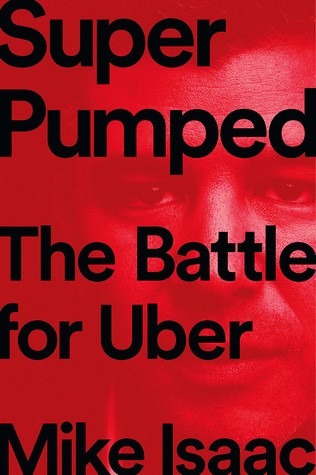
Super Pumped: The Battle for Uber by Mike Isaac is a 2019 business book about startup culture, leadership failure, silicon valley. Kalanick's 'super pumped' ethos — relentless aggression and winner-takes-all thinking — drove Uber's early growth and also created the culture of ethical shortcuts that nearly destroyed it.
Summary
Super Pumped is New York Times technology reporter Mike Isaac's account of Uber's rise from a San Francisco startup to a $70 billion company — and of the internal chaos, ethical failures, and leadership battles that nearly destroyed it. The protagonist is Travis Kalanick, Uber's co-founder and CEO, whose relentless aggression shaped the company's culture at every level and eventually made him its most serious liability.
Isaac had unparalleled access during the period and the book reads like the best kind of investigative journalism: granular, specific, and willing to let scenes speak for themselves. The account of Kalanick's management of Uber's expansion is both admiring and damning. His willingness to operate in regulatory gray zones, bully competitors and governments, and push engineers and managers past ethical limits produced enormous short-term results. It also built a culture where a senior engineer could get away with stealing trade secrets from Google, where sexual harassment complaints were suppressed, and where the board prioritized growth metrics over governance until it was nearly too late.
The book covers the full arc: the early ride-sharing insight, the brutal market-by-market expansion playbook, the surge pricing controversies, the battles with regulators and taxi companies, the Waymo lawsuit, the Susan Fowler memo, and finally the board coup that removed Kalanick in 2017. Isaac treats Kalanick as a tragic figure more than a villain — someone whose qualities that built the company were precisely the qualities that made him unable to run it responsibly at scale.
Super Pumped is primarily a business narrative rather than a strategic analysis. Readers looking for frameworks or lessons will need to draw them from the story themselves. But as an account of how startup culture can metastasize into something genuinely destructive, and how boards can fail to function as checks on founding CEOs, it is one of the more thorough journalistic treatments written about a major technology company.
Talk to Super Pumped: The Battle for Uber like its author wrote you back.
Get the ideas that fit your life — not generic summaries.
- Chat with the book
- Audiobook-style main ideas
- Adapts to your life and goals
- Helps you take action
Key takeaways
- 1.
Kalanick's 'super pumped' ethos — relentless aggression and winner-takes-all thinking — drove Uber's early growth and also created the culture of ethical shortcuts that nearly destroyed it.
- 2.
Boards that prioritize growth metrics over governance create the conditions for the problems they will eventually have to clean up. Uber's investors saw warning signs for years.
- 3.
Regulatory battles are a competitive strategy, not just a compliance problem. Uber used regulatory conflict to create political and public legitimacy for its model.
- 4.
Startup culture that celebrates rule-breaking at the product level tends to produce rule-breaking at the HR and legal level too. The same instincts don't stop at a clean boundary.
- 5.
The Susan Fowler memo demonstrated that a single, detailed, credibly-written public account can force a company to confront behavior it has spent years managing quietly.
- 6.
Trade secret litigation — the Waymo case — illustrated how fast an existential legal risk can materialize when engineers move between competing companies carrying confidential knowledge.
- 7.
A founding CEO's relationship with the board is never stable. Kalanick's removal showed that investors can and will act when reputational risk threatens their investment thesis.
- 8.
Global expansion by regulatory arbitrage works until it doesn't. What looks like a winning playbook in ten cities can collapse quickly when regulators coordinate or public opinion turns.
Discussion questions
Use these on your own, with a book club, or as chat starters in Superbook. Book club version, ready to copy or print →
- 1.
Isaac portrays Kalanick as someone whose strengths and failures were inseparable. Is there a version of Uber that succeeds without his particular brand of aggression?
- 2.
At what point should Uber's board have intervened, and what made it difficult for them to do so earlier?
- 3.
Susan Fowler published her account as a personal blog post rather than going through institutional channels. What does it mean that this was more effective?
- 4.
Uber's surge pricing created consistent controversy but also demonstrably improved driver supply. How should companies handle economically rational policies that feel unfair to customers?
- 5.
How much of Uber's culture was a product of Kalanick's personality versus a product of the incentive structures that venture capital creates?
- 6.
The 'move fast and break things' ethos is celebrated during the growth phase. Who pays the cost when things break?
- 7.
Uber's expansion playbook involved deliberately operating in jurisdictions where ride-sharing was illegal. Is that defensible, or is it simply regulatory capture dressed as disruption?
- 8.
How did Uber's employees rationalize participating in a culture they individually might have found troubling? What makes that kind of rationalization easier?
- 9.
What accountability did Uber's early investors bear for the culture they helped fund?
- 10.
The Waymo case over stolen autonomous vehicle technology illustrated how talent mobility creates legal and competitive risk. How should companies manage this?
- 11.
Isaac seems to view Kalanick with some sympathy despite cataloging his failures. Do you share that reading?
- 12.
What has changed at Uber since Kalanick's removal, and what does the company's subsequent trajectory suggest about how much culture can change after a leadership transition?
Themes
Frequently asked questions
-
Is Super Pumped worth reading?
Yes, if you're interested in Silicon Valley culture, corporate governance, or startup ethics. Isaac's access and reporting make it one of the most detailed accounts of how a major tech company actually operates — and fails — during rapid growth. It reads like a thriller with the advantage of being true.
-
How long does it take to read Super Pumped?
Around five to six hours. Isaac writes at a fast pace with short chapters. The narrative is structured chronologically and moves quickly, which makes it easy to read in long stretches.
-
What is Super Pumped about, briefly?
It's the story of Uber's rise and the leadership crisis that led to Travis Kalanick's removal as CEO in 2017. Isaac traces how Kalanick's personality shaped the company's culture and how that culture eventually produced the scandals — sexual harassment, trade secret theft, regulatory deception — that forced the board to act.
-
Is Super Pumped fair to Travis Kalanick?
It's critical but not simply hostile. Isaac presents Kalanick as a genuinely capable founder whose worst qualities were amplified by the incentives around him and by the absence of serious governance. Readers will form their own judgments about where responsibility lies.
-
Who should read Super Pumped?
Anyone interested in startup culture, corporate governance, or the ethics of growth-at-all-costs business strategy. Also recommended for investors, board members, and founders who want to understand how governance failures at the board level tend to unfold in practice.
Similar books
Bad Blood: Secrets and Lies in a Silicon Valley Startup
John Carreyrou
The Everything Store: Jeff Bezos and the Age of Amazon
Brad Stone

No Filter: The Inside Story of Instagram
Sarah Frier
Shoe Dog: A Memoir by the Creator of Nike
Phil Knight
