The 21 Irrefutable Laws of Leadership by John C. Maxwell is a 1998 business book about leadership, influence, character. Leadership is influence — nothing more, nothing less. Title and authority create only the most basic form of it.
Summary
The 21 Irrefutable Laws of Leadership is John C. Maxwell's attempt to distill the principles of effective leadership into a framework that applies across organizations, eras, and industries. Each of the twenty-one laws — from the Law of the Lid (leadership ability determines a person's level of effectiveness) to the Law of Legacy (a leader's lasting value is measured by succession) — is presented as universal, illustrated with historical examples, and accompanied by a self-assessment and application exercise.
Maxwell's central claim is that leadership is influence, nothing more and nothing less. The book's twenty-one laws are organized around that premise: how influence is built (through character, relationships, and results), how it compounds over time, how it is lost, and how the best leaders extend it by developing others. Some laws are about personal qualities — the Law of Solid Ground (trust is the foundation of leadership), the Law of Magnetism (who you are is who you attract). Others address strategic behavior — the Law of Priorities, the Law of Sacrifice, the Law of Buy-In.
The format is consistent throughout: each law gets a chapter that opens with a story, explains the principle, illustrates it with historical or business examples, and closes with application questions. Maxwell draws on figures as varied as Abraham Lincoln, Truett Cathy, and Princess Diana to illustrate his points. The approach favors accessibility over depth — each chapter is self-contained and readable in fifteen minutes, which makes the book easy to pick up and put down but less useful for extended analytical engagement.
The book became one of the best-selling leadership titles of the 1990s and has been updated twice. Its influence on corporate and church leadership development programs has been substantial. Readers who are new to thinking systematically about leadership will find the framework clarifying. Those already familiar with leadership literature may find the laws occasionally self-evident and the examples selected for confirmation rather than complexity.
Talk to The 21 Irrefutable Laws of Leadership like its author wrote you back.
Get the ideas that fit your life — not generic summaries.
- Chat with the book
- Audiobook-style main ideas
- Adapts to your life and goals
- Helps you take action
Key takeaways
- 1.
Leadership is influence — nothing more, nothing less. Title and authority create only the most basic form of it.
- 2.
The Law of the Lid: a leader's leadership ability sets a ceiling on their effectiveness and the effectiveness of everyone around them. Raising that ceiling is the work of leadership development.
- 3.
The Law of Solid Ground: trust is the foundation of leadership. When trust is damaged, influence erodes — often irreversibly.
- 4.
The Law of Magnetism: leaders attract people similar to themselves. The quality of a team reflects the character and competence of the person who leads it.
- 5.
The Law of Buy-In: people buy into the leader before they buy into the vision. A compelling goal delivered by a leader people don't trust will not move anyone.
- 6.
The Law of Sacrifice: leaders must give up to go up. Each level of leadership requires surrendering something — comfort, time, control — that worked at the previous level.
- 7.
The Law of Reproduction: only leaders can develop other leaders. Teaching leadership as a skill requires modeling it, not just describing it.
- 8.
The Law of Legacy: a leader's lasting value is measured by succession — what continues after they leave, and how many leaders they developed.
Discussion questions
Use these on your own, with a book club, or as chat starters in Superbook. Book club version, ready to copy or print →
- 1.
Maxwell argues leadership is influence and nothing else. Where does that definition feel accurate, and where does it feel incomplete?
- 2.
The Law of the Lid says your leadership ability sets a ceiling on your results. Which of the twenty-one laws feels most like your own personal lid right now?
- 3.
The Law of Magnetism says you attract people similar to yourself. Looking at the people around you, what does that suggest about your own qualities and blind spots?
- 4.
Maxwell's laws are presented as universal. Which one felt least applicable to your context, and why?
- 5.
The Law of Buy-In says people follow the leader before they follow the vision. When have you experienced a compelling vision that failed because the leader didn't have enough trust?
- 6.
The Law of Sacrifice says leaders give up to go up. What have you had to give up to grow as a leader, and what are you still reluctant to surrender?
- 7.
Maxwell uses historical examples ranging from Lincoln to corporate CEOs. Does the breadth strengthen or weaken his arguments for any particular law?
- 8.
Some laws feel like descriptions of what effective leaders do, while others feel like prescriptions for what leaders should do. Which is more useful for your development right now?
- 9.
The Law of Legacy focuses on succession. How often do the leaders you admire actually invest in developing their successors, and what gets in the way?
- 10.
Which of the twenty-one laws do you think most organizations consistently violate, and what does that cost them?
- 11.
Maxwell updated the book twice since 1998. What law do you think is missing that reflects changes in how leadership works in a remote, distributed, or algorithmically mediated workplace?
Themes
Frequently asked questions
-
Is The 21 Irrefutable Laws of Leadership still relevant?
For someone new to systematic thinking about leadership, yes. The framework is memorable and the laws cover most of the important ground. More experienced readers may find it covers familiar territory in accessible rather than rigorous terms. The 2007 updated edition adds reflection on the laws that Maxwell himself found difficult to live by, which adds useful candor.
-
How long does it take to read The 21 Irrefutable Laws of Leadership?
Around four hours. Each chapter is brief and self-contained. Many readers work through one law per day as a leadership development practice rather than reading it straight through.
-
What is the most important of Maxwell's 21 laws?
Maxwell himself points to the Law of the Lid and the Law of Solid Ground as foundational. The Lid matters because it frames the entire challenge of leadership development. Solid Ground matters because without trust, no other skill or strategy produces lasting influence.
-
Who should read The 21 Irrefutable Laws of Leadership?
Managers early in their careers, people moving into first leadership roles, and teams looking for a common framework for discussing leadership. It's widely used in corporate and nonprofit leadership development programs as a shared vocabulary text.
-
How does this compare to The 5 Levels of Leadership?
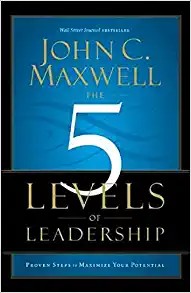
The 21 Laws is broader and more conceptual — it covers the full range of leadership principles in a list format. The 5 Levels is more diagnostic and structural — it gives you a model for assessing where you are with each person you lead. Most readers find The 5 Levels more immediately actionable.