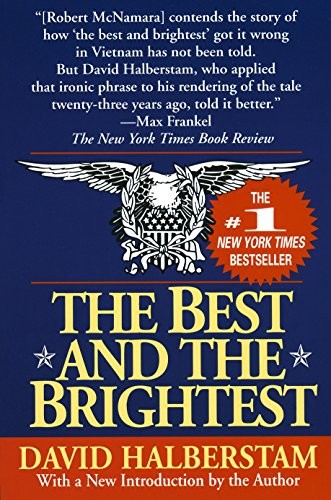
The Best and the Brightest by David Halberstam is a 1972 history book about vietnam war, hubris, technocratic governance. The Kennedy and Johnson foreign policy teams were extraordinarily talented by conventional measures. Their mutual confidence and intellectual homogeneity made them less likely to hear contrary information, not more.
Summary
David Halberstam's The Best and the Brightest, published in 1972, is both a history of American intervention in Vietnam and a study of institutional failure. The title is ironic: the men who prosecuted the Vietnam War — McNamara, Bundy, Rusk, the Rostows — were the most credentialed, most confident, and by any conventional measure most talented collection of advisors ever assembled in an American administration. Halberstam's argument is that their intelligence, confidence, and mutual reinforcement made them not more likely to succeed but more dangerous.
The book's method is biographical. Halberstam profiles each major figure at length, tracing their career paths, their intellectual formation, their institutional incentives, and the specific decisions they made. The portrait of Robert McNamara is the most extended and the most damning: a systems analyst who believed that Vietnam could be managed through quantifiable metrics, and who continued to apply quantitative frameworks to a situation that was fundamentally political and cultural. McNamara's data said the war was going well long after journalists in the field reported otherwise.
Halberstam was a New York Times reporter in Vietnam and his reporting contributed to the credibility gap between official optimism and field reality. The book draws on that experience and on years of interviews with participants. It is not a disinterested history; Halberstam's anger at the war and at the men who prosecuted it is evident throughout. That anger is also, in his view, earned — he covered the war and watched the gap between official statements and visible reality widen for years.
The book's central thesis holds up: the same intellectual confidence and institutional cohesion that made the Kennedy and Johnson administrations so impressive in public also made them resistant to information that contradicted their operating assumptions. Dissent was filtered out, doubts were suppressed, and the bureaucratic logic of escalation acquired its own momentum. The Best and the Brightest is often cited as a case study in what happens when expert consensus becomes self-reinforcing and loses contact with reality.
Talk to The Best and the Brightest like its author wrote you back.
Get the ideas that fit your life — not generic summaries.
- Chat with the book
- Audiobook-style main ideas
- Adapts to your life and goals
- Helps you take action
Key takeaways
- 1.
The Kennedy and Johnson foreign policy teams were extraordinarily talented by conventional measures. Their mutual confidence and intellectual homogeneity made them less likely to hear contrary information, not more.
- 2.
McNamara's systems-analysis approach to Vietnam produced metrics that could be optimized independently of whether the war was actually being won. The body count became the key indicator because it could be counted, not because it measured what mattered.
- 3.
The bureaucratic logic of escalation operated independently of any individual's judgment: each decision to escalate made the previous investment harder to abandon, and each escalation created new pressures for the next.
- 4.
The French defeat in Indochina in 1954 was visible precedent for American failure, but the relevant lessons were not absorbed by the American planners who succeeded them.
- 5.
Journalists in the field, including Halberstam himself, reported contradictions between official optimism and battlefield reality from the early 1960s. Their reports were dismissed as inexperienced or defeatist.
- 6.
The South Vietnamese government was fundamentally weak as a political entity and could not generate the popular legitimacy necessary to sustain a counterinsurgency. American military power could not substitute for that legitimacy.
- 7.
Kennedy's advisors brought a Cold War framework to Vietnam that assumed a global communist monolith. The reality — that the Vietnamese conflict was primarily nationalist — did not fit the framework and was therefore not fully processed.
- 8.
Halberstam argues that the same qualities that made these men impressive in Washington — confidence, articulateness, institutional dominance — made them poor at the specific task of understanding Vietnam.
Discussion questions
Use these on your own, with a book club, or as chat starters in Superbook. Book club version, ready to copy or print →
- 1.
Halberstam's title is ironic: intelligence and credentials made these men more dangerous, not less. Where else do you see expert confidence becoming a source of institutional blindness?
- 2.
McNamara's systems-analysis approach optimized for measurable variables at the expense of unmeasurable ones. Is that a failure specific to McNamara, or a structural problem with quantitative management?
- 3.
Halberstam was both a reporter covering Vietnam and the author of this history. Does his personal stake in the story strengthen or complicate the account?
- 4.
The French precedent was available and was not fully absorbed. What made American planners confident they would succeed where the French had failed?
- 5.
The bureaucratic logic of escalation — each investment making the previous one harder to abandon — operates in many institutional contexts. Where do you see it operating today?
- 6.
Dissent was filtered out of the policy process. What institutional structures would have been necessary to allow contrary views to be heard and weighed seriously?
- 7.
Halberstam profiles each major figure at length. Which portrait do you find most illuminating about how policy decisions are actually made?
- 8.
The book argues that the South Vietnamese government lacked the political legitimacy that American military power could not supply. Is that lesson still relevant to American foreign policy?
- 9.
The book was published in 1972, while the war was still ongoing. Does its proximity to events affect how you evaluate it as history?
- 10.
Kennedy's advisors operated within a Cold War framework that may have distorted their perception of specific situations. What frameworks operate similarly in current foreign policy thinking?
- 11.
Halberstam's anger at these men is evident. Does that anger damage his historical fairness, or does it reflect a legitimate moral response to the evidence?
- 12.
The 'best and the brightest' of the title have become a cultural shorthand for technocratic overconfidence. Is that lesson generalizable, or was Vietnam a specific failure with specific causes?
Themes
Frequently asked questions
-
Is The Best and the Brightest still relevant today?
Yes. Its analysis of how institutional confidence and credential-homogeneity produce policy failures applies well beyond Vietnam. The book is regularly cited in discussions of expert consensus, bureaucratic inertia, and the gap between elite assumptions and ground reality.
-
How long does it take to read The Best and the Brightest?
About 700 pages, roughly 25-28 hours at average pace. The book is dense with biographical detail in its early sections and gains narrative momentum as the escalation sequences unfold.
-
Is Halberstam's account of Vietnam reliable history?
It is deeply researched and draws on extensive interviews with participants. It is also explicitly a work of argument rather than neutral chronicle, and Halberstam's antipathy toward the war shapes what he emphasizes. Academic historians use it but note its rhetorical edge.
-
Do I need to know the Vietnam War's military history to read this book?
No. Halberstam is focused on decision-making in Washington rather than battlefield events. Basic familiarity with the war's arc helps, but the book is primarily about the men who made the decisions, not the soldiers who executed them.
-
Who should read The Best and the Brightest?
Readers interested in how governments make bad decisions, in Cold War American foreign policy, and in the sociology of elite institutions. It is also valuable for anyone studying how quantitative management approaches can fail when applied to fundamentally political problems.
Similar books

Master of the Senate: The Years of Lyndon Johnson, Volume III
Robert A. Caro
Means of Ascent: The Years of Lyndon Johnson, Volume II
Robert A. Caro
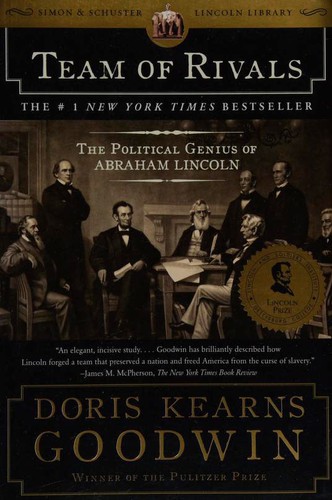
Team of Rivals: The Political Genius of Abraham Lincoln
Doris Kearns Goodwin
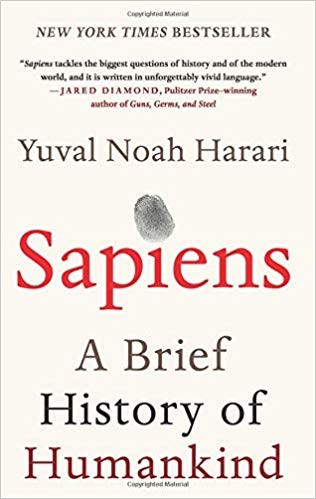
Sapiens: A Brief History of Humankind
Yuval Noah Harari
