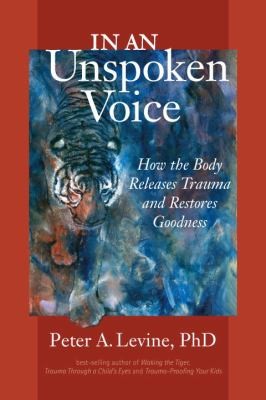
In an Unspoken Voice: How the Body Releases Trauma and Restores Goodness by Peter A. Levine is a 2010 psychology book about trauma, nervous system, somatic therapy. Trauma lives in the nervous system, not primarily in memory or narrative. Its symptoms are physiological: hyperarousal, numbness, chronic vigilance, and disrupted body sensation.
Summary
Peter Levine's central claim is that trauma is not primarily a psychological wound but a physiological one. When the body encounters extreme threat, it mobilizes a survival response — fight, flight, or freeze. In healthy recovery, that response completes and the nervous system discharges the mobilized energy. In traumatic injury, the cycle is interrupted: the energy stays locked in the body, producing the symptoms of post-traumatic stress through physiological dysregulation rather than through stored memory alone. In an Unspoken Voice is both an account of this mechanism and a manual for working with it.
Levine draws on ethology, neuroscience, and decades of clinical practice to argue that animals in the wild rarely develop chronic post-traumatic stress because they allow their bodies to complete the interrupted freeze response. Prey animals shake and tremble after escaping a predator; the trembling discharges the undischarged survival energy. Humans, by contrast, suppress bodily sensation, shame the shaking, and thereby trap the energy in chronic activation. His therapeutic approach, Somatic Experiencing, works by guiding clients to track and release physical sensations associated with traumatic memory, completing the arrested cycle without requiring prolonged verbal processing of events.
The book includes Levine's own experience of being hit by a car, which he used as a real-time laboratory for the principles he describes. This narrative grounds the theory in first-person phenomenology and makes the account more persuasive than abstract case studies alone. He walks through the sensory stages of the shock response with precision — the high-definition clarity, the narrowing of attention, the sense of time slowing — and shows how each stage corresponds to a survival function.
The book is dense and rewards slow reading. It is written for clinicians as much as general readers, and the theoretical sections assume some familiarity with neuroscience and somatic work. Readers who come to it from Levine's earlier Waking the Tiger will find a more rigorous and comprehensive version of the same argument. The clinical framework is well developed, but the evidence base for Somatic Experiencing as a formal treatment is still maturing, and readers should weigh enthusiasm against the limits of the current research.
Talk to In an Unspoken Voice: How the Body Releases Trauma and Restores Goodness like its author wrote you back.
Get the ideas that fit your life — not generic summaries.
- Chat with the book
- Audiobook-style main ideas
- Adapts to your life and goals
- Helps you take action
Key takeaways
- 1.
Trauma lives in the nervous system, not primarily in memory or narrative. Its symptoms are physiological: hyperarousal, numbness, chronic vigilance, and disrupted body sensation.
- 2.
Animals in the wild rarely develop chronic post-traumatic stress because they complete the interrupted freeze response through involuntary shaking and trembling.
- 3.
Humans suppress and shame bodily discharge responses, trapping survival energy in the nervous system and converting short-term adaptation into long-term dysregulation.
- 4.
Somatic Experiencing works by guiding attention to body sensations associated with traumatic memory, allowing the arrested survival response to complete without requiring full verbal re-processing of events.
- 5.
The freeze response is not passivity but maximal engagement: the body mobilizes enormous energy for action and then inhibits it simultaneously, creating the paralysis and dissociation of the trauma response.
- 6.
Healing requires tracking the body's sensory experience in small, titrated doses — pendulating between activation and discharge — rather than sustained exposure to traumatic material.
- 7.
The therapeutic relationship is itself a co-regulatory system. Trauma dysregulates the nervous system and healing involves the gradual restoration of nervous system regulation, often through another regulated presence.
- 8.
Levine's own car accident offers a first-person account of survival response activation. The sensory experience of shock — heightened clarity, time distortion, automatic animal movements — matches the ethological and neuroscientific model precisely.
Discussion questions
Use these on your own, with a book club, or as chat starters in Superbook.
- 1.
Levine argues that trauma is physiological before it is psychological. Does this reframe how you understand symptoms like anxiety, numbness, or chronic pain?
- 2.
The book describes how animals discharge trauma through shaking and trembling that humans typically suppress. When have you noticed the impulse to shake or tremble and suppressed it?
- 3.
Somatic Experiencing works with sensation rather than narrative. What would it mean to work with a difficult experience without having to tell its story?
- 4.
Levine uses his own car accident to illustrate the survival response. What did he notice about his own body's automatic reactions that you found most surprising?
- 5.
The freeze response is described as mobilization plus inhibition simultaneously. Does this account of freeze as active rather than passive change how you interpret past moments of paralysis?
- 6.
The book distinguishes traumatic stress from ordinary stress. What criteria does Levine use, and how useful are they for understanding your own responses?
- 7.
Levine argues that effective trauma work requires titration — small doses of activation followed by discharge. How does this contrast with exposure-based therapies, and what are the tradeoffs?
- 8.
The therapeutic relationship is described as a co-regulatory system. What does this suggest about why the quality of that relationship matters so much in trauma treatment?
- 9.
How do social and cultural norms around emotional expression shape which groups are more likely to develop chronic post-traumatic symptoms?
- 10.
The book draws heavily on animal behavior. How useful do you find the ethological comparisons, and where do they start to obscure specifically human dimensions of trauma?
- 11.
Levine suggests that the body contains its own healing intelligence. What evidence from your own experience either supports or challenges that claim?
- 12.
If you were recommending this book to someone unfamiliar with somatic work, what would you tell them to expect, and what are its limits?
Themes
Frequently asked questions
-
How does this book differ from The Body Keeps the Score?
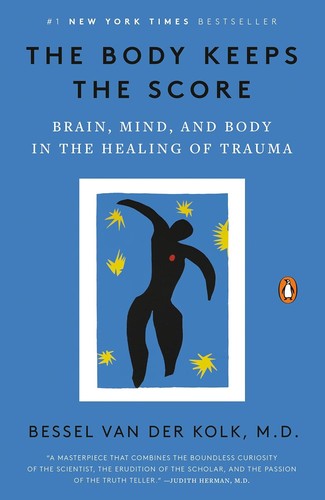
Bessel van der Kolk's book is a broader survey of trauma treatment modalities including EMDR, yoga, and theater. Levine's book is a deeper dive into one specific somatic approach — Somatic Experiencing — with more technical detail about the nervous system mechanisms involved. Van der Kolk is better as an introduction; Levine is better for clinical or theoretical depth.
-
Is In an Unspoken Voice worth reading?
Yes, especially for clinicians, therapists, and people with a professional interest in somatic approaches to trauma. For general readers, Waking the Tiger may be a more accessible starting point. The book is dense but rewards careful reading.
-
What is Somatic Experiencing?
A body-oriented approach to trauma treatment that focuses on tracking physical sensations associated with traumatic memory rather than on verbal processing of events. The goal is to allow the arrested survival response — the interrupted fight-or-flight cycle — to complete and discharge, restoring nervous system regulation.
-
Who should read this book?
Clinicians and therapists who work with trauma, and anyone seeking a deeper physiological understanding of post-traumatic stress. Survivors of trauma who want to understand their symptoms from a body-centered perspective may also find it valuable, though working with a trained practitioner is advisable.
-
What is the strongest criticism of Levine's approach?
The evidence base for Somatic Experiencing as a formally validated treatment is less established than for EMDR or trauma-focused CBT. Levine draws on compelling theory and case studies, but randomized controlled trials supporting the approach are limited compared to other trauma therapies.