History · Book club
The Captive Mind book club questions
Here are 12 book club questions for The Captive Mind by Czesław Miłosz, ordered to open easily and end somewhere worth arguing about. Copy them, print them, or bring them up one at a time.
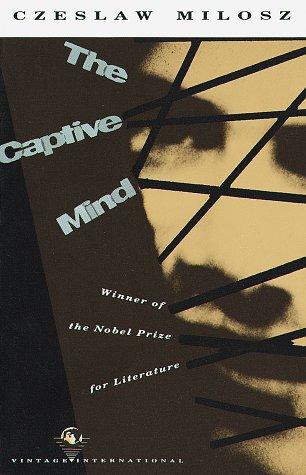
The Captive Mind is Czesław Miłosz's study of how intellectuals living under Soviet-imposed communism in postwar Eastern Europe came to accommodate, justify, and eventually internalize the ideology they had initially resisted.
Czesław Miłosz · 1953 · 5h 0m
Full summary and key takeaways →The 12 questions
- 1.
Miłosz describes the appeal of a total system that explains everything and assigns everyone a role. Have you encountered a secular or political equivalent of this appeal in your own environment?
- 2.
The concept of Ketman describes the practice of public performance and private reservation. Is this always a form of corruption, or are there circumstances in which it is a legitimate survival strategy?
- 3.
Miłosz's four portraits show talented people reasoning themselves into collaboration. Which of the four paths toward accommodation do you find most psychologically recognizable?
- 4.
Miłosz argues that accommodation is rarely a single act of cowardice but a sequence of reasonable-seeming small steps. Can you identify a domain in your own experience — workplace, institution, community — where this dynamic operates?
- 5.
The book was written in the early 1950s about Eastern Europe under Stalinism. Which of its observations do you think are specific to that context, and which describe something more general about ideology and the intellectual?
- 6.
Miłosz suggests that the pill of Murti-Bing — the peace that comes from surrendering independent thought — has genuine attractions. What does this say about human psychology and the burden of intellectual freedom?
- 7.
How should we evaluate writers and artists who produced work under totalitarian conditions, some of which served the regime? Does the quality of the work change the moral assessment?
- 8.
Miłosz was himself a diplomat and cultural official for the new Polish government before he defected. Does his insider knowledge make The Captive Mind more or less credible? Does his own prior accommodation matter for how we read his analysis?
- 9.
The book describes a situation in which telling the truth publicly is impossible. What forms of truth-telling remain available when direct speech is foreclosed?
- 10.
Western intellectuals in the 1950s were often skeptical of anti-communist accounts from Eastern Europe. Miłosz addresses this skepticism. How do we calibrate our response to accounts of ideological oppression that come from those who left?
- 11.
Miłosz argues that Eastern Europeans had an insight into totalitarianism that Westerners lacked. Is this kind of experiential knowledge transferable through reading and study, or does it require having lived under the conditions?
- 12.
The Captive Mind was written over seventy years ago. Which of its arguments feel most alive to contemporary politics, and which feel most dated?
How to run the discussion
- Pick six to eight, not all of them. An hour of real discussion covers fewer questions than anyone expects, and racing the list is what makes a book club feel like homework.
- Open with what people noticed, not what they concluded. Asking for a verdict first hardens opinions before anyone has heard each other.
- Let the disagreement run. The questions below that split a room are the ones worth the time; the ones everyone answers the same way can be skipped.
- Ask the quiet person a specific question. A direct, narrow question is far easier to answer than an open invitation to contribute.
Themes worth steering toward
If the conversation stalls, these are the threads that usually restart it.
Common questions
What are good book club questions for The Captive Mind?
Here are 12 book club questions for The Captive Mind by Czesław Miłosz, ordered to open easily and end somewhere worth arguing about. The strongest openers ask what each reader noticed rather than what they concluded, and the discussion usually turns on totalitarianism, ideology, intellectual compromise.
How long should a book club discussion of The Captive Mind last?
Most groups run 60 to 90 minutes of actual discussion. That is roughly six to eight questions, not all of them, so pick the ones that suit your group rather than working down the list in order.
What are the main themes in The Captive Mind?
Totalitarianism, Ideology, Intellectual compromise, Conformity, Freedom. Those are the threads most likely to divide a room, which makes them the useful places to steer a discussion that has gone quiet.
Picking the next one? See books like The Captive Mind or questions for other book club picks.
