Health · Book club
The Case Against Sugar book club questions
Here are 12 book club questions for The Case Against Sugar by Gary Taubes, ordered to open easily and end somewhere worth arguing about. Copy them, print them, or bring them up one at a time.
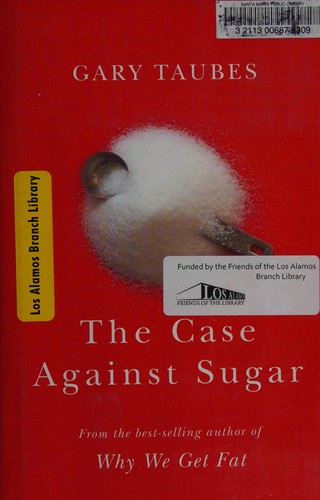
The Case Against Sugar is Gary Taubes's focused argument that sugar — sucrose and high-fructose corn syrup specifically — is the primary cause of the obesity and diabetes epidemics, and the likely driver of the cluster of diseases, from heart disease to Alzheimer's, that researchers now associate with insulin resistance and metabolic syndrome.
Gary Taubes · 2016 · 6h 40m
Full summary and key takeaways →The 12 questions
- 1.
Taubes argues sugar is uniquely harmful in a way that other calorie sources are not. How does that change how you think about the idea that 'a calorie is a calorie'?
- 2.
He cites the sugar industry's deliberate funding of misleading research as a reason to distrust the public health consensus on fat. How much should industry-funded research discount your confidence in dietary guidelines?
- 3.
Chronic, moderate sugar consumption — not occasional binges — is the behavior Taubes indicts. How does your own daily sugar intake compare to historical averages?
- 4.
The book draws a parallel to tobacco: the industry knew the product was harmful and actively funded confusion. Is that comparison fair? What are the disanalogies?
- 5.
Taubes is careful to say he is making a causal hypothesis rather than proving causation. Is that epistemic honesty reassuring or does it undermine the book's prescriptive value?
- 6.
Fructose from whole fruit comes with fiber, vitamins, and phytochemicals that likely modulate its metabolic effects. Does the book adequately distinguish whole-fruit sugar from added sugar?
- 7.
If you significantly reduced added sugar in your diet, what would be the hardest thing to give up? What would that tell you about your relationship with sugar?
- 8.
Sugar is in most processed foods, including bread, sauces, and foods not perceived as sweet. How practical is Taubes's prescription for people who rely on processed food for convenience or cost?
- 9.
He covers the physiological addiction potential of sugar. How does that change your understanding of why reducing sugar is difficult?
- 10.
Public health campaigns have focused on obesity and calories while largely ignoring sugar as a specific toxin. If Taubes is right, what should a better public health campaign look like?
- 11.
Taubes argues that the advice to eat less and exercise more has failed because it doesn't address sugar's metabolic effects. Does that explain the failure of weight loss efforts you've observed?
- 12.
After reading the book, have you changed your view on any specific food or drink? What would it take to act on that change?
How to run the discussion
- Pick six to eight, not all of them. An hour of real discussion covers fewer questions than anyone expects, and racing the list is what makes a book club feel like homework.
- Open with what people noticed, not what they concluded. Asking for a verdict first hardens opinions before anyone has heard each other.
- Let the disagreement run. The questions below that split a room are the ones worth the time; the ones everyone answers the same way can be skipped.
- Ask the quiet person a specific question. A direct, narrow question is far easier to answer than an open invitation to contribute.
Themes worth steering toward
If the conversation stalls, these are the threads that usually restart it.
Common questions
What are good book club questions for The Case Against Sugar?
Here are 12 book club questions for The Case Against Sugar by Gary Taubes, ordered to open easily and end somewhere worth arguing about. The strongest openers ask what each reader noticed rather than what they concluded, and the discussion usually turns on sugar, obesity, food industry.
How long should a book club discussion of The Case Against Sugar last?
Most groups run 60 to 90 minutes of actual discussion. That is roughly six to eight questions, not all of them, so pick the ones that suit your group rather than working down the list in order.
What are the main themes in The Case Against Sugar?
Sugar, Obesity, Food industry, Public health, Metabolic disease. Those are the threads most likely to divide a room, which makes them the useful places to steer a discussion that has gone quiet.
Picking the next one? See books like The Case Against Sugar or questions for other book club picks.
