A Crack in Creation: Gene Editing and the Unthinkable Power to Control Evolution by Jennifer A. Doudna and Samuel H. Sternberg is a 2017 science book about gene editing, crispr, bioethics. CRISPR-Cas9 is a bacterial immune mechanism repurposed as a molecular scissors that can cut any DNA sequence with high precision — cheaper and simpler than any previous editing technique.
Summary
A Crack in Creation is Jennifer Doudna and Samuel Sternberg's account of how CRISPR-Cas9 works, what it can do, and why its possibilities should give everyone pause. Doudna is one of the scientists who developed the technology into a practical gene-editing tool; the book is part science explanation, part memoir, and part ethical reckoning from someone who helped create something whose implications she found troubling enough to call for a public moratorium.
The first half is a lucid account of CRISPR's molecular mechanism. CRISPR stands for clustered regularly interspaced short palindromic repeats — sequences in bacterial DNA that store fragments of viral DNA as a kind of immunological memory. The Cas9 protein acts as molecular scissors, guided by a short RNA molecule to cut a specific location in the genome. Doudna and Charpentier adapted this system into a tool for editing the genomes of plants, animals, and human cells with a precision and speed no previous technique matched. The result transformed a laborious, expensive process into something any well-equipped graduate student could learn.
The second half is about consequences. Doudna surveys the already-active applications: correcting single-gene disorders like sickle cell disease and cystic fibrosis, improving crop yields, eliminating disease-carrying mosquitoes through gene drives, and early-stage cancer therapies. Each possibility carries its own risk profile. Gene drives could alter entire wild populations. Human germline editing would produce heritable changes with effects we can't fully predict. Enhancement applications — editing for intelligence or athletic ability — raise questions about access, equity, and what we mean by a normal human life.
What makes the book distinctive is Doudna's willingness to name her own anxiety. She describes a dream in which she teaches CRISPR to a figure who turns out to be Adolf Hitler. The dream is not an argument, but it captures a genuine discomfort about the gap between scientific capability and societal readiness. The book is an invitation to a conversation that most people have not yet started.
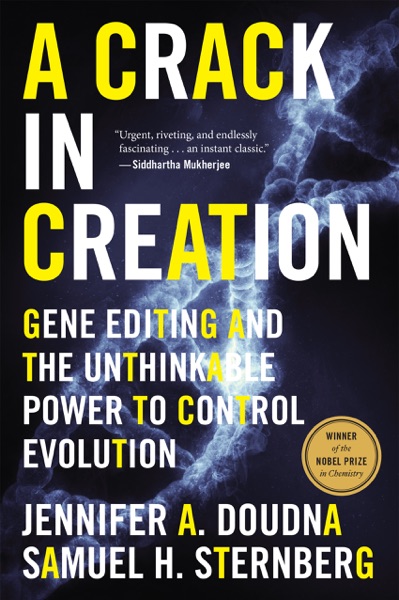
Talk to A Crack in Creation: Gene Editing and the Unthinkable Power to Control Evolution like its author wrote you back.
Get the ideas that fit your life — not generic summaries.
- Chat with the book
- Audiobook-style main ideas
- Adapts to your life and goals
- Helps you take action
Key takeaways
- 1.
CRISPR-Cas9 is a bacterial immune mechanism repurposed as a molecular scissors that can cut any DNA sequence with high precision — cheaper and simpler than any previous editing technique.
- 2.
The technology has already entered clinical trials for sickle cell disease, certain cancers, and inherited blindness, with results that suggest it will become a routine medical tool.
- 3.
Gene drives can spread a CRISPR modification through an entire wild population within a few generations, raising ecological risks that are qualitatively different from other genetic interventions.
- 4.
Germline editing — modifying embryos, eggs, or sperm — produces heritable changes affecting all future descendants of the modified individual, raising the stakes of any error or misuse.
- 5.
Doudna and other CRISPR pioneers called for a voluntary moratorium on certain applications in 2015, arguing that science had outrun societal debate and governance.
- 6.
The line between therapy and enhancement is blurrier in practice than in principle: correcting a mutation that causes disease is different from editing for traits associated with advantage, but the boundary shifts with context.
- 7.
Access and equity are central ethical issues: if CRISPR therapies remain expensive, they will deepen existing health inequalities rather than correct them.
- 8.
The book argues for broad public engagement with CRISPR decisions, not because scientists are unwilling to self-govern but because the questions involved are not just scientific.
Discussion questions
Use these on your own, with a book club, or as chat starters in Superbook. Book club version, ready to copy or print →
- 1.
Doudna describes calling for a moratorium on germline editing research she helped create. How do you evaluate that decision — too cautious, not cautious enough, or roughly right?
- 2.
If gene editing could reliably eliminate a heritable disease from a family line, do you think parents would have a moral obligation to pursue it, or purely an option?
- 3.
Gene drives could eliminate mosquito species that carry malaria. What ethical weight, if any, should the interests of a disease-vector species carry in that calculation?
- 4.
The book argues that access to CRISPR therapies is partly a justice issue. How should societies handle expensive life-changing technologies that only the wealthy can initially afford?
- 5.
Doudna's dream about Hitler illustrates the anxiety that the technology could be misused by bad actors. How realistic is that fear, and does it justify any current restriction?
- 6.
Where would you personally draw the line between acceptable therapeutic editing and unacceptable enhancement editing? Is that line stable or does it shift when you consider specific cases?
- 7.
The book was published in 2017. How does knowing what happened with He Jiankui in 2018 change how you read its cautious optimism?
- 8.
Doudna and Sternberg coauthored this book but Doudna's first-person voice dominates. Does the dual authorship affect how you read its authority?
- 9.
How much should the public understand about CRISPR before these decisions are made? And what would adequate public engagement even look like?
- 10.
The book discusses CRISPR agriculture — editing crops to resist disease or drought. Do the ethical frameworks around human editing apply to plants, or are they entirely different?
- 11.
Doudna mentions that the competitive race to publish and patent CRISPR discoveries created pressures that complicated the science. What does that say about how academic incentives interact with responsible research?
- 12.
What is the most important thing you think governments should do in response to CRISPR, based on what this book covers?
Themes
Frequently asked questions
-
Who should read A Crack in Creation?
Anyone wanting to understand CRISPR from one of its inventors — the science, its applications, and the ethical concerns. It is accessible enough for general readers but honest about complexity. Particularly useful for anyone following debates about gene therapy, genetic disease, or bioethics.
-
How does A Crack in Creation compare to The Code Breaker?
A Crack in Creation is written by Doudna herself and goes deeper into the molecular biology. The Code Breaker is Isaacson's biography of Doudna and is more narrative and character-driven. If you want science and ethics from the source, start here. For context and competitive drama, read both.
-
Is the science in the book accessible to non-scientists?
Mostly yes. Doudna and Sternberg explain CRISPR from first principles using clear analogies. Some sections require sustained attention, but no prior biology background is needed.
-
What does Doudna actually think should happen with germline editing?
She argues against premature clinical application of germline editing — changes to heritable human DNA — until safety and governance issues are resolved. She is not categorically opposed to it but wants the scientific and public conversation to happen before it is widely used.
-
How long does it take to read A Crack in Creation?
Around five to six hours. At 281 pages it is one of the shorter books on CRISPR. The first half on the science reads slowly for non-biologists; the ethics sections are faster and more narrative.
Similar books
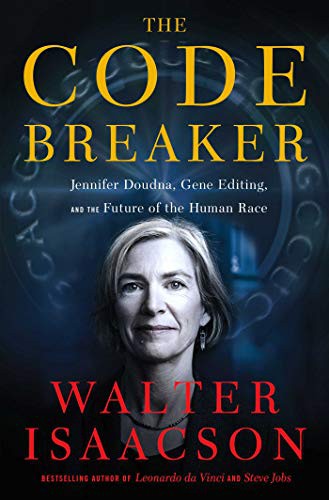
The Code Breaker: Jennifer Doudna, Gene Editing, and the Future of the Human Race
Walter Isaacson
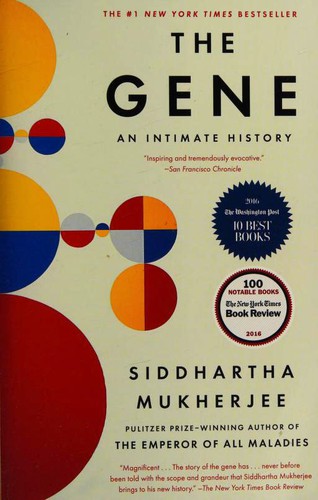
The Gene: An Intimate History
Siddhartha Mukherjee
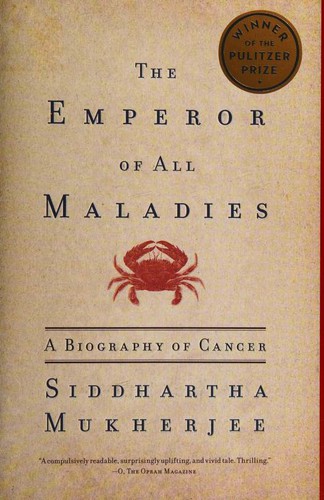
The Emperor of All Maladies: A Biography of Cancer
Siddhartha Mukherjee
The Song of the Cell
Siddhartha Mukherjee
