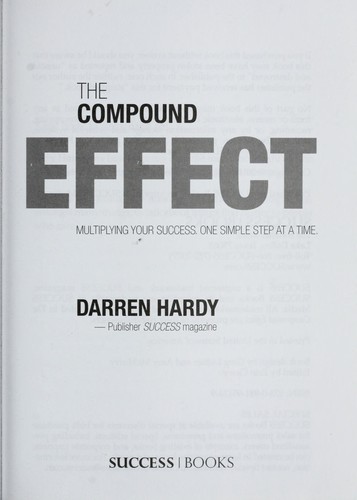
The Compound Effect by Darren Hardy is a 2010 self-help book about habits, consistency, personal development. Small consistent actions compound into large results over time. The mechanism is the same as compound interest: growth accelerates as it builds on previous growth.
Summary
The Compound Effect is Darren Hardy's distillation of the principle he believes underlies all lasting success: small, consistent actions compounding over time produce outsized results. The title is an extension of the familiar compound interest metaphor — just as money invested at compound interest grows exponentially rather than linearly, small daily improvements in behavior accumulate nonlinearly over years.
Hardy was the publisher of Success Magazine for many years and the book reflects the practical, case-study-driven style of that audience. He argues that the primary reason people fail at self-improvement is not lack of knowledge or effort but inconsistency — the inability to sustain small actions long enough for the compounding to become visible. He calls the period before compounding becomes apparent the "boring phase," and argues that most people quit in this phase because they can't see results yet.
The book covers four mechanisms for making the Compound Effect work in practice. Choices: every choice is either a compounding deposit or a withdrawal, and awareness of this transforms mundane decisions. Habits: the automation of good choices through routines reduces the willpower cost of consistency. Momentum: once consistent action produces enough momentum, maintaining it takes less energy than starting it. Influences: the people and media you expose yourself to are compounding inputs that shape your behavior and aspirations over time.
Hardy's writing is motivational in the Success Magazine tradition — accessible, example-rich, and optimistic. The book does not break new theoretical ground but presents familiar compound-growth ideas with enough practical specificity to be actionable. Most readers finish it in a single day and describe it as a good reminder rather than a revelation.
Talk to The Compound Effect like its author wrote you back.
Get the ideas that fit your life — not generic summaries.
- Chat with the book
- Audiobook-style main ideas
- Adapts to your life and goals
- Helps you take action
Key takeaways
- 1.
Small consistent actions compound into large results over time. The mechanism is the same as compound interest: growth accelerates as it builds on previous growth.
- 2.
The boring phase — the period before compounding becomes visible — is where most people quit. Trusting the process through this phase is the primary discipline required.
- 3.
Every choice is either a deposit or a withdrawal in your compounding account. Awareness of this reframes mundane decisions as consequential investments.
- 4.
Habits automate good choices, reducing the daily willpower cost of consistent behavior. The goal is to make your best actions the path of least resistance.
- 5.
Momentum is real: it takes more energy to start than to maintain consistent action. Once you have momentum, protecting it is easier than rebuilding it from zero.
- 6.
The people you spend time with are a compounding influence. Their standards, ambitions, and behaviors shape yours over time, for better or worse.
- 7.
Media inputs compound: what you consume — news, entertainment, social media — shapes your thinking, aspirations, and sense of what's normal. Curating inputs is a compounding strategy.
- 8.
Tracking behavior creates awareness that precedes change. You cannot improve what you don't monitor, and starting to track often reveals patterns invisible before.
Discussion questions
Use these on your own, with a book club, or as chat starters in Superbook. Book club version, ready to copy or print →
- 1.
Hardy argues that consistency through the boring phase — before compounding is visible — is the primary discipline required. Where in your life are you in the boring phase right now?
- 2.
Think of a small daily action you've sustained for more than a year. What did it compound into? Could you have predicted that result when you started?
- 3.
What choices do you make daily that are compounding withdrawals — small negative habits that accumulate in the wrong direction?
- 4.
He argues that the people you spend time with are a compounding influence. Look honestly at your five closest relationships. What are they compounding in you?
- 5.
What media inputs are you compounding that are not serving the direction you want to go?
- 6.
Hardy's compound effect premise requires trusting a long time horizon. How comfortable are you with investing in actions that won't produce visible results for months or years?
- 7.
Habit automation reduces willpower cost. What is one behavior you want to automate — to make so habitual it requires no decision — that is currently requiring active effort every time?
- 8.
The book argues that awareness of choices — tracking them as deposits or withdrawals — transforms mundane decisions. What would you learn if you tracked your choices for one week through this lens?
- 9.
Hardy covers momentum: consistent action builds inertia that makes continuing easier than stopping. Where in your life are you currently making things harder for yourself by stopping and restarting?
- 10.
What is the most important area of your life where you have stopped tracking because the results felt too slow to justify the effort?
- 11.
If you identified one small daily action that would compound most significantly over the next five years, what would it be?
Themes
Frequently asked questions
-
Is The Compound Effect worth reading?
Yes if you want a clear, example-driven presentation of how small consistent habits produce large outcomes over time. The book doesn't break new theoretical ground — the compound growth idea appears in Atomic Habits and many other places — but it presents it accessibly and motivationally. If you've already read Atomic Habits, much of the core content will be familiar.
-
How long does it take to read The Compound Effect?
About three hours. The book is organized around the core principle with chapters covering habits, choices, momentum, and influences. It reads quickly.
-
What is the main idea of The Compound Effect?
Small, consistent daily actions compound over time just as money compounds with interest. The primary challenge is maintaining consistency through the long period before compounding produces visible results.
-
Who should read The Compound Effect?
People who are impatient with their progress on long-term goals and need a reframe on why consistency over time is more important than intensity in the short term. Also good for people who want a shorter, more direct companion to Atomic Habits.
-
How does The Compound Effect compare to The Slight Edge?
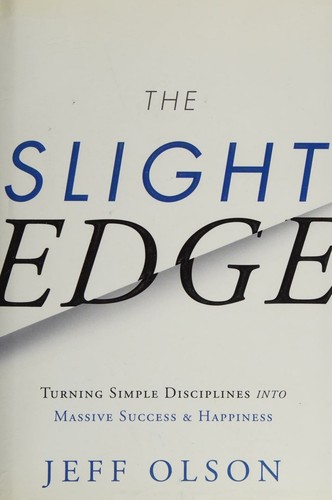
Both are based on the same core idea — small consistent actions compound into large results. The Compound Effect is more practical and structured; The Slight Edge is more philosophical and narrative-driven. Reading either will give you the core insight; reading both is somewhat redundant.
Similar books
The Compound Effect vs.
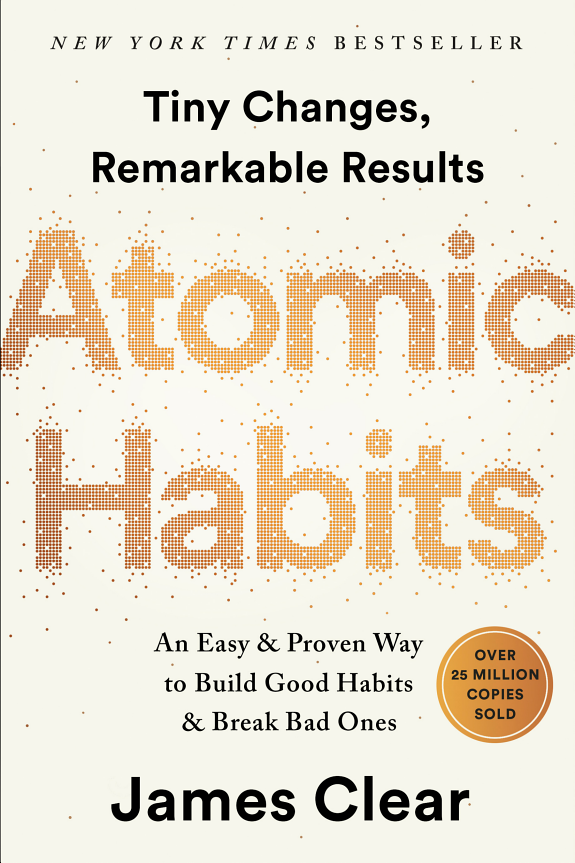
Deciding between two books? The Compound Effect vs Atomic Habits .
