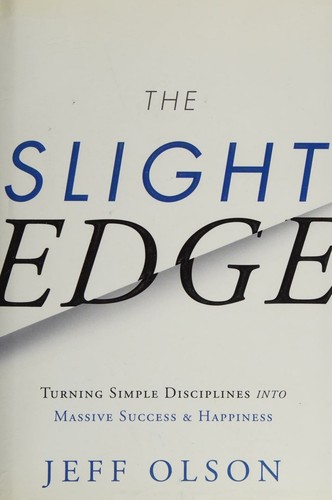
The Slight Edge by Jeff Olson is a 2005 self-help book about habits, consistency, personal development. The Slight Edge is the compounding advantage produced by doing small, easy things consistently over time. The actions are easy to do and equally easy not to do — the discipline is choosing to do them anyway.
Summary
The Slight Edge is Jeff Olson's philosophical account of why some people succeed over time while others don't — and his answer is not talent, intelligence, or opportunity but the daily practice of small, easy actions. Olson's core observation is that the actions that produce extraordinary results over time are simple, accessible, and easy to do. The problem is that they are equally easy not to do. And because they seem so small and the results are so distant, most people don't do them consistently.
This is the Slight Edge: the gap between the person who does the small things daily and the person who doesn't. The gap is invisible in the moment — a single day's difference between reading ten pages and watching television is negligible. But compounded over five years, it is the difference between a significantly different body of knowledge and capability. The trajectory that looks flat in the short term becomes dramatically different in the long term.
Olson grounds the book in the philosophy of continuous learning and daily investment. He argues that successful people read consistently, learn consistently, exercise consistently, and practice their craft consistently — not heroically but habitually. The daily practice is always easy to skip. The philosophy of the Slight Edge says you develop the discipline to not skip it not through willpower but through awareness of the compounding consequence.
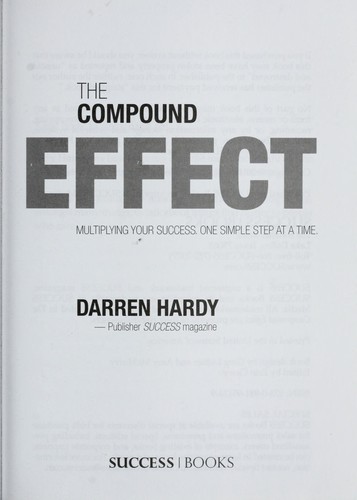
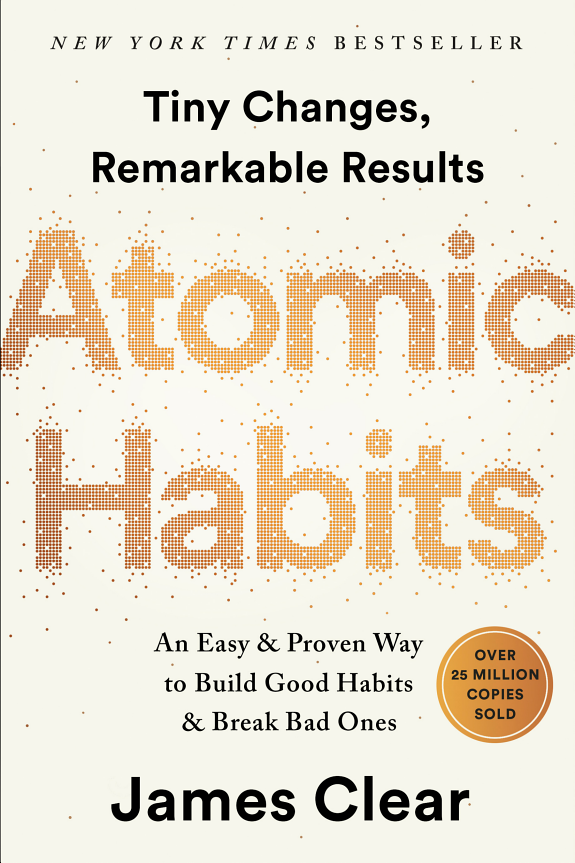
The book is more philosophical and narrative-driven than most habit books. It is less tactical than Atomic Habits or The Compound Effect and more focused on shifting your understanding of how success works. Some readers find it redundant after the core idea is established; others find the philosophical padding sustaining.
Talk to The Slight Edge like its author wrote you back.
Get the ideas that fit your life — not generic summaries.
- Chat with the book
- Audiobook-style main ideas
- Adapts to your life and goals
- Helps you take action
Key takeaways
- 1.
The Slight Edge is the compounding advantage produced by doing small, easy things consistently over time. The actions are easy to do and equally easy not to do — the discipline is choosing to do them anyway.
- 2.
Success and failure are both built from simple daily disciplines, repeated consistently over time. There is no dramatic turning point; there are only daily choices that eventually become visible as trajectories.
- 3.
The activities that produce the most long-term value are the easiest to skip in the short term — they seem too small to matter today. This is the trap: they never seem to matter today, but they always do eventually.
- 4.
The positive side of the Slight Edge works just as its negative side does: consistently good inputs compound into dramatically better outcomes; consistently poor inputs compound in the other direction.
- 5.
Creating a philosophy of success requires understanding how time and consistent action interact. Short-term thinking is the primary obstacle to long-term success.
- 6.
Continuous learning — reading, studying, developing — is the most reliable long-term investment available. Most successful people read consistently; most unsuccessful people don't.
- 7.
Mastery requires making the same small investments in your craft, your knowledge, and your relationships daily for long enough that compounding becomes visible.
- 8.
The failure curve and the success curve both start in the same place and look similar for a long time. The divergence becomes visible only after the compounding has run long enough.
Discussion questions
Use these on your own, with a book club, or as chat starters in Superbook. Book club version, ready to copy or print →
- 1.
Olson's central observation is that the actions that produce extraordinary results are easy to do but equally easy not to do. What small daily action in your most important area are you most consistently skipping?
- 2.
The book argues that success and failure both feel similar in the short term. Where in your life is a small daily choice compounding in a direction you haven't fully examined?
- 3.
Think of someone in your life who models the Slight Edge — who does small consistent things that add up to extraordinary results over time. What specifically do they do?
- 4.
Olson says reading consistently is the most reliable long-term investment available. How much do you read per year? What would adding one more book per month compound into over five years?
- 5.
Where in your life are you expecting dramatic results from sporadic effort rather than consistent compounding from daily discipline?
- 6.
The Slight Edge works negatively as well as positively. What daily inputs — food, media, habits, relationships — are compounding in a direction you'd rather they didn't?
- 7.
Olson's philosophy is essentially anti-impatience: accepting that results will be invisible for a long time is the required disposition. How patient are you with your most important long-term efforts?
- 8.
He argues that the choice to start, stop, or continue a daily discipline seems trivially small in the moment but enormous over time. Do you actually believe that? What would it take to behave as if you did?
- 9.
What is the Slight Edge advantage you want to build over the next five years? What daily action would build it?
- 10.
How does the Slight Edge philosophy change how you think about failure? If failure is the accumulation of easy choices not made, what does that imply about recovery from failure?
- 11.
The book is more philosophical than tactical. Does that format serve the content? Would more specific guidance make it more or less useful?
Themes
Frequently asked questions
-
Is The Slight Edge worth reading?
Yes if you want a philosophical grounding in the compound effect of daily habits. It is less tactical than Atomic Habits and covers similar territory to The Compound Effect. Its value is in the philosophical framing — helping you understand why consistency matters before giving you techniques for maintaining it.
-
How long does it take to read The Slight Edge?
About three to four hours. The book is organized philosophically rather than tactically, with extended discussion of the compounding principle before practical application. Some readers find the philosophical sections repetitive.
-
What is the main idea of The Slight Edge?
Small, easy daily actions compound into extraordinary results over time. The same principle works in both directions — for success and failure. The challenge is that these actions always seem too small to matter today, which is why most people don't do them consistently.
-
How does The Slight Edge differ from Atomic Habits?
Atomic Habits provides specific mechanisms and techniques for building habits — cues, rewards, friction reduction. The Slight Edge is more philosophical, focused on why consistent small actions matter rather than how to build the habits. Read The Slight Edge for the why; Atomic Habits for the how.
-
Who should read The Slight Edge?
People who are impatient with their progress and quit before compounding becomes visible. Also useful for people who want to understand the philosophy behind consistent daily discipline before they commit to building specific habits.