Talk to The Design of Everyday Things like its author wrote you back.
Get the ideas that fit your life — not generic summaries.
- Chat with the book
- Audiobook-style main ideas
- Adapts to your life and goals
- Helps you take action
The Design of Everyday Things, in detail
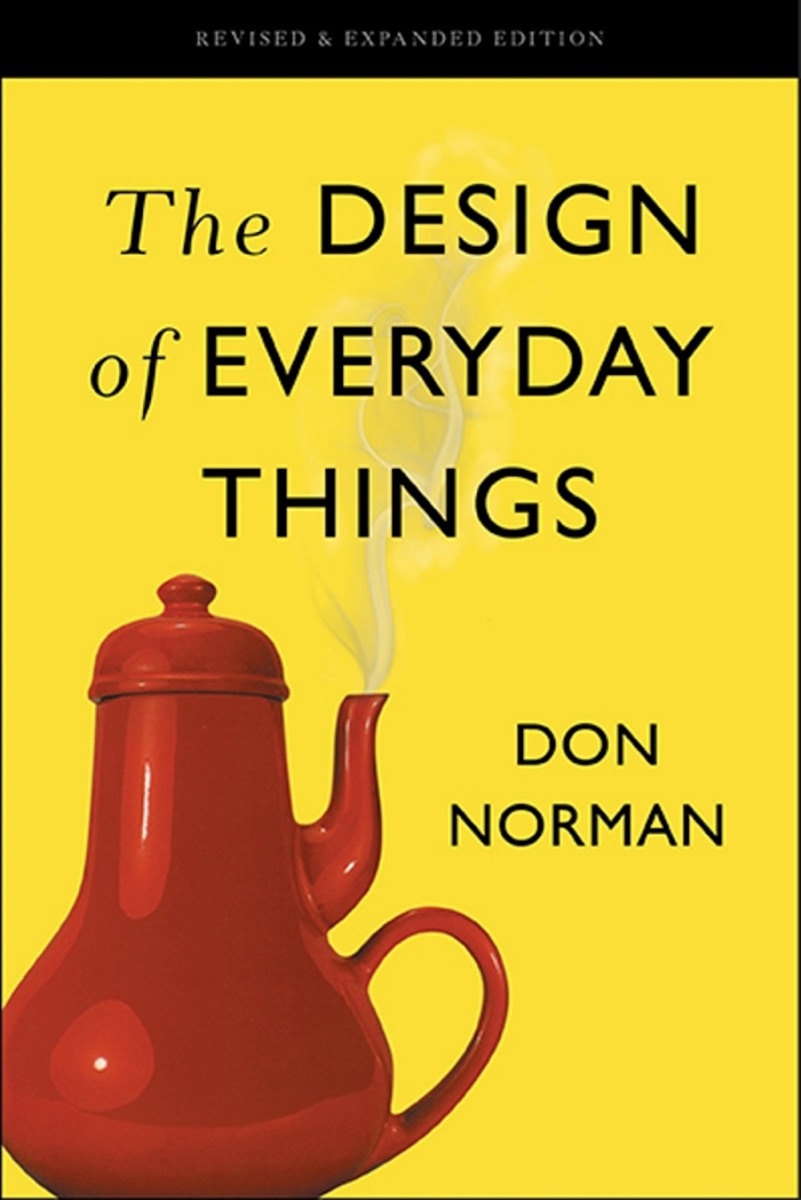
The Design of Everyday Things began as The Psychology of Everyday Things when first published in 1988, and Donald Norman revised it substantially for a 2013 edition that updated the examples for a digital age. The argument has not changed: most design that frustrates users fails because designers blame the user for errors that are actually the designer's fault. When a door is pushed when it should be pulled, when an oven knob controls the wrong burner, when a software interface crashes a new user on their first attempt — these are design failures, not human failures.
Norman builds his argument on a set of core concepts from cognitive psychology. Affordances are the properties of an object that suggest how it can be used — a handle affords pulling, a button affords pressing. Signifiers are the cues that communicate these affordances. Feedback is the system's response that tells the user what just happened. Mental models are the user's understanding of how a system works, which may or may not match the actual system. Good design aligns these elements so that users can figure out how to operate something without instructions, and so that when things go wrong, the error is obvious and recoverable.
The most useful chapter for most readers deals with the nature of human error. Norman distinguishes slips (doing the wrong thing while intending the right thing) from mistakes (having the wrong intention). Most design tries to prevent slips by putting up barriers — locked menus, confirmation dialogs, warning labels. Norman argues this is the wrong approach. Better design makes wrong actions hard to take in the first place, makes the current state visible at all times, and makes errors reversible when they do occur.
The book influenced the entire field of human-computer interaction and is standard reading in design schools. Its weakness is the same as its strength: the concepts are simple enough to apply broadly, which means the book explains the same ideas in many examples across its length. First-time readers often find the middle sections repetitive. But the framework itself — affordances, signifiers, feedback, conceptual models, constraints, mappings — remains the most practical vocabulary available for thinking about whether something is well-designed or not.
The big ideas
- 1.
When a user fails to operate something correctly, the first question should be whether the design failed them, not whether they failed the design. Most errors are design problems in disguise.
- 2.
Affordances are the properties of an object that suggest how it can be used. A good handle tells you where to grab it. A well-designed button tells you it can be pressed.
- 3.
Signifiers make affordances perceivable. Good design communicates possibilities and constraints without requiring the user to read a manual.
