The Education of a Value Investor by Guy Spier is a 2014 memoir book about value investing, self-improvement, investment philosophy. Environment shapes investment behavior profoundly. Moving away from financial centers, avoiding sell-side noise, and controlling who you spend time with are structural changes that improve decision quality.
Summary
The Education of a Value Investor is Guy Spier's memoir of his transformation from a mediocre fund manager shaped by Wall Street's short-term incentives into a focused, long-term value investor working from Zurich. The book is part investing guide, part confession, and part account of how a successful person remade their professional identity by deliberately changing their environment and influences. It is among the most honest books written by an active money manager about what actually goes wrong in investment decision-making.
Spier grew up in South Africa, attended Oxford and Harvard Business School, and then joined a small Wall Street firm that he later describes as a "boiler room" — high pressure, ethically compromised, and organized around short-term commission generation rather than client interests. He eventually escaped, started his own fund, and began learning seriously from Buffett's letters and later from Mohnish Pabrai, with whom he eventually paid $650,100 jointly at auction for a charity lunch with Warren Buffett. That lunch, which Spier writes about at length, became a turning point in how he thought about his own professional environment and the kinds of people he wanted around him.
The second half of the book is more practical: rules Spier developed to improve his investment behavior. He moves his office to Zurich partly to remove himself from the noise of financial markets. He stops attending sell-side conferences. He imposes a rule of not talking to management of companies while evaluating them, to avoid being charmed out of a correct analysis. He develops a checklist. He focuses on not losing money before thinking about making it. These are behavioral changes that reflect a deep engagement with the psychological literature on decision-making, particularly Cialdini's work on influence.
The limitation is that Spier's investment performance, while decent, is not extraordinary — he acknowledges this. The book is less useful as a guide to generating high returns than as an honest account of how professional incentives distort judgment and what structural changes can partially counteract them. For readers interested in the psychology of investing and the difficulty of acting independently in an environment designed to push you toward consensus, it is unusually candid.
Talk to The Education of a Value Investor like its author wrote you back.
Get the ideas that fit your life — not generic summaries.
- Chat with the book
- Audiobook-style main ideas
- Adapts to your life and goals
- Helps you take action
Key takeaways
- 1.
Environment shapes investment behavior profoundly. Moving away from financial centers, avoiding sell-side noise, and controlling who you spend time with are structural changes that improve decision quality.
- 2.
Meeting with company management while evaluating an investment is often counterproductive — skilled management teams are persuasive in ways that can override correct analytical conclusions.
- 3.
Checklists reduce the frequency of repeating known mistakes, particularly in situations where emotional pressure pushes toward hasty decisions.
- 4.
The decision to invest should be separated from the environment that generated the idea — sleeping on a decision for 24 hours often changes it.
- 5.
Cloning the behavior of investors you respect is an underrated strategy. Monitoring the publicly disclosed positions of great investors and analyzing why they made each bet builds analytical skill over time.
- 6.
The quality of your circle — the people you spend time with and take seriously — has an outsized effect on your thinking. Choose it deliberately rather than by default.
- 7.
Investing is as much a psychological discipline as an analytical one. The work of becoming a better investor is partly the work of understanding your own biases and building structures that counteract them.
- 8.
Long-term thinking is itself a competitive advantage, because institutional incentives push almost everyone toward shorter and shorter time horizons.
Discussion questions
Use these on your own, with a book club, or as chat starters in Superbook. Book club version, ready to copy or print →
- 1.
Spier argues that environment shapes investment behavior more than most investors acknowledge. What in your current environment is pushing your financial decisions in directions you don't endorse in the abstract?
- 2.
The decision to avoid talking to management while evaluating a company seems counterintuitive. Under what circumstances might meeting management be more informative than misleading?
- 3.
Spier spent $650,100 on a lunch with Buffett. What would you need to believe about what that conversation would do for your investing to justify that price?
- 4.
How honest are you willing to be, in your own accounting, about the decisions that have cost you money? Spier is unusually candid about his failures. What makes that hard?
- 5.
Spier moved his office to Zurich partly to escape the noise of financial markets. What's the equivalent move you could make to improve the quality of your own financial decisions?
- 6.
What checklist would you build if you were trying to avoid your own most common investing mistakes? What items would be on the first page?
- 7.
Spier describes Wall Street's culture as systematically misaligned with client interests. Is that a solvable problem, or structural? What would need to change?
- 8.
The book documents Spier's circle of influence — Pabrai, Buffett, Munger, Cialdini. Who is in your intellectual circle on financial matters, and how deliberately did you construct it?
- 9.
Spier's performance is good but not exceptional. Does an investment philosophy need to produce exceptional results to be worth adopting, or is 'good and durable' enough?
- 10.
How do you decide when copying a great investor's position is a good idea versus when you need to do independent analysis? Where does the line fall for you?
- 11.
The book is partly about character — becoming a better person as well as a better investor. Do you think those are as connected as Spier argues?
- 12.
What would your investing behavior look like if you removed all time pressure — no quarterly performance reviews, no client calls, no benchmark comparisons?
Themes
Frequently asked questions
-
Is The Education of a Value Investor worth reading?
Yes, especially for investors who feel the gap between what they know they should do and what they actually do under pressure. The book's behavioral and environmental framing is more honest than most investment memoirs, and its practical rules are specific enough to implement.
-
How does this compare to other value investing books?
It is less analytical than The Intelligent Investor or Margin of Safety and more psychological than most. Its closest peer is the biographical strand of Buffett literature — it's primarily about how to become a better investor by changing your environment and habits rather than about how to analyze securities.
-
What is the most actionable idea in the book?
The rule of not making a final investment decision in the same environment where the idea originated — sleeping on it, walking away from the screen, introducing a pause. Spier argues this single habit catches a large fraction of enthusiasm-driven mistakes.
-
How long does it take to read?
Around four to five hours. The book reads quickly as a memoir, and the practical chapters in the second half are concise. It does not require re-reading for technical detail the way Graham's work does.
-
Who should not read this book?
Investors primarily interested in technical valuation frameworks or quantitative strategies will find it too behavioral and personal in focus. It is most useful for those already convinced of value investing's merits who want to work on execution and discipline.
Similar books
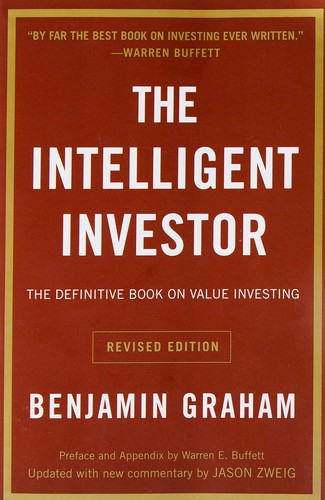
The Intelligent Investor
Benjamin Graham
The Essays of Warren Buffett
Warren Buffett
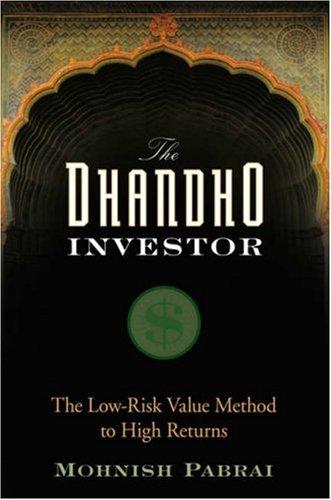
The Dhandho Investor
Mohnish Pabrai
Thinking in Bets: Making Smarter Decisions When You Don't Have All the Facts
Annie Duke
