Psychology · Book club
The Elephant in the Brain: Hidden Motives in Everyday Life book club questions
Here are 11 book club questions for The Elephant in the Brain: Hidden Motives in Everyday Life by Kevin Simler and Robin Hanson, ordered to open easily and end somewhere worth arguing about. Copy them, print them, or bring them up one at a time.
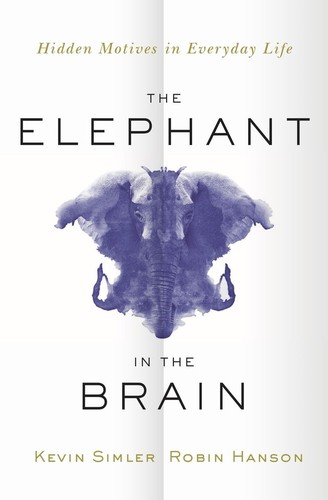
Kevin Simler and Robin Hanson argue that human behavior is much more self-interested and much less high-minded than the explanations people give for it.
Kevin Simler and Robin Hanson · 2018 · 5h 20m
Full summary and key takeaways →The 11 questions
- 1.
The book argues that we are systematically self-deceived about our own motivations. What is your reaction to that claim? Do you find it liberating, deflating, or something else?
- 2.
Simler and Hanson apply the signaling lens to education. Does that analysis match your experience of school and college, and what does it suggest about what education actually is for?
- 3.
They argue that medicine is partly a signaling good. How do you distinguish the signaling components of medical consumption from the genuinely therapeutic? Does it matter?
- 4.
The book says that political positions are often more about tribal identity than reasoned analysis. Can you identify a position you hold where you have not seriously examined the evidence?
- 5.
If self-deception is adaptive, what is the cost of becoming more honest with yourself about your motives? Does the book suggest that becoming less self-deceived is beneficial?
- 6.
Hanson has been criticized for over-applying the signaling explanation. Are there cases in the book where you think the signaling account misses something important?
- 7.
The book argues that most people know, at some level, that official explanations are partly false but maintain them because the social norm demands it. Is there a setting in your life where this is most visible?
- 8.
They claim that art consumption is substantially about signaling taste and affiliation rather than pure aesthetic experience. What is your reaction to this reading of something you care about?
- 9.
If employers are paying for credentials as signals rather than competence, what are the implications for how education should be structured?
- 10.
Is there a hidden motive you have recognized in yourself after reading this book — something you were doing for self-interested reasons while telling yourself a different story?
- 11.
How does the elephant-in-the-brain framework interact with concepts like integrity and authenticity? Is it possible to be authentic in a world where most motivation is partly concealed from the self?
How to run the discussion
- Pick six to eight, not all of them. An hour of real discussion covers fewer questions than anyone expects, and racing the list is what makes a book club feel like homework.
- Open with what people noticed, not what they concluded. Asking for a verdict first hardens opinions before anyone has heard each other.
- Let the disagreement run. The questions below that split a room are the ones worth the time; the ones everyone answers the same way can be skipped.
- Ask the quiet person a specific question. A direct, narrow question is far easier to answer than an open invitation to contribute.
Themes worth steering toward
If the conversation stalls, these are the threads that usually restart it.
Common questions
What are good book club questions for The Elephant in the Brain: Hidden Motives in Everyday Life?
Here are 11 book club questions for The Elephant in the Brain: Hidden Motives in Everyday Life by Kevin Simler and Robin Hanson, ordered to open easily and end somewhere worth arguing about. The strongest openers ask what each reader noticed rather than what they concluded, and the discussion usually turns on hidden motives, self-deception, social signaling.
How long should a book club discussion of The Elephant in the Brain: Hidden Motives in Everyday Life last?
Most groups run 60 to 90 minutes of actual discussion. That is roughly six to eight questions, not all of them, so pick the ones that suit your group rather than working down the list in order.
What are the main themes in The Elephant in the Brain: Hidden Motives in Everyday Life?
Hidden motives, Self-deception, Social signaling, Evolution, Behavioral economics. Those are the threads most likely to divide a room, which makes them the useful places to steer a discussion that has gone quiet.
Picking the next one? See books like The Elephant in the Brain: Hidden Motives in Everyday Life or questions for other book club picks.
