The End of Faith: Religion, Terror, and the Future of Reason by Sam Harris is a 2004 religion & spirituality book about atheism, terrorism, religion. Faith — belief on insufficient evidence — is an epistemically irresponsible practice that, when applied to political and moral questions, produces uniquely dangerous results.
Summary
The End of Faith was written in the weeks following the September 11 attacks and published in 2004. It is Sam Harris' first book and his most urgent — a sustained argument that religious faith, understood as belief without sufficient evidence, is uniquely dangerous because it places certain conclusions beyond rational examination and can therefore motivate any act in their service. Harris' target is not only Islamic extremism but religious faith as such, including the moderate religious belief that, he argues, provides the cultural cover under which extremism thrives.
The book's argument has several layers. The epistemological layer: faith — believing things on insufficient evidence — is an irresponsible cognitive practice that, when applied to political questions, generates catastrophic results. The historical layer: the history of religious violence is not an aberration but a predictable consequence of ideologies that treat certain beliefs as literally sacred and non-negotiable. The cultural layer: the West's embarrassment about criticizing religious belief — its deference to faith as a special category exempt from the standards of evidence applied to other claims — is itself a problem that facilitates religious extremism.
The book's treatment of Islam is more extensive and more critical than its treatment of Christianity and Judaism, reflecting its post-9/11 context. Harris argues that the specific doctrines of mainstream Islam — concerning martyrdom, apostasy, and jihad — are more directly connected to political violence than equivalent doctrines in contemporary Christianity, and that this difference matters for policy analysis. This argument generated substantial controversy and has been revisited in his subsequent work.
The final chapter, on ethics, proposes a science of morality based on facts about wellbeing rather than divine command or cultural consensus. This argument is developed more fully in The Moral Landscape (2010) but its initial statement here is forceful. Harris argues that the collapse of religious ethics will not leave a vacuum but will create space for a more honest engagement with what actually produces or reduces suffering.
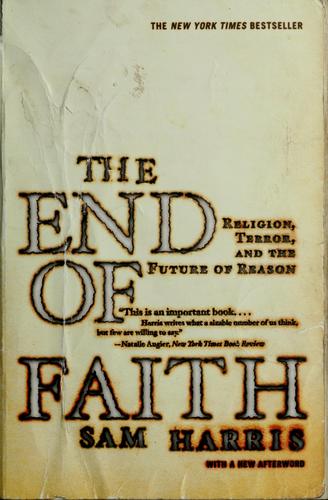
Talk to The End of Faith: Religion, Terror, and the Future of Reason like its author wrote you back.
Get the ideas that fit your life — not generic summaries.
- Chat with the book
- Audiobook-style main ideas
- Adapts to your life and goals
- Helps you take action
Key takeaways
- 1.
Faith — belief on insufficient evidence — is an epistemically irresponsible practice that, when applied to political and moral questions, produces uniquely dangerous results.
- 2.
Moderate religious belief provides cultural legitimacy to the idea that certain commitments are beyond rational examination, creating conditions in which extremism can grow.
- 3.
The history of religious violence is not a series of aberrations but a predictable consequence of ideologies that treat certain beliefs as literally sacred.
- 4.
The distinction between 'extremist' and 'moderate' religion conceals the degree to which extremism draws directly on mainstream religious texts and doctrines.
- 5.
A secular ethics grounded in facts about wellbeing is both possible and more intellectually honest than ethics derived from divine command or cultural convention.
- 6.
The reluctance to criticize religious belief — to extend to it a deference not given to other claims — is itself a form of irresponsibility that facilitates harm.
- 7.
Confronting religious belief honestly requires acknowledging that its claims make specific empirical predictions that can be evaluated against evidence.
- 8.
The peaceful coexistence of Western societies does not demonstrate the compatibility of religion and reason — it demonstrates the degree to which liberal secular institutions have constrained religion's political power.
Discussion questions
Use these on your own, with a book club, or as chat starters in Superbook. Book club version, ready to copy or print →
- 1.
Harris argues that faith itself — not just extremist faith — is the problem. Is that a more or less defensible position than the claim that only extremist religion is harmful?
- 2.
He says moderate religious belief provides cover for extremism. Is that claim fair, or does it fail to distinguish between very different kinds of religious commitment?
- 3.
The book was written immediately after 9/11 and focuses heavily on Islamic doctrine. Does the timing and focus affect the fairness and generalizability of the argument?
- 4.
Harris proposes a science of ethics based on facts about wellbeing. What would the limits of that framework be? Are there important moral questions it cannot address?
- 5.
He argues that Western deference to religious belief is itself dangerous. Is there a meaningful distinction between respecting religious freedom and deferring uncritically to religious claims?
- 6.
The End of Faith became a best-seller before the term 'New Atheism' existed. What does its success tell you about the cultural moment it was addressing?
- 7.
Harris has been criticized for double standards — being harder on Islam than on Christianity. Is that criticism of the book fair?
- 8.
The argument that violence follows from specific doctrines is contested by sociologists and historians who argue structural factors are more important. Does that contestation undermine Harris' case?
- 9.
Harris acknowledges in the book that he values mystical experience and meditates. How does that complicate the simple atheist polemic that some readers took it to be?
- 10.
What would a world look like in which Harris' recommendations — critical examination of all religious belief, a science of ethics — were actually implemented?
- 11.
Has reading this book changed how you evaluate claims about the relationship between religious belief and political violence?
Themes
Frequently asked questions
-
What is the main argument of The End of Faith?
That faith — belief without sufficient evidence — is an epistemically irresponsible practice that, when applied to political and moral questions, produces dangerous results, and that the West's deference to religious belief prevents it from confronting this honestly.
-
Is The End of Faith primarily about Islam?
Its post-9/11 context makes Islam a primary focus, but Harris frames it as an argument against religious faith in general. He is also critical of Christianity's historical record. The heavier treatment of Islam reflects both the immediate occasion and his argument that specific doctrines have different political consequences.
-
How does this book relate to Harris' later Waking Up?
The End of Faith attacks religious faith while acknowledging the reality of mystical experience. Waking Up develops a secular framework for that experience. The two books are complementary: the first says what needs to be demolished; the second says what can be built on the cleared ground.
-
Has Harris' position on Islam changed since 2004?
He has continued to argue that specific Islamic doctrines are more directly connected to political violence than equivalent Christian doctrines, and has engaged in extended debates on this question. The arguments are consistent with The End of Faith but have been developed in greater nuance.
-
What is Harris' proposed replacement for religious ethics?
A science of morality grounded in facts about wellbeing — the claim that moral questions are ultimately questions about what produces or reduces suffering in conscious creatures, and that these questions can in principle be investigated empirically. He develops this more fully in The Moral Landscape.
Similar books
The God Delusion
Richard Dawkins
God Is Not Great: How Religion Poisons Everything
Christopher Hitchens
Waking Up: A Guide to Spirituality Without Religion
Sam Harris

The Dhammapada
Anonymous
