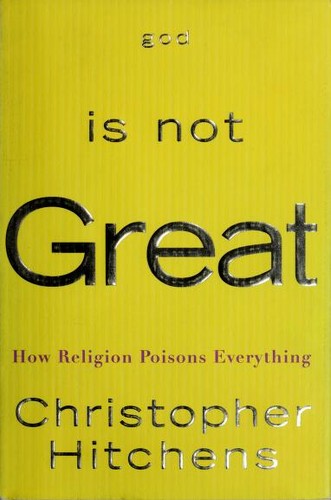
God Is Not Great: How Religion Poisons Everything by Christopher Hitchens is a 2007 religion & spirituality book about atheism, religion, reason. Religion's claims to moral authority are undermined by its history: slavery, inquisition, child abuse, and theocratic violence are not distortions of religion but expressions of its institutional logic.
Summary
God Is Not Great is Christopher Hitchens' comprehensive polemic against religion, published in 2007 as part of the wave of "New Atheist" books that included Dawkins' The God Delusion, Harris' The End of Faith, and Dennett's Breaking the Spell. Hitchens brings to the project a literary sensibility, a journalist's eye for the particular, and a combativeness that distinguishes his contribution from the others. His argument is not only that God probably doesn't exist but that religion — considered as an institution, a set of practices, and a way of thinking — has on balance been harmful to humanity.
The book moves through a catalog of religious crimes and absurdities: the complicity of religious institutions in slavery, colonialism, and child abuse; the epistemological irresponsibility of treating ancient texts as authoritative on matters of science and history; the psychological damage done by inducing guilt and shame in children; the political dangers of theocracy and the alliance of religion with totalitarianism. Hitchens is particularly strong on the Middle East, on the specific damage done by the monotheistic religions to sexual ethics, and on what he calls "the tawdry secret of religion" — that it did not originate in ethics but in fear and ignorance.
Hitchens distinguishes his position from simple materialism: he values art, music, literature, and ceremony, and he defends the study of religion as a serious intellectual and cultural enterprise. What he opposes is the claim that religion provides moral authority, that its supernatural claims are credible, or that the harm it has done is outweighed by the good. His alternative is "the Enlightenment values of reason, evidence, and human solidarity" — a secular humanism that he traces through Spinoza, Jefferson, Paine, and Darwin.
The book is written to persuade and provoke rather than to offer balanced analysis. Hitchens acknowledges this; he does not write as a neutral observer. The charges he levels are frequently fair and documented; the rhetorical energy sometimes carries the argument past the evidence. Reading it alongside a serious theological response is more illuminating than reading it alone.
Talk to God Is Not Great: How Religion Poisons Everything like its author wrote you back.
Get the ideas that fit your life — not generic summaries.
- Chat with the book
- Audiobook-style main ideas
- Adapts to your life and goals
- Helps you take action
Key takeaways
- 1.
Religion's claims to moral authority are undermined by its history: slavery, inquisition, child abuse, and theocratic violence are not distortions of religion but expressions of its institutional logic.
- 2.
The argument from design fails: natural selection explains the complexity of life without requiring a designer, and the evidence of natural suffering contradicts any benevolent creator.
- 3.
Religious texts are human documents — reflecting the knowledge, prejudices, and politics of their authors — and their claim to divine authority requires skeptical examination.
- 4.
Morality does not require religion: the ethical values that actually improve human lives — evidence, reason, solidarity, compassion — are available through secular humanism.
- 5.
The harm religion does to children — inducing guilt, shame, and fear before they can evaluate the claims — is an ethical problem that religious authority cannot adjudicate.
- 6.
Religion has been particularly damaging to women and sexual minorities, encoding prejudices as divine commands rather than social preferences.
- 7.
The 'God of the gaps' — invoked to explain whatever current science cannot — shrinks with each advance in knowledge.
- 8.
The religious character of totalitarian movements of the 20th century — North Korea, Nazism, Stalinism — suggests that the impulse to collective submission and sacred authority is not limited to conventional religion.
Discussion questions
Use these on your own, with a book club, or as chat starters in Superbook. Book club version, ready to copy or print →
- 1.
Hitchens argues that religion has been on balance harmful to humanity. Is that a falsifiable claim, and how would you assess the evidence for and against it?
- 2.
He distinguishes his own secular humanism — with its genuine appreciation of art, ceremony, and cultural inheritance — from simple materialism. Does that distinction hold up?
- 3.
The book focuses heavily on Islam in a post-9/11 context. Does that context affect the fairness of the analysis?
- 4.
Hitchens says morality does not require religion. Do you think secular humanism provides an adequate foundation for moral commitment, or does it depend on inherited religious capital?
- 5.
His argument that religion harms children through guilt and shame is among his most personal. Do you think that harm is inherent in religious education or only in certain forms of it?
- 6.
Hitchens was a polemicist, not an academic philosopher. Does the rhetorical form serve or undermine his argument?
- 7.
The book groups together very different traditions — Islam, Christianity, Judaism, Hinduism — under a single indictment. Is that lumping intellectually defensible?
- 8.
He argues that the best in religious culture — the music, the architecture, the literature — was created despite religion rather than because of it. Is that a sustainable claim?
- 9.
God Is Not Great was enormously popular. What cultural moment made a book with this argument a bestseller in 2007?
- 10.
Hitchens spent the last years of his life dying of esophageal cancer and writing about the experience. Did that context change how the religious community responded to him, or vice versa?
- 11.
What does Hitchens' atheism share with, and how does it differ from, the atheism of Dawkins, Harris, and Dennett?
Themes
Frequently asked questions
-
What is the main argument of God Is Not Great?
That religion is not merely false but harmful — that its institutional history, its epistemological practices, and its psychological effects on individuals and societies have on balance caused more suffering than they have relieved, and that secular humanism provides a better foundation for ethics and human flourishing.
-
Is God Is Not Great a philosophical argument against the existence of God?
Partly, but primarily it is a historical and ethical argument against religion as an institution and practice. Hitchens draws on Dawkins and others for the scientific case against design; his own contribution is the moral and cultural indictment.
-
How does Hitchens' atheism differ from Dawkins'?
Dawkins is primarily a scientist attacking religion's interference with science and reason. Hitchens is primarily a humanist and literary intellectual attacking religion's moral legacy and its suppression of free thought. Hitchens' prose is more literary; his range of historical and cultural reference is broader.
-
Is this book fair to religion?
It is polemical, not balanced. Hitchens is selecting evidence and arguments to make a case, not conducting a scholarly survey. The charges are frequently documented and fair; the rhetoric sometimes carries the argument past the evidence. Religious readers should read alongside responses.
-
Who should read God Is Not Great?
People already skeptical of religion who want a well-argued and vividly written case for secular humanism. Also people of faith who want to confront the strongest version of the atheist critique. It is not balanced but it is honest about being unbalanced.
Similar books
The God Delusion
Richard Dawkins
The End of Faith: Religion, Terror, and the Future of Reason
Sam Harris
Waking Up: A Guide to Spirituality Without Religion
Sam Harris
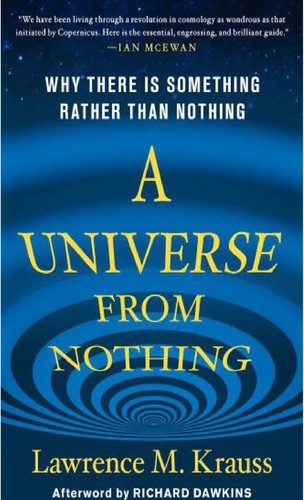
A Universe from Nothing
Lawrence M. Krauss
