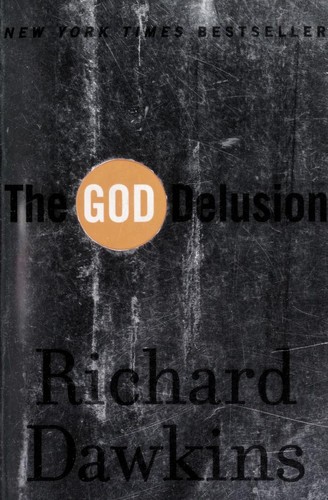
The God Delusion by Richard Dawkins is a 2006 religion & spirituality book about atheism, evolution, religion. The God hypothesis is a scientific hypothesis and can be evaluated against evidence; the probability of a God complex enough to design the universe is extremely low.
Summary
The God Delusion is Richard Dawkins' comprehensive case against religious belief, published in 2006 as the most high-profile work of the New Atheist movement. A scientist by training and a gifted popularizer of evolutionary biology, Dawkins brings a distinctive set of arguments — rooted in natural selection — to the standard philosophical critiques of theism. The book became an international bestseller and one of the most discussed books of the decade, celebrated by atheists and strongly criticized by theologians, philosophers, and many scientists.
Dawkins' central argument is that the hypothesis of God is a scientific hypothesis that can and should be evaluated against the evidence, and that the evidence substantially disconfirms it. The argument from design — the intuition that complex, organized systems must have been designed — is definitively answered by natural selection: complexity can arise from the accumulation of small, undirected steps. A designer would require its own explanation, regressing infinitely; natural selection breaks this regress. This is Dawkins' "central argument" and the one he considers decisive.
Beyond the argument from design, Dawkins surveys the standard philosophical arguments for God's existence (cosmological, ontological, moral) and finds them wanting. He offers an evolutionary explanation for religion as a byproduct of adaptive cognitive tendencies — the tendency to attribute agency and design to natural events — rather than a rational response to evidence. He also argues that religious upbringing of children is a form of indoctrination that should be subject to more critical scrutiny.
The book's weakest sections, by general scholarly consensus, are those on philosophical theology — where Dawkins dismisses sophisticated theological positions with less engagement than their actual difficulty warrants. Critics including Terry Eagleton, Alvin Plantinga, and many others argued that Dawkins was attacking a naive version of theism while ignoring its most rigorous defenses. Dawkins' response — that the God most people actually believe in is the naive one — has some force but doesn't fully answer the philosophical objections.
Talk to The God Delusion like its author wrote you back.
Get the ideas that fit your life — not generic summaries.
- Chat with the book
- Audiobook-style main ideas
- Adapts to your life and goals
- Helps you take action
Key takeaways
- 1.
The God hypothesis is a scientific hypothesis and can be evaluated against evidence; the probability of a God complex enough to design the universe is extremely low.
- 2.
The argument from design is definitively answered by natural selection: complex organized systems can arise through the accumulation of undirected incremental steps.
- 3.
A designer would require its own explanation; positing God as the designer regresses infinitely rather than stopping the chain of explanation.
- 4.
Religion can be explained as a byproduct of adaptive cognitive tendencies — agency detection, teleological thinking — rather than as a rational response to evidence.
- 5.
Moral values do not require religion for their justification; Dawkins argues they evolved through natural selection and can be grounded in secular humanism.
- 6.
Children's religious upbringing raises ethical concerns about indoctrination — instilling beliefs before the child has the cognitive capacity to evaluate them.
- 7.
Faith — belief without evidence or in the face of contrary evidence — is not a virtue to be respected but an epistemological vice to be criticized.
- 8.
Einstein's awe at the universe, often described as religious, is not evidence for theism; Dawkins distinguishes 'Einsteinian religion' (wonder at nature) from supernatural theism.
Discussion questions
Use these on your own, with a book club, or as chat starters in Superbook. Book club version, ready to copy or print →
- 1.
Dawkins argues that the God hypothesis is scientific and should be evaluated against evidence. Is that framing of theology correct, or does it misunderstand what theological claims are?
- 2.
The central argument — that natural selection answers the argument from design — is one of the most widely accepted arguments in science. Does it fully address all forms of the design argument?
- 3.
Dawkins suggests the religious upbringing of children is a form of indoctrination comparable to child abuse in its effects. Is that a fair analogy, and what does it imply practically?
- 4.
His evolutionary account of religion explains its origins. Does explaining the origin of a belief tell us anything about its truth?
- 5.
The book was criticized by many theologians for attacking a naive version of theism while ignoring sophisticated theological arguments. Is that criticism fair?
- 6.
Dawkins distinguishes Einstein's 'Einsteinian religion' from supernatural theism. Is that distinction clear enough to be useful?
- 7.
The God Delusion became a cultural phenomenon. What does its extraordinary popularity tell you about the cultural moment it was addressing?
- 8.
Many scientists who accept evolution still hold religious beliefs. Dawkins finds this inconsistent. Does the history of religious scientists (Newton, Faraday, Collins) undermine his case?
- 9.
If moral values evolved through natural selection, in what sense are they genuinely binding rather than just tendencies?
- 10.
Dawkins says faith is an epistemological vice. Is there any sense in which faith — commitment despite uncertainty — is epistemically legitimate?
- 11.
What would change about Dawkins' argument if strong evidence for God's existence were to emerge? Is his position falsifiable?
Themes
Frequently asked questions
-
What is the main argument of The God Delusion?
That the hypothesis of God's existence is a scientific hypothesis that is substantially disconfirmed by the evidence, particularly by natural selection's explanation of biological complexity. Dawkins also argues that religion is explained as a byproduct of adaptive cognitive tendencies and that it causes more harm than good.
-
How has The God Delusion been received by theologians?
Largely critically. Many theologians argued that Dawkins attacks a naive version of theism while ignoring sophisticated theological arguments — that he has not engaged seriously with Aquinas, Anselm, or contemporary philosophers of religion like Plantinga or Swinburne.
-
Does Dawkins think all religion is harmful?
He is critical of religious belief as epistemologically irresponsible but acknowledges some cultural value in religious art, music, and community. His primary targets are fundamentalism and the political power of organized religion.
-
What is the difference between The God Delusion and The Selfish Gene?
The Selfish Gene is a work of evolutionary biology arguing for the gene-centered view of natural selection. The God Delusion uses evolutionary biology as one tool in a broader philosophical and ethical argument against religious belief. The former is a scientific work; the latter is a polemic.
-
Who should read The God Delusion?
Atheists who want a well-argued and accessible summary of the scientific and philosophical case against theism. Also believers who want to engage with the strongest version of contemporary atheism. Read alongside theological responses for a fuller picture of the debate.
Similar books

God Is Not Great: How Religion Poisons Everything
Christopher Hitchens

The End of Faith: Religion, Terror, and the Future of Reason
Sam Harris
Behave: The Biology of Humans at Our Best and Worst
Robert M. Sapolsky
Why Buddhism Is True
Robert Wright
