The Odessa File by Frederick Forsyth is a 1972 thriller book about nazi fugitives and justice, institutional impunity, undercover identity. The novel documents the extent to which former SS officers successfully reintegrated into West German and international professional life after 1945 — a historical reality, not a thriller invention.
Summary
Hamburg, 1963. Young German journalist Peter Miller discovers the diary of a Jewish concentration camp survivor who has just committed suicide. The diary names the commandant of Riga — SS Captain Eduard Roschmann — and details his crimes. Miller becomes obsessed with finding Roschmann, who has never faced justice. His investigation leads him to ODESSA, a secret organization of former SS officers helping each other evade prosecution and remain influential in postwar German society. Mossad, learning of his mission, recruits Miller to help them reach a target of their own.
Forsyth wrote The Odessa File the year after The Day of the Jackal, and it shares that book's documentary approach while shifting the moral register significantly. Where The Jackal is morally neutral about its Jackal, The Odessa File is explicitly about the failure of postwar Germany to reckon with Nazism. The novel is set in 1963 — the year of the Frankfurt Auschwitz trials, which Forsyth weaves into the narrative — and Forsyth uses Miller's investigation to document how many former SS officers had successfully reintegrated into West German professional life.
ODESSA itself may or may not have existed as a formal organization (historians dispute this, and Simon Wiesenthal, who appears in the novel, later expressed doubts). As a thriller device it works because it names something that was undeniably real: the network of assistance, both formal and informal, that helped SS men avoid prosecution, relocate to South America, and in some cases continue to hold respectable positions in European institutions. The novel is, among other things, a piece of moral journalism.
Forsyth's procedural strengths are fully deployed here. The undercover infiltration sequence — Miller training with Mossad, constructing a false identity as a former SS man, penetrating ODESSA — is meticulously plotted. The historical research is dense and the factual scaffolding is, like The Day of the Jackal, unusually solid for thriller fiction. Readers who want action-driven plotting will find this slower than the Jackal; readers interested in the postwar Nazi question will find it essential.
Talk to The Odessa File like its author wrote you back.
Get the ideas that fit your life — not generic summaries.
- Chat with the book
- Audiobook-style main ideas
- Adapts to your life and goals
- Helps you take action
Key takeaways
- 1.
The novel documents the extent to which former SS officers successfully reintegrated into West German and international professional life after 1945 — a historical reality, not a thriller invention.
- 2.
ODESSA as an organization may be partly fictional, but the mutual assistance networks among former SS members were real and well-documented.
- 3.
The Frankfurt Auschwitz trials of 1963-65, which run alongside the novel's events, represent a genuine turning point in West Germany's historical reckoning — Forsyth uses them to frame his moral argument.
- 4.
Miller's motivation — his father's involvement in the war — adds a personal dimension that The Day of the Jackal deliberately avoided in its protagonist.
- 5.
The Mossad sequences give the novel geopolitical range that extends beyond the central Nazi-hunting story to Cold War arms development in Egypt.
- 6.
Forsyth uses the thriller form to argue that justice deferred is justice denied — the novel is implicitly critical of German and Allied failure to pursue war criminals aggressively.
- 7.
The undercover infiltration plot requires Miller to perform convincingly as a former SS officer, which creates an uncomfortable identification dynamic the novel handles with more care than might be expected.
- 8.
Simon Wiesenthal appears as himself, which grounds the thriller in real-world accountability efforts and signals that Forsyth sees the novel as documentary as well as entertainment.
Discussion questions
Use these on your own, with a book club, or as chat starters in Superbook. Book club version, ready to copy or print →
- 1.
Miller's obsession with finding Roschmann begins with a stranger's diary. What does it mean that an outsider, a man without direct family loss, becomes the story's agent of justice?
- 2.
Forsyth includes Simon Wiesenthal as a character. What effect does mixing fictional and real historical figures have on how you read the novel's claims?
- 3.
ODESSA's historical existence is contested. Does it matter whether the organization existed as Forsyth describes it, given that the underlying phenomenon — former SS men helping each other — is documented?
- 4.
The novel is set in 1963, when many Germans who lived through the Third Reich were middle-aged and professionally active. How does that specific historical moment shape the story?
- 5.
Miller infiltrates a network of former SS officers by pretending to be one. Did you find the mechanics of that performance psychologically convincing?
- 6.
The novel argues, implicitly, that West Germany failed to reckon adequately with its Nazi past. Is that a fair historical judgment? Has Germany's reckoning changed your assessment since 1972?
- 7.
Forsyth intersperses the thriller plot with historical documentation of the Auschwitz trials. Is that a strength — grounding the thriller in history — or does it break the narrative?
- 8.
The Mossad subplot connects the Nazi-hunting story to Israeli geopolitical interests. Does that complicate the moral simplicity of the hunt, or does it feel like a separate thriller grafted onto the main story?
- 9.
Compare The Odessa File to The Day of the Jackal as pieces of craft. What does each do better? Which is more important as a novel?
- 10.
The resolution is action-thriller conventional but the emotional register is more complex. Did the ending satisfy the moral stakes the novel established?
- 11.
How does reading this novel, fifty years after publication, change the experience? Are the historical questions it raises more or less urgent now?
- 12.
Forsyth gives Eduard Roschmann a documented historical basis — he was a real person and actual war criminal. What are the ethical considerations of writing thriller fiction around real perpetrators of documented atrocities?
Themes
Frequently asked questions
-
Did ODESSA actually exist?
Historians disagree. Informal networks helping former SS officers were documented; whether a formal organization called ODESSA existed is debated. Simon Wiesenthal, who features in the novel, later expressed doubt about ODESSA as a formal entity, though he had previously discussed it publicly. Forsyth's account is plausible but not definitively historical.
-
Is The Odessa File based on real events?
Partly. Eduard Roschmann was a real person — the SS commandant of the Riga ghetto — and was genuinely sought after the war. The Frankfurt Auschwitz trials are real. The Mossad subplot touches on real geopolitical concerns of the era. Miller and the thriller plot are fictional.
-
Is there a film adaptation?
Yes — a 1974 film directed by Ronald Neame, starring Jon Voight as Miller and Maximilian Schell as Roschmann. It's a solid adaptation that captures the novel's moral weight.
-
Should I read The Day of the Jackal first?
Not required — The Odessa File is a standalone novel with no shared characters. The Jackal is slightly better as pure thriller craft; The Odessa File has more moral weight. Start with whichever premise interests you more.
-
Who shouldn't read The Odessa File?
Readers who want fast action rather than procedural research, those uncomfortable with detailed historical documentation of Nazi atrocities (which Forsyth includes), and anyone expecting the moral neutrality of The Day of the Jackal. This is a more overtly moralistic book.
Similar books
The Day of the Jackal
Frederick Forsyth
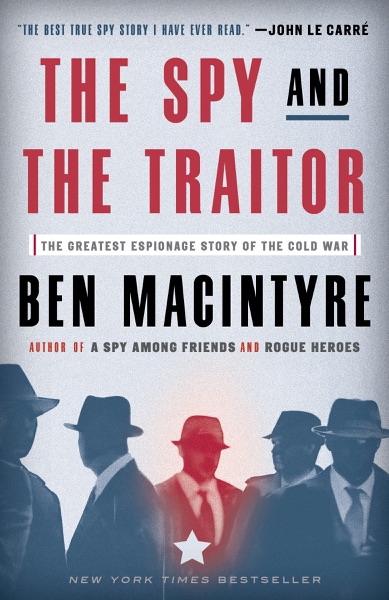
The Spy and the Traitor: The Greatest Espionage Story of the Cold War
Ben Macintyre
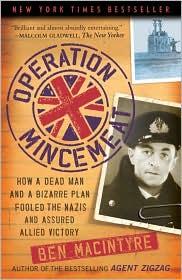
Operation Mincemeat: How a Dead Man and a Bizarre Plan Fooled the Nazis and Assured an Allied Victory
Ben Macintyre
Ordinary Men: Reserve Police Battalion 101 and the Final Solution in Poland
Christopher R. Browning
