The First 20 Hours by Josh Kaufman is a 2013 self-help book about skill acquisition, deliberate practice, learning. The 10,000-hour rule is about world-class expertise, not functional competence. Reaching a satisfying level of skill in most activities takes roughly 20 focused hours.
Summary
The First 20 Hours makes a sharp distinction that most books on learning quietly ignore: the difference between becoming competent at a skill and becoming world-class at one. Kaufman argues that reaching a functional, enjoyable level of competence in almost any skill — programming, yoga, chess, a musical instrument — requires roughly 20 focused hours of deliberate practice, not the 10,000 hours Malcolm Gladwell associated with expertise. The confusion between those two targets has convinced a lot of people they can't learn new things when in fact they've just set the wrong goal.
The first half of the book lays out Kaufman's framework for rapid skill acquisition. The core steps are: deconstruct the skill into its most important sub-skills, learn enough to self-correct early mistakes, remove barriers to practice (the phone, the TV, the open browser tab), and practice the most critical sub-skills first. He distinguishes skill acquisition from knowledge acquisition: reading about tennis and drilling forehands are not the same activity, and only one of them makes you better at tennis.
The second half is a series of case studies: Kaufman learning to program, to play the ukulele, to practice yoga, to play Go, and several others. Each chapter walks through how he applied his own framework — what he focused on, what he skipped, how long it actually took. The case studies vary in quality; the yoga and ukulele chapters are more engaging than some of the technical ones. But the pattern they collectively demonstrate is useful: most skills have a small core that gets you 80 percent of the way there, and getting past the frustration barrier is the hardest part.
The book is most useful for adults who have been telling themselves they're not the kind of person who can learn a new skill. Kaufman's framework dismantles the excuse. Twenty hours is a weekend plus a few evenings. The real barrier isn't time — it's the willingness to be genuinely bad at something for the first few sessions while the skill slowly takes shape.
Talk to The First 20 Hours like its author wrote you back.
Get the ideas that fit your life — not generic summaries.
- Chat with the book
- Audiobook-style main ideas
- Adapts to your life and goals
- Helps you take action
Key takeaways
- 1.
The 10,000-hour rule is about world-class expertise, not functional competence. Reaching a satisfying level of skill in most activities takes roughly 20 focused hours.
- 2.
Deconstruct the skill before you practice. Most skills contain a small core of sub-skills that unlock the majority of the value; start with those.
- 3.
Learning enough to self-correct early is more important than deep study. Too much pre-reading delays practice and creates false confidence.
- 4.
The frustration barrier is predictable and temporary. The first few hours of any skill feel awful; push through and frustration drops sharply.
- 5.
Removing barriers to practice matters as much as adding motivation. If getting started requires more than two steps, you will skip it.
- 6.
Skill acquisition and knowledge acquisition are different activities. Reading about a skill does not substitute for doing it, even when reading feels productive.
- 7.
Focused practice beats scattered time. Twenty hours of deliberate repetition on the core sub-skills produces more progress than 100 hours of casual exposure.
- 8.
Most adults underestimate their own learning capacity. The assumption 'I'm not good at X' usually means 'I've never put 20 focused hours into X.'
Discussion questions
Use these on your own, with a book club, or as chat starters in Superbook. Book club version, ready to copy or print →
- 1.
Kaufman separates functional competence from elite expertise. Which skills in your life have you given up on because you confused those two targets?
- 2.
Think of a skill you've wanted to learn for years. Have you ever genuinely deconstructed it into its sub-skills, or have you approached it as one undifferentiated thing?
- 3.
Where in your life are you confusing reading about something with actually practicing it?
- 4.
What is your personal frustration barrier like? Do you typically quit skills at the same point in the learning curve?
- 5.
Pick a skill from Kaufman's case studies. What would your version of his 20-hour plan look like for that skill?
- 6.
What barriers to practice do you have in your environment right now that you could remove this week?
- 7.
Kaufman argues most adults stop learning new skills after formal education ends. Do you agree? What's behind that?
- 8.
Which sub-skills are load-bearing for a skill you're currently trying to build? Are you practicing those, or the peripheral ones?
- 9.
How much pre-reading or research do you typically do before attempting a new skill? Is it helping or delaying you?
- 10.
Think of a skill you picked up quickly as a child. What made that learning environment different from how you approach learning now?
- 11.
Kaufman's examples are largely solo skills. How does social accountability or group learning change the 20-hour calculation?
- 12.
Which skill could you commit 20 hours to in the next month? What specifically would you practice?
Themes
Frequently asked questions
-
Is The First 20 Hours worth reading?
Yes, especially if you've been putting off learning something because you felt it would take too long. The core argument is genuinely liberating. The case study chapters are uneven, but the framework in the first half is practical and easy to apply immediately.
-
How does The First 20 Hours differ from Outliers?
Outliers is about what produces world-class performance over a decade or more. The First 20 Hours is about getting to enjoyable functional competence in a few weeks. They're answering different questions. Kaufman explicitly positions his book as what to do when 10,000 hours is neither your goal nor your situation.
-
What is the 20-hour rule exactly?
Kaufman's claim is that roughly 20 hours of deliberate, focused practice on the core sub-skills of almost any skill will take you from zero to a functional, satisfying level of competence. Not mastery. Not professional quality. But good enough to enjoy the skill and keep improving on your own.
-
Who should read The First 20 Hours?
Adults who want to pick up a new skill — a language, an instrument, a sport, a technical tool — but feel daunted by the time commitment. The book is well-suited to people in their 30s and 40s who've stopped thinking of themselves as learners.
-
How long does it take to read The First 20 Hours?
About three to four hours. The first few chapters covering the framework are the most valuable and worth close reading. The case study chapters can be skimmed once you understand how Kaufman applies the system.
Similar books
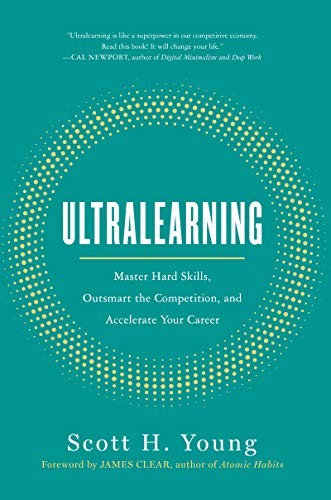
Ultralearning
Scott Young
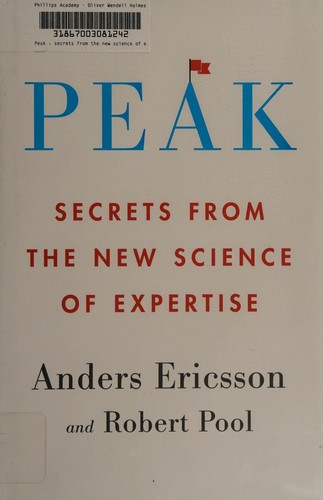
Peak: Secrets from the New Science of Expertise
Anders Ericsson and Robert Pool

Mindset: The New Psychology of Success
Carol S. Dweck
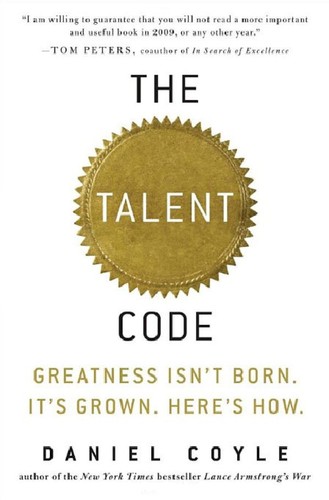
The Talent Code
Daniel Coyle
