Business · Book club
The Five Dysfunctions of a Team book club questions
Here are 12 book club questions for The Five Dysfunctions of a Team by Patrick Lencioni, ordered to open easily and end somewhere worth arguing about. Copy them, print them, or bring them up one at a time.
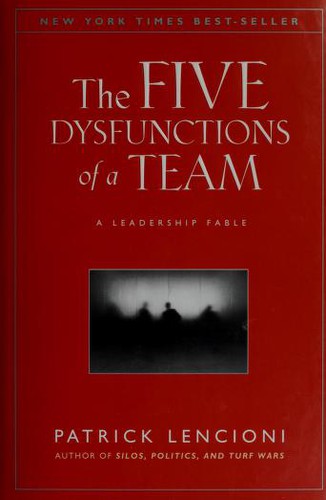
The Five Dysfunctions of a Team is Patrick Lencioni's argument that most teams fail not because of strategy, talent, or resources, but because of five specific, predictable behavioral problems that compound on each other.
Patrick Lencioni · 2002 · 4h 15m
Full summary and key takeaways →The 12 questions
- 1.
Which of the five dysfunctions feels most present in a team you're currently part of? What specific behavior makes it visible?
- 2.
Lencioni defines trust as vulnerability, not reliability. Are there people on your team with whom you'd comfortably admit a mistake? What makes that safe or unsafe?
- 3.
Think of a recent meeting where the real disagreement never surfaced. What was the cost of that silence?
- 4.
Kathryn argues that teams can commit to a decision without full consensus. When have you seen that work? When does it fail?
- 5.
What does accountability look like on the best team you've been part of? Who enforced it, and how?
- 6.
Lencioni claims most executives protect their own department's results over the company's collective results. Where have you seen that trade-off made, even subtly?
- 7.
The model puts trust at the foundation. If trust is genuinely broken on a team, what would actually have to happen to rebuild it — not just say it's repaired?
- 8.
Personal history exercises and Myers-Briggs debriefs are Lencioni's first practical recommendations. Do you think knowing more about your teammates would change how you work with them?
- 9.
Think of a team with obvious talent and resources that underperformed. Looking at the five dysfunctions, which one was probably the root?
- 10.
Lencioni's fable shows a CEO driving culture change from the top. When dysfunction comes from the leader rather than the team, what changes about how you'd apply his model?
- 11.
How do you personally respond to being held accountable by a peer rather than a manager? Is that more or less uncomfortable, and why?
- 12.
The book was published in 2002. Which of its ideas feel more relevant now than they did then, and which feel more dated?
How to run the discussion
- Pick six to eight, not all of them. An hour of real discussion covers fewer questions than anyone expects, and racing the list is what makes a book club feel like homework.
- Open with what people noticed, not what they concluded. Asking for a verdict first hardens opinions before anyone has heard each other.
- Let the disagreement run. The questions below that split a room are the ones worth the time; the ones everyone answers the same way can be skipped.
- Ask the quiet person a specific question. A direct, narrow question is far easier to answer than an open invitation to contribute.
Themes worth steering toward
If the conversation stalls, these are the threads that usually restart it.
Common questions
What are good book club questions for The Five Dysfunctions of a Team?
Here are 12 book club questions for The Five Dysfunctions of a Team by Patrick Lencioni, ordered to open easily and end somewhere worth arguing about. The strongest openers ask what each reader noticed rather than what they concluded, and the discussion usually turns on teamwork, trust, leadership.
How long should a book club discussion of The Five Dysfunctions of a Team last?
Most groups run 60 to 90 minutes of actual discussion. That is roughly six to eight questions, not all of them, so pick the ones that suit your group rather than working down the list in order.
What are the main themes in The Five Dysfunctions of a Team?
Teamwork, Trust, Leadership, Organizational behavior, Accountability. Those are the threads most likely to divide a room, which makes them the useful places to steer a discussion that has gone quiet.
Picking the next one? See books like The Five Dysfunctions of a Team or questions for other book club picks.
