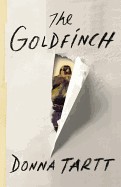
Talk to The Goldfinch like its author wrote you back.
Get the ideas that fit your life — not generic summaries.
- Chat with the book
- Audiobook-style main ideas
- Adapts to your life and goals
- Helps you take action
What it argues
The Goldfinch begins with a bombing in a New York museum. Thirteen-year-old Theo Decker survives; his mother doesn't. In the confusion of the aftermath, Theo walks out of the rubble carrying a small seventeenth-century Dutch painting — Fabritius's Goldfinch — not quite knowing what he's done. From there the novel follows Theo across two decades and through several social worlds: a wealthy Park Avenue family who take him in; Las Vegas, where his alcoholic father reappears; New York again, where he takes up antiques restoration under the wing of Hobie; and eventually the criminal world that inevitably closes in around the painting he never gave back.
The Goldfinch is a novel about grief and about the way objects can carry what people leave behind. The painting is Theo's connection to his mother, and more broadly to the idea that some things survive destruction — that beauty persists through accident, through war, through the indifference of time. Tartt is an unapologetic classicist; the novel's debt to Dickens is everywhere, in its picaresque structure, its memorable gallery of secondary characters, the social worlds Theo passes through, the long reach of crime and coincidence in a plot that takes the whole novel to close.
What it gets right
- 1.
The painting functions as the novel's organizing symbol and its moral problem simultaneously — Theo's attachment to it is genuine and explicable, and it also ruins him slowly.
- 2.
Tartt's Dickensian structure means the novel is openly invested in plot — coincidence, long-deferred consequence, characters reappearing — in a way that contemporary literary fiction often disdains.
- 3.
Grief is presented as something that doesn't resolve or heal cleanly — Theo carries his mother's death forward into every version of himself, and the painting is the physical form of that carrying.
What it covers
Who wrote it
Donna Tartt is an American novelist known for her infrequent, long, densely crafted novels. Her debut, The Secret History (1992), was a sensation — a campus thriller about a classics student implicated in murder that sold millions. The Little Friend followed in 2002. The Goldfinch, her third novel, was published in 2013, won the Pulitzer Prize, and became an international bestseller. She publishes roughly once a decade and gives few interviews. She was born in Mississippi and lives in New York.
