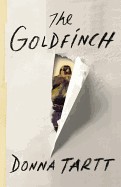
The Goldfinch by Donna Tartt is a 2013 literary fiction book about grief and loss, art and its consolation, belonging and displacement. The painting functions as the novel's organizing symbol and its moral problem simultaneously — Theo's attachment to it is genuine and explicable, and it also ruins him slowly.
Summary
The Goldfinch begins with a bombing in a New York museum. Thirteen-year-old Theo Decker survives; his mother doesn't. In the confusion of the aftermath, Theo walks out of the rubble carrying a small seventeenth-century Dutch painting — Fabritius's Goldfinch — not quite knowing what he's done. From there the novel follows Theo across two decades and through several social worlds: a wealthy Park Avenue family who take him in; Las Vegas, where his alcoholic father reappears; New York again, where he takes up antiques restoration under the wing of Hobie; and eventually the criminal world that inevitably closes in around the painting he never gave back.
The Goldfinch is a novel about grief and about the way objects can carry what people leave behind. The painting is Theo's connection to his mother, and more broadly to the idea that some things survive destruction — that beauty persists through accident, through war, through the indifference of time. Tartt is an unapologetic classicist; the novel's debt to Dickens is everywhere, in its picaresque structure, its memorable gallery of secondary characters, the social worlds Theo passes through, the long reach of crime and coincidence in a plot that takes the whole novel to close.
Tartt writes physical reality with extraordinary pleasure — interiors, furniture, the look of drugs and alcohol, the texture of different social registers. The middle section in Las Vegas with Boris, Theo's anarchic Ukrainian friend, is the most kinetic part of the novel; the antiques world in New York is the most atmospheric. At nearly 300,000 words, The Goldfinch is long, and the final third, set partly in Amsterdam, moves from realist novel into something more like a thriller.
The Goldfinch won the Pulitzer Prize in 2014 and sold millions of copies. It was also the subject of a critical backlash from literary reviewers who found it sentimental, overlong, and unserious as a literary object. That debate is partly a proxy war about popular versus experimental fiction, and readers who loved it are often not interested in the argument. It's a big, absorbing, emotionally generous novel that asks you to care about a painting, a friendship, and a young man's survival, and it delivers on all three.
Talk to The Goldfinch like its author wrote you back.
Get the ideas that fit your life — not generic summaries.
- Chat with the book
- Audiobook-style main ideas
- Adapts to your life and goals
- Helps you take action
Key takeaways
- 1.
The painting functions as the novel's organizing symbol and its moral problem simultaneously — Theo's attachment to it is genuine and explicable, and it also ruins him slowly.
- 2.
Tartt's Dickensian structure means the novel is openly invested in plot — coincidence, long-deferred consequence, characters reappearing — in a way that contemporary literary fiction often disdains.
- 3.
Grief is presented as something that doesn't resolve or heal cleanly — Theo carries his mother's death forward into every version of himself, and the painting is the physical form of that carrying.
- 4.
Boris is the novel's most alive character — the kind of secondary figure who threatens to take over the book. His moral ambiguity is more interesting than Theo's relative passivity.
- 5.
The antiques world provides Tartt with her best material: old objects, their provenance and damage and survival, as a metaphor for what the novel is about.
- 6.
The final section, set in Amsterdam, shifts genres in a way that some readers find exhilarating and others find a betrayal of what came before — it becomes a thriller.
- 7.
The novel's explicit thesis — its long final meditation on art and meaning and why beauty persists — divides readers: some find it earned, others find it portentous.
- 8.
At 300,000 words, length is a feature not a bug: Tartt needs time for Theo to accumulate a life, and the novel's emotional payoff depends on that accumulation.
Discussion questions
Use these on your own, with a book club, or as chat starters in Superbook. Book club version, ready to copy or print →
- 1.
Is Theo's keeping of the painting an act of love, pathology, or both? Does the novel come down on one side?
- 2.
Boris is a morally compromised character who is also the most energetic presence in the novel. What does he represent — chaos, freedom, the version of Theo that chose differently?
- 3.
The novel ends with a long philosophical meditation on art, fate, and meaning. Did that section feel earned to you, or did it feel like Tartt explaining what she'd been doing?
- 4.
The Goldfinch generated a critical backlash from literary reviewers after the Pulitzer win. What do you think those critics were responding to? Are they right?
- 5.
Hobie is one of the novel's most fully realized characters — decent, patient, skilled. What does his relationship with Theo represent?
- 6.
Pippa, Theo's romantic obsession, functions partly as a parallel to him — another museum bombing survivor. Does she feel like a fully developed character or a symbolic figure?
- 7.
The Las Vegas section with Boris feels like a different novel from the New York sections. Is that tonal shift effective or disruptive?
- 8.
Tartt's previous novel, The Secret History, came out thirteen years before The Goldfinch. Is there a meaningful relationship between them — in theme, obsession, or approach?
- 9.
The actual painting — Fabritius's Goldfinch — survived a real explosion. Tartt builds the whole novel on that fact. Does that historical grounding matter to how you read the novel?
- 10.
Theo's father is a figure of pure destruction in the novel. Is he humanized or simply a plot function?
- 11.
The final Amsterdam section tips into thriller. Did that work, or did it feel like a genre intrusion into a realist novel?
- 12.
Compared to other long American novels — The Corrections, American Pastoral — where does The Goldfinch land in terms of ambition and achievement?
- 13.
The 2019 film adaptation received negative reviews. Does that affect your sense of the novel — was it always unfilmable?
Themes
Frequently asked questions
-
Is The Goldfinch worth reading?
Yes, if you're willing to commit to a long, absorbing, Dickensian novel. It rewards the investment with rich characters, a propulsive plot, and genuine emotional weight. If you need critical credibility along with pleasure, ignore the backlash — readers and the Pulitzer committee were not wrong.
-
Is The Goldfinch too long?
It's very long — nearly 300,000 words. The middle third, particularly the Las Vegas chapters, moves fast. The antiques passages slow down deliberately. The final Amsterdam section accelerates again. Most readers who love the novel don't experience the length as a problem; readers who lose patience in the slower sections may.
-
What is The Goldfinch about, without spoilers?
A boy who survives a museum bombing, loses his mother, and walks out of the rubble with a small seventeenth-century Dutch painting. The novel follows him across two decades as he tries to live with that act and that loss.
-
Why did The Goldfinch get such negative reviews after winning the Pulitzer?
Several prominent critics found it sentimental, melodramatic, and too popular to merit literary distinction. The debate is real but also partly a cultural argument about what literary fiction is for — whether mass readability is a virtue or a concession.
-
Who shouldn't read The Goldfinch?
Readers who want a spare, controlled, experimental novel — the opposite of Tartt's maximalist impulse. Also readers who can't tolerate extended passages about antiques, drugs, and adolescent drift before the plot tightens up. The first hundred pages require patience.