Health · Book club
The Good Gut book club questions
Here are 11 book club questions for The Good Gut by Justin Sonnenburg, ordered to open easily and end somewhere worth arguing about. Copy them, print them, or bring them up one at a time.
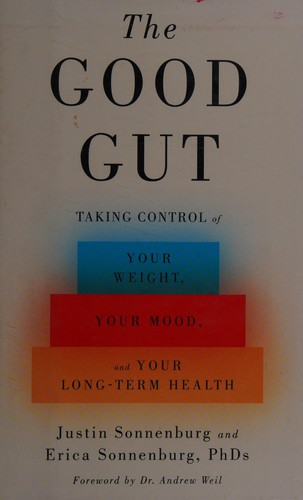
Justin Sonnenburg is a microbiologist at Stanford who studies the gut microbiome, and The Good Gut is his attempt to translate that research into something useful for non-scientists.
Justin Sonnenburg · 2015 · 5h 0m
Full summary and key takeaways →The 11 questions
- 1.
The Sonnenburgs argue the Western diet has impoverished our microbiome over generations. Do you find that frame convincing, or does it romanticize traditional diets?
- 2.
If microbial diversity tracks with health outcomes, what are the practical limits of improving it through diet alone, given how much was lost before any of us were born?
- 3.
The book emphasizes fiber variety over fiber quantity. Does that nuance change how you think about what a healthy diet actually looks like?
- 4.
How do you weigh the established benefits of antibiotics against the microbiome disruption they cause? Did the book shift your thinking?
- 5.
The Sonnenburgs include recipes. Did that practical layer make the book more or less credible to you as a science text?
- 6.
The hygiene hypothesis — that reduced microbial exposure drives allergy and autoimmune disease — is contested. What would it take to convince you it's correct?
- 7.
If the microbiome is partly inherited from our parents and shaped in infancy, how much of adult gut health is within our control?
- 8.
The book was published in 2015 and the field has moved. What would you most want updated — the diet sections, the immune function research, or the mental health connections?
- 9.
The Sonnenburgs advocate for eating like our ancestors in some respects. How do you apply that kind of ancestral-environment reasoning to other areas of health or life?
- 10.
The book's tone is academic but accessible. Did the scientific background of the authors make you more or less willing to follow their recommendations?
- 11.
What single change in eating or lifestyle did you find most plausible or most worth trying after reading The Good Gut?
How to run the discussion
- Pick six to eight, not all of them. An hour of real discussion covers fewer questions than anyone expects, and racing the list is what makes a book club feel like homework.
- Open with what people noticed, not what they concluded. Asking for a verdict first hardens opinions before anyone has heard each other.
- Let the disagreement run. The questions below that split a room are the ones worth the time; the ones everyone answers the same way can be skipped.
- Ask the quiet person a specific question. A direct, narrow question is far easier to answer than an open invitation to contribute.
Themes worth steering toward
If the conversation stalls, these are the threads that usually restart it.
Common questions
What are good book club questions for The Good Gut?
Here are 11 book club questions for The Good Gut by Justin Sonnenburg, ordered to open easily and end somewhere worth arguing about. The strongest openers ask what each reader noticed rather than what they concluded, and the discussion usually turns on microbiome, gut health, diet.
How long should a book club discussion of The Good Gut last?
Most groups run 60 to 90 minutes of actual discussion. That is roughly six to eight questions, not all of them, so pick the ones that suit your group rather than working down the list in order.
What are the main themes in The Good Gut?
Microbiome, Gut health, Diet, Immune function, Chronic disease. Those are the threads most likely to divide a room, which makes them the useful places to steer a discussion that has gone quiet.
Picking the next one? See books like The Good Gut or questions for other book club picks.
