The Handmaid's Tale by Margaret Atwood is a 1985 literary fiction book about patriarchy and control, bodily autonomy, resistance and complicity. Atwood's most chilling formal choice is making Offred unreliable not through deception but through trauma — she doesn't know what she remembers accurately, and neither do we.
Summary
The Handmaid's Tale is set in the near-future theocratic Republic of Gilead, carved out of what was once the northeastern United States after a coup by a fundamentalist Christian movement. The narrator, known only as Offred, is a Handmaid — a woman assigned to a high-ranking Commander and his wife for the sole purpose of bearing children, in a society where most women are infertile from environmental contamination. Offred narrates from memory, reconstructing events she is not entirely certain she has preserved accurately. The frame of the novel — a historical note from scholars centuries later — suggests she survived.
The novel is about many things at once. It is a political satire directed at a particular strand of American religious conservatism, and Atwood has been emphatic that everything in the novel has a historical precedent — she invented nothing, only recombined. It is also a study of how people adapt to degradation incrementally, how institutions of oppression require the participation of the oppressed, and how women in particular can be deployed against each other in the service of male power. Offred's relationship with the Wife, Serena Joy, is one of the book's most chilling dynamics: two women who hate each other trapped in the same system.
Atwood's prose is controlled, spare, and periodically devastating. The novel is short enough — under 300 pages in most editions — that its compression feels intentional; every scene earns its place. What makes it remarkable is not the dystopian world-building (which is less elaborated than, say, Orwell's) but the quality of consciousness Atwood sustains in Offred: a person who has not stopped noticing beauty, irony, and desire even inside a system designed to strip all three from her.
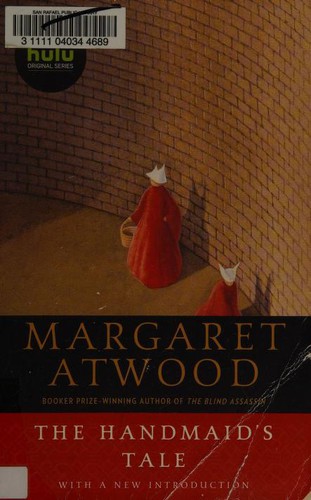
The novel was adapted into a hit Hulu television series beginning in 2017 and has become the defining feminist dystopia of the modern era — cited at political protests and referenced in policy debates. Readers who approach it as a thought experiment about institutional misogyny will find it more unsettling than readers who read it as science fiction. It is not primarily a novel of plot or action; it is a novel about the texture of subjugation. Those looking for a more conventionally dramatic story should read the sequel, The Testaments, first.
Talk to The Handmaid's Tale like its author wrote you back.
Get the ideas that fit your life — not generic summaries.
- Chat with the book
- Audiobook-style main ideas
- Adapts to your life and goals
- Helps you take action
Key takeaways
- 1.
Atwood's most chilling formal choice is making Offred unreliable not through deception but through trauma — she doesn't know what she remembers accurately, and neither do we.
- 2.
The novel argues that totalitarian systems require participation from those they oppress. The Aunts — women who enforce Gilead's rules on other women — are the most disturbing example.
- 3.
Language is a central weapon in Gilead: Handmaids are named after their Commanders (Offred = Of Fred), and controlling what can be said is how the regime controls what can be thought.
- 4.
The 'historical notes' epilogue is one of the great formal moves in modern fiction: it simultaneously confirms Offred's survival, frames her account as a historical artifact, and satirizes the academic tendency to treat women's testimony as a methodological problem.
- 5.
Every element of Gilead has a real historical precedent, from the Colonies to the Salvagings. Atwood's speculative fiction is assembled from documented facts about how women have been controlled throughout history.
- 6.
Serena Joy represents women who cooperate in systems of female oppression and then suffer from those same systems — a dynamic the novel treats with no sympathy but considerable comprehension.
- 7.
The novel asks what resistance looks like when the normal channels are closed — and Offred's small internal preservations of memory, desire, and humor are framed as a form of resistance in themselves.
- 8.
Atwood is precise about the mechanisms of normalization: Offred was once a free woman and the novel traces how quickly the past starts to feel like a dream when the present becomes all-encompassing.
Discussion questions
Use these on your own, with a book club, or as chat starters in Superbook. Book club version, ready to copy or print →
- 1.
Atwood insists that everything in Gilead has a historical precedent. Looking at the novel's specific institutions — Handmaids, Marthas, Aunts, the Wall — can you identify what real practices each might derive from?
- 2.
Offred's narrative is framed, in the historical note, as recorded tapes whose authenticity scholars cannot fully verify. What does that frame do to how you read her account?
- 3.
The Aunts — particularly Aunt Lydia — are women who enforce the system on other women. How does the novel account for this phenomenon? Is Aunt Lydia a villain, a victim, or something else?
- 4.
Offred says 'I compose myself' — using both senses of the word. How does the act of narrating her experience function as survival? Is narration presented as a form of agency in the novel?
- 5.
Nick is a figure of moral ambiguity throughout. By the end of the novel, do you trust him? Does Offred?
- 6.
The Ceremony — the institutionalized rape at the center of the novel — is rendered with deliberate emotional flatness by Offred. What does that flatness tell us about what she has had to do to survive?
- 7.
Serena Joy was once a television evangelist who advocated for women to return to the home. She is now confined to the home by the world she helped create. How does the novel treat that irony — satirically, tragically, or something else?
- 8.
The Republic of Gilead rose quickly, while many people were not paying attention. Does the novel's account of how the coup happened feel credible or contrived?
- 9.
Offred chooses not to join the resistance movement in the way Moira does. Is that a moral failure, a realistic choice, or something the novel refuses to judge?
- 10.
The historical note mocks the tendency to treat women's testimony with methodological skepticism rather than as direct evidence. Does that feel dated in 2026, or has the dynamic it describes persisted?
- 11.
The TV series extended the story significantly beyond the novel. If you've seen it, how does the adaptation change your reading of the source material?
- 12.
The novel is often read as a warning about the religious right. Atwood has also said it's about all forms of authoritarian control. Which reading feels more accurate to you after reading it?
Themes
Frequently asked questions
-
Is The Handmaid's Tale worth reading?
Yes. It is one of the most precisely constructed political novels in modern English literature, and its concerns feel more rather than less urgent with time. Even readers who know the plot from the television adaptation will find the novel's texture and formal intelligence distinctive.
-
Is The Handmaid's Tale appropriate for book clubs?
Yes, and it generates unusually rich discussion. The political and ethical questions it raises are ones reasonable adults disagree about, and the formal choices — the unreliable narrator, the epilogue — give book clubs plenty beyond the surface plot to discuss.
-
What is The Handmaid's Tale about, without spoilers?
A woman in a near-future theocratic United States, where women have been stripped of legal rights and assigned to roles based on fertility. She narrates her life in the household of a high-ranking official, attempting to preserve her sense of self while surviving a system designed to erase it.
-
Should I read the book or watch the show?
Both are worth your time but they are quite different experiences. The novel is compressed, interior, and formally precise. The television series is dramatically amplified and covers substantially more plot across multiple seasons. The novel takes about six hours to read and is the better starting point.
-
Who shouldn't read The Handmaid's Tale?
Readers who are currently in crisis around reproductive rights or bodily autonomy may find it too raw. The novel depicts institutionalized rape with deliberate flatness that some readers find disturbing rather than cathartic. It is not a comfortable read and does not offer neat resolution.