Business · Book club
The Jobs To Be Done Playbook book club questions
Here are 12 book club questions for The Jobs To Be Done Playbook by Jim Kalbach, ordered to open easily and end somewhere worth arguing about. Copy them, print them, or bring them up one at a time.
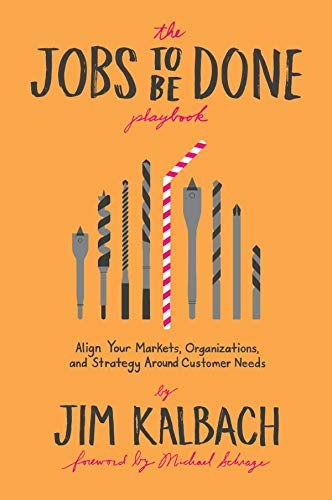
Jim Kalbach's The Jobs To Be Done Playbook is a practitioner's guide to applying the jobs-to-be-done framework in product development and innovation work.
Jim Kalbach · 2020 · 4h 15m
Full summary and key takeaways →The 12 questions
- 1.
What job does your core product get hired to do, in the customer's language rather than the product's feature list?
- 2.
Think of a product you use regularly. What job were you trying to get done the first time you 'hired' it, and is that still the primary job you're using it for?
- 3.
Where in your organization do demographic or behavioral frameworks dominate research? What questions aren't being asked as a result?
- 4.
Map one job your customers try to do that your product is involved in. At which step in the job map is the experience worst, and why?
- 5.
Kalbach describes multiple JTBD schools. Which one resonates most with how your team thinks about customers, and what does that tell you?
- 6.
What would your product roadmap look like if it were organized by the jobs customers hire you for rather than by features or technology?
- 7.
Have you or your team done switching research — asked customers what they stopped using before your product? What did you learn or what would you expect to learn?
- 8.
Write an outcome statement for the primary job one of your customers is trying to accomplish. Is it measurable and solution-neutral, or does it sneak in your product's approach?
- 9.
Where does JTBD thinking create friction with the way your organization currently does product development or customer research?
- 10.
The framework shifts focus from who buys to why they buy. Where in your sales or marketing process is that shift most needed?
- 11.
What's a recent product decision your team made that JTBD research might have changed? What information was missing?
- 12.
Kalbach says JTBD is a lens, not a complete strategy. What other frameworks does your team use alongside it, and how do they fit together?
How to run the discussion
- Pick six to eight, not all of them. An hour of real discussion covers fewer questions than anyone expects, and racing the list is what makes a book club feel like homework.
- Open with what people noticed, not what they concluded. Asking for a verdict first hardens opinions before anyone has heard each other.
- Let the disagreement run. The questions below that split a room are the ones worth the time; the ones everyone answers the same way can be skipped.
- Ask the quiet person a specific question. A direct, narrow question is far easier to answer than an open invitation to contribute.
Themes worth steering toward
If the conversation stalls, these are the threads that usually restart it.
Common questions
What are good book club questions for The Jobs To Be Done Playbook?
Here are 12 book club questions for The Jobs To Be Done Playbook by Jim Kalbach, ordered to open easily and end somewhere worth arguing about. The strongest openers ask what each reader noticed rather than what they concluded, and the discussion usually turns on customer research, product development, innovation.
How long should a book club discussion of The Jobs To Be Done Playbook last?
Most groups run 60 to 90 minutes of actual discussion. That is roughly six to eight questions, not all of them, so pick the ones that suit your group rather than working down the list in order.
What are the main themes in The Jobs To Be Done Playbook?
Customer research, Product development, Innovation, User experience, Jobs to be done. Those are the threads most likely to divide a room, which makes them the useful places to steer a discussion that has gone quiet.
Picking the next one? See books like The Jobs To Be Done Playbook or questions for other book club picks.
