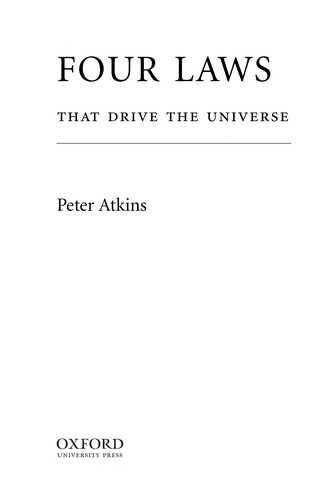
Four Laws That Drive the Universe by Peter Atkins is a 2007 science book about thermodynamics, entropy, energy. The four laws of thermodynamics are not engineering rules but fundamental statements about how energy, temperature, and disorder work in any physical system.
Summary
Peter Atkins, one of the most respected chemistry educators of the twentieth century, wrote this book as a compact but uncompromising account of the four laws of thermodynamics. The premise is simple: these four laws govern every physical and chemical process in the universe, and understanding them is not optional if you want to understand how the world actually works. Atkins doesn't treat them as engineering tools. He treats them as deep truths about the nature of energy, order, and time.
The zeroth law establishes what temperature means. The first law states that energy is conserved — you can't create or destroy it, only convert it from one form to another. The second law introduces entropy, the measure of disorder, and states that it always increases in any closed system. This is the law that gives time its direction: processes run forward, not backward, because forward means more entropy. The third law establishes absolute zero as an unreachable limit and grounds the measurement of entropy in something absolute. Atkins treats each law with equal seriousness and traces the intellectual history behind each one.
The second law gets the most attention, as it deserves. Entropy is the most consequential idea in the book, and Atkins is genuinely rigorous about what it means. He explains why engines can never be perfectly efficient, why heat flows from hot to cold and never the reverse, and why complex structures — galaxies, organisms, economies — are temporary pockets of order in a universe trending toward maximum disorder. The book does not comfort the reader with reassurances that this doesn't really apply to life or information; Atkins holds the line.
This is a short book, around 100 pages in its original form, but it is dense. Atkins writes with a dry precision that rewards careful reading and punishes skimming. Readers expecting gentle popularization will find it demanding. But those willing to follow his argument will come away with a genuine understanding of why the universe is the way it is — ordered in some places, disordered in most, and always heading somewhere specific.
Talk to Four Laws That Drive the Universe like its author wrote you back.
Get the ideas that fit your life — not generic summaries.
- Chat with the book
- Audiobook-style main ideas
- Adapts to your life and goals
- Helps you take action
Key takeaways
- 1.
The four laws of thermodynamics are not engineering rules but fundamental statements about how energy, temperature, and disorder work in any physical system.
- 2.
The zeroth law defines temperature: if two objects are each in thermal equilibrium with a third, they are in equilibrium with each other. This is what makes thermometers possible.
- 3.
The first law is conservation of energy. You can convert energy between forms, but the total amount in any closed system never changes.
- 4.
The second law says entropy — disorder — always increases in a closed system. This irreversibility is what gives time its direction and makes the past different from the future.
- 5.
No heat engine can be perfectly efficient, because converting heat entirely into work would violate the second law. The Carnot efficiency sets the absolute limit.
- 6.
Local decreases in entropy — complex structures like living organisms — are possible only by increasing entropy elsewhere, typically by releasing heat into the environment.
- 7.
The third law establishes that absolute zero is unreachable in finite steps, and uses this to ground the measurement of entropy in an absolute rather than arbitrary scale.
- 8.
The arrow of time is thermodynamic. The reason processes happen in one direction — eggs break, ice melts, heat dissipates — is the second law.
Discussion questions
Use these on your own, with a book club, or as chat starters in Superbook. Book club version, ready to copy or print →
- 1.
Atkins argues that entropy increase explains the direction of time. Does that framing change how you think about irreversible events in your own life?
- 2.
The second law says complex structures can only exist by exporting disorder somewhere else. What are the implications of that for how we think about life, industry, or civilization?
- 3.
Atkins is deliberately rigorous and refuses to soften the second law. Is that an asset or a barrier for a popular science book?
- 4.
The zeroth law defines temperature in a formal way most people have never encountered. Did having a precise definition change how you think about something as familiar as a thermometer?
- 5.
Heat engines can never be perfectly efficient. How does understanding the Carnot limit change how you evaluate claims about energy technology?
- 6.
The book is short but dense. Did the compression serve the subject or leave you wishing for more development?
- 7.
Atkins treats thermodynamics as the deepest of the physical sciences. Do you find that claim persuasive, or does it feel like a chemist's bias?
- 8.
If entropy always increases, what does that imply about the long-term fate of order in the universe, including structures we consider permanent?
- 9.
The third law makes absolute zero unreachable. Does knowing something is theoretically impossible but practically unreachable change how you think about limits in general?
- 10.
Where have you encountered the second law operating in your own experience, even if you didn't call it entropy at the time?
- 11.
Atkins wrote this for a general audience but doesn't compromise on precision. Is there a better way to write about thermodynamics for non-scientists, or does precision require some difficulty?
Themes
Frequently asked questions
-
Is Four Laws That Drive the Universe worth reading without a science background?
It is accessible but demanding. Atkins writes clearly and avoids heavy mathematics, but he doesn't oversimplify. Readers comfortable with careful reading and willing to sit with unfamiliar ideas will get a great deal from it. Those expecting easy popularization will find it challenging.
-
How long is the book?
The original Oxford University Press edition is around 110 pages. It reads in roughly three hours, though the density of ideas means many readers take longer on the entropy chapters. It rewards re-reading.
-
What is the second law of thermodynamics, in plain terms?
Entropy — a measure of disorder or the number of ways a system can be arranged — always increases in a closed system. Heat flows from hot to cold, not the reverse. Processes that run forward don't spontaneously reverse. The second law is why time has a direction.
-
Who should read this book?
Anyone who wants to understand why the physical world behaves as it does at a foundational level. It is especially useful for readers of other popular physics books who want something more rigorous than most introductions provide, and for anyone curious about why perfect engines, perpetual motion, and absolute cold are impossible.
-
Does the book cover statistical mechanics?
Atkins introduces Boltzmann's statistical interpretation of entropy — the idea that entropy counts the number of microstates available to a system — and uses it to explain why entropy increases. It's not a full treatment of statistical mechanics, but it gives the conceptual foundation that makes the second law feel like physics rather than magic.
Similar books
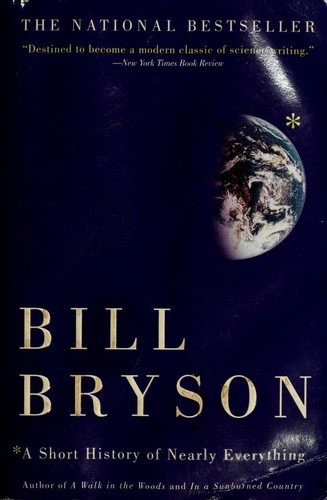
A Short History of Nearly Everything
Bill Bryson

Seven Brief Lessons on Physics
Carlo Rovelli
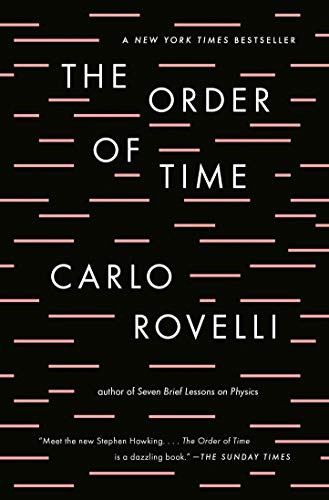
The Order of Time
Carlo Rovelli
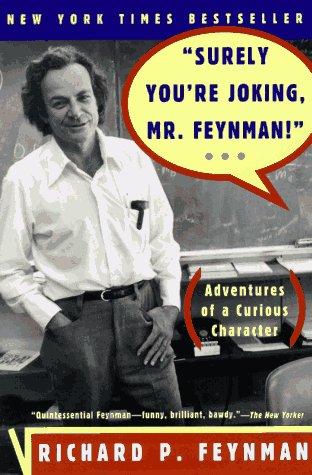
Surely You're Joking, Mr. Feynman!
Richard P. Feynman
