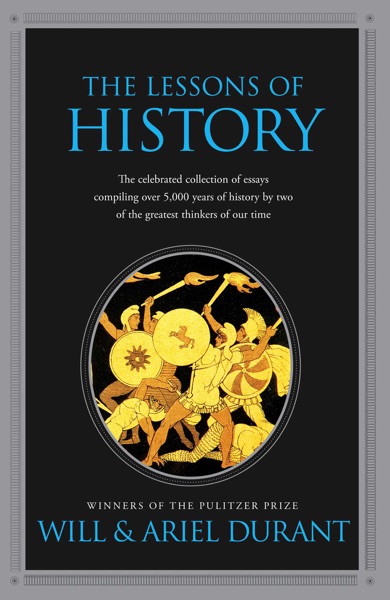
The Lessons of History by Will & Ariel Durant is a 1968 history book about civilizations, human nature, progress. History is largely the record of human behavior driven by biological imperatives — competition, cooperation, and the instinct for survival — that no ideology has permanently suppressed.
Summary
The Lessons of History is the Durants' distillation of their eleven-volume The Story of Civilization — a project that consumed forty years — into a slim, hundred-page essay. The premise is audacious: extract what history actually teaches, stripped of nationalist sentiment and arranged by theme. The result is part meditation, part provocation, and part warning from two scholars who had seen enough of the twentieth century to know how confidently wrong confident people can be.
The book works through a series of short chapters, each one posing a question: What does history teach about biology? About morals? About religion? About economics? The Durants resist tidy answers. They note that inequality is natural and persistent — most redistributions of wealth last only a generation before concentrations re-form. They observe that the moral code loosens when civilizations feel secure and tightens when they feel threatened. They argue that religion has been indispensable as a social adhesive even for nonbelievers, because it provides the shared moral framework that law alone cannot sustain.
The chapter on geography is a corrective to determinism: the land shapes civilizations but is not destiny. The chapters on war and government reflect the Durants' hard-won skepticism — war is biological, democracy is fragile, and the state is always a balance of force and consent that can tip in either direction. They treat socialism and capitalism as tendencies that have always coexisted in tension, not as mutually exclusive systems. Their view is that history does not repeat itself, exactly, but it rhymes reliably enough to be worth studying.
What makes the book unusual is its tone: learned but not academic, world-weary but not cynical. The Durants had read too much to be optimistic in the naive sense, but they still end on the idea that progress is real — that each generation inherits more tools, more knowledge, and more ethical sensitivity than it found. The book is brief enough to finish in one sitting and dense enough to reward years of return visits.
Talk to The Lessons of History like its author wrote you back.
Get the ideas that fit your life — not generic summaries.
- Chat with the book
- Audiobook-style main ideas
- Adapts to your life and goals
- Helps you take action
Key takeaways
- 1.
History is largely the record of human behavior driven by biological imperatives — competition, cooperation, and the instinct for survival — that no ideology has permanently suppressed.
- 2.
Inequality of wealth and power is persistent; economic leveling happens through revolution or depression, but concentrations re-form within a generation.
- 3.
Moral codes change with the conditions of survival. Loose in secure eras, they tighten when a civilization feels threatened.
- 4.
Religion has functioned as the foundation of social order even in societies whose elites have abandoned belief — it provides moral consensus that law cannot manufacture.
- 5.
War is not an aberration but a recurring expression of biological competition; states prepare for it and are shaped by it whether they fight or not.
- 6.
Democracy is rare and fragile. Most civilizations have been ruled by aristocracies; popular self-government requires unusual conditions to sustain itself.
- 7.
Progress is real, but it is not guaranteed. Each generation bequeaths accumulated knowledge and technique, but character must be re-formed in every individual.
- 8.
Capitalism and socialism are tendencies, not absolutes. Every historical society has mixed them in shifting proportions depending on crisis and circumstance.
Discussion questions
Use these on your own, with a book club, or as chat starters in Superbook. Book club version, ready to copy or print →
- 1.
The Durants argue inequality is a permanent feature of civilizations, not a correctable malfunction. Do you find this persuasive, or does it conflate what is with what must be?
- 2.
They claim moral codes have always been tied to the conditions of survival, not to eternal truths. What would that imply for moral arguments made today?
- 3.
The book treats religion as socially necessary even when factually doubtful. Is that a tenable position, or does it require defending something on false grounds?
- 4.
The Durants say every redistribution of wealth is reversed within a generation. What historical examples would you challenge them with?
- 5.
They describe democracy as rare and difficult to sustain. What conditions in your own country seem to support or undermine democratic stability right now?
- 6.
The chapter on war suggests states are always in some state of preparation for conflict. How does that framing change how you read current international news?
- 7.
The Durants write as cultural optimists despite everything they knew about the twentieth century. Is that optimism earned or is it a failure of nerve?
- 8.
They argue that history does not repeat but rhymes. Which contemporary situation most closely rhymes with something you recognize from their account?
- 9.
The book is explicitly a distillation of the Durants' eleven-volume series. Does that origin make it more trustworthy, or does compression inevitably distort?
- 10.
They treat capitalism and socialism as tendencies in tension rather than as opposed systems. How does that framing change how you think about economic debates?
- 11.
The book was written in 1968. Which of its observations seem dated, and which seem like they could have been written last year?
- 12.
The Durants say progress is real because each generation inherits accumulated knowledge. Is inherited knowledge the same as progress in human character?
Themes
Frequently asked questions
-
Is The Lessons of History worth reading?
Yes, particularly if you want a compact, skeptical overview of what history actually demonstrates rather than what ideologues of any stripe claim it shows. At roughly 100 pages it is unusually efficient. Some conclusions feel overstated, and the book reflects mid-twentieth-century assumptions, but the quality of the thinking is high throughout.
-
How long does it take to read The Lessons of History?
Two to three hours for most readers. The book is about 35,000 words across thirteen thematic chapters. It rewards slow reading and annotation more than it rewards speed — many passages pack a paragraph's worth of argument into two sentences.
-
What is the main argument of The Lessons of History?
That history teaches humility above all: human nature changes slowly if at all, inequality is persistent, progress is real but fragile, and no ideology is as new or as final as its advocates believe. The Durants extract patterns while resisting the temptation to turn those patterns into predictions.
-
Do I need to read The Story of Civilization first?
No. The Lessons of History stands entirely alone and was written as a standalone distillation. It will make you want to read the larger series, but it requires no prior knowledge of it.
-
Who should read this book?
Anyone who wants a fast, intellectually honest grounding in historical thinking — students, policy professionals, or general readers who suspect they've been getting history filtered through a particular agenda. It pairs well with any current-events reading.
Similar books
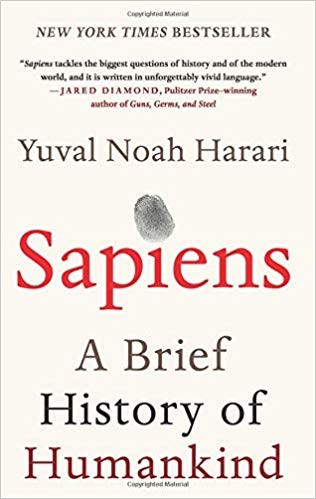
Sapiens: A Brief History of Humankind
Yuval Noah Harari

The Decline and Fall of the Roman Empire
Edward Gibbon
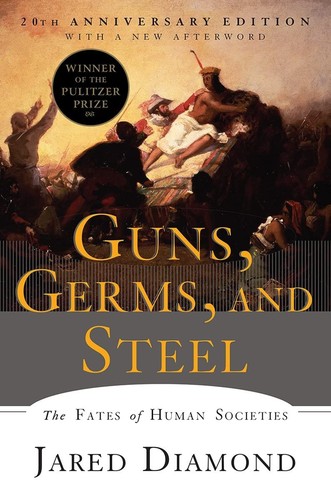
Guns, Germs, and Steel
Jared Diamond
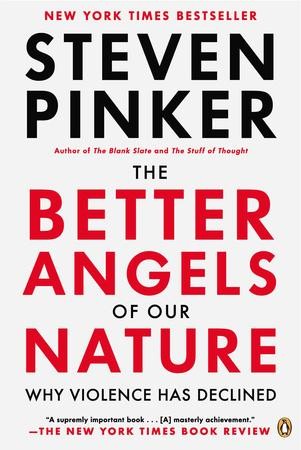
The Better Angels of Our Nature
Steven Pinker
