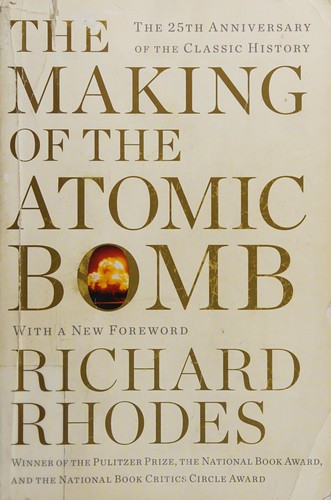
The Making of the Atomic Bomb by Richard Rhodes is a 1986 history book about nuclear science, world war ii, scientific discovery. The atomic bomb was built by a community of European refugee physicists who brought the theoretical foundations of fission to America just as Hitler was closing universities to Jews.
Summary
Richard Rhodes spent years researching the scientific and political story behind the Manhattan Project, and the result is a work of narrative history that refuses to treat the bomb as either a triumph or a horror to be judged from a comfortable distance. The Making of the Atomic Bomb won the Pulitzer Prize in 1988 and remains the definitive account of how the most destructive weapon in history was built in under three years.
Rhodes begins with the theoretical physics — the discoveries of radioactivity, fission, and the chain reaction — and renders them accessible without dumbing them down. The scientists who built the bomb are vivid individuals: Leo Szilard conceiving the chain reaction on a London street corner, Enrico Fermi supervising the first controlled reaction beneath a Chicago squash court, Robert Oppenheimer managing an extraordinary collection of egos in the New Mexico desert. Rhodes is as interested in the human story as the technical one, and he follows these men and women from their European origins through emigration, wartime secrecy, and finally the detonations at Alamogordo, Hiroshima, and Nagasaki.
The narrative covers both the scientific and the political-military dimensions. Rhodes traces how refugee physicists fleeing Nazi Europe brought their knowledge to America, how the decision to build the bomb was made at the highest levels of government, and how the decision to use it on Japanese cities was taken with far less deliberation than most people assume. He does not spare the architects of Hiroshima — the book's final chapters on the bombings are among the most harrowing in American historical writing — but he also resists easy retrospective condemnation. The world these scientists inhabited was one already saturated with industrial killing.
What makes the book endure is its refusal to separate the physics from the politics or the scientists from their moral context. Rhodes argues that the bomb was not an accident or an aberration but the logical outcome of forces — scientific curiosity, national ambition, wartime terror, and the competitive logic of weapons development — that remain active today. For anyone trying to understand the nuclear age, this is the essential starting point.
Talk to The Making of the Atomic Bomb like its author wrote you back.
Get the ideas that fit your life — not generic summaries.
- Chat with the book
- Audiobook-style main ideas
- Adapts to your life and goals
- Helps you take action
Key takeaways
- 1.
The atomic bomb was built by a community of European refugee physicists who brought the theoretical foundations of fission to America just as Hitler was closing universities to Jews.
- 2.
The Manhattan Project succeeded in part because of Robert Oppenheimer's rare ability to manage top-tier scientific talent under extreme secrecy and time pressure.
- 3.
The decision to use the bomb on Japanese cities involved less deliberation than the decision to build it. No single formal review considered alternatives before Hiroshima.
- 4.
Enrico Fermi's Chicago Pile-1 in December 1942 — the world's first self-sustaining nuclear chain reaction — proved the bomb was theoretically achievable and set off an industrial mobilization unprecedented in science.
- 5.
Industrial-scale bombing of civilian populations was already normalized by 1945. Rhodes argues this context explains why the bomb's use felt routine to military planners at the time.
- 6.
Leo Szilard grasped the political and moral implications of fission before most physicists did, and spent the final war years trying to prevent the bomb's use — unsuccessfully.
- 7.
The secrecy of the Manhattan Project was so extreme that Vice President Truman learned of the bomb's existence only after Roosevelt's death, four months before Hiroshima.
- 8.
Rhodes shows that scientific knowledge, once generated, does not remain secret for long. The Soviet bomb followed within four years, beginning a nuclear arms race that shaped the entire second half of the twentieth century.
Discussion questions
Use these on your own, with a book club, or as chat starters in Superbook. Book club version, ready to copy or print →
- 1.
Rhodes traces the bomb's origin to theoretical physics developed decades before the war. At what point, if any, was it still possible to prevent the bomb from being built?
- 2.
How does Rhodes's portrayal of Oppenheimer compare to the popular image of him? What does the book add or complicate?
- 3.
The refugee scientists who built the bomb were fleeing fascism in Europe. How does their motivation compare to the motivations of American military and political leaders who directed the project?
- 4.
Rhodes argues that the decision to bomb Hiroshima was made with surprisingly little deliberation. Does his account change how you think about the morality of that decision?
- 5.
How does the practice of physics as Rhodes describes it compare to your mental model of how science works?
- 6.
Szilard and other scientists tried to prevent the bomb's use through petitions. What constraints limited their effectiveness, and what does that suggest about scientists' ability to control the applications of their discoveries?
- 7.
Rhodes treats the Manhattan Project scientists as complex individuals rather than heroes or villains. Do you think that framing is accurate, or does it let them off too easily?
- 8.
The mass civilian bombing of Dresden and Tokyo preceded Hiroshima. How does the book's treatment of conventional bombing shape your reading of the atomic bomb decision?
- 9.
The Manhattan Project cost roughly two billion 1940s dollars. What does that willingness to spend tell us about how governments weigh scientific investment in wartime?
- 10.
Rhodes ends with the bombings themselves rather than tracing the arms race. What is the effect of that choice?
- 11.
Which scientist in the book left the strongest impression on you, and why?
- 12.
The book was published in 1986, at the height of the Cold War. How does its perspective feel different from how we might read it today?
Themes
Frequently asked questions
-
Is The Making of the Atomic Bomb worth reading?
Yes, for anyone seriously interested in the history of the nuclear age. It is long and demanding, but the rewards are proportionate. Rhodes makes the physics comprehensible, the characters vivid, and the moral stakes inescapable. It won the Pulitzer, the National Book Award, and the National Book Critics Circle Award for good reason.
-
How long is The Making of the Atomic Bomb?
The book runs about 900 pages. At an average reading pace expect twelve to fifteen hours. Most readers take several weeks. The early chapters on theoretical physics are slower going; the pace accelerates once the war begins.
-
What is the book about?
Rhodes tells the full story of how the atomic bomb was built, from the discovery of radioactivity in the 1890s through the bombings of Hiroshima and Nagasaki in August 1945. It covers both the science — fission, chain reactions, critical mass — and the political and human story of the Manhattan Project.
-
Do I need a science background to follow it?
No. Rhodes explains the physics clearly for a general reader. The technical passages are detailed enough to be satisfying but never assume prior knowledge. The science is never the sole focus — the human and political dimensions run alongside it throughout.
-
How does it compare to American Prometheus?
American Prometheus is a biography of Oppenheimer and goes deeper into his personal life and the security hearing that destroyed his career. Rhodes covers a wider cast of characters and pays more attention to the physics. The two books complement each other well.
Similar books
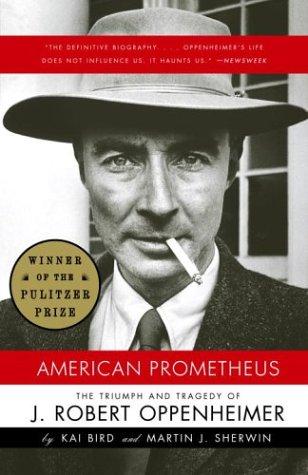
American Prometheus
Kai Bird and Martin J. Sherwin
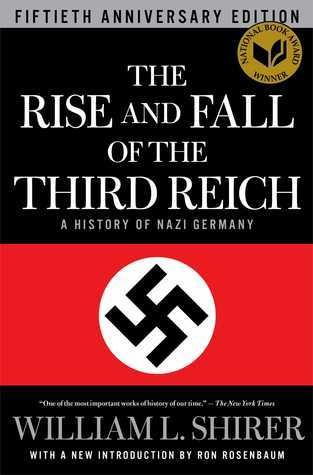
The Rise and Fall of the Third Reich
William L. Shirer
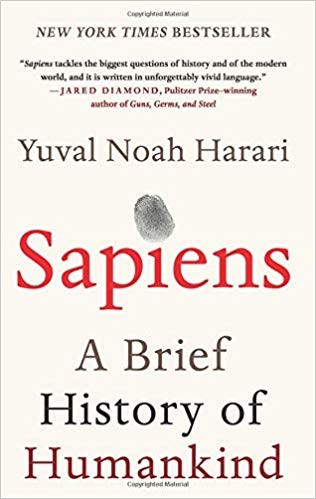
Sapiens: A Brief History of Humankind
Yuval Noah Harari
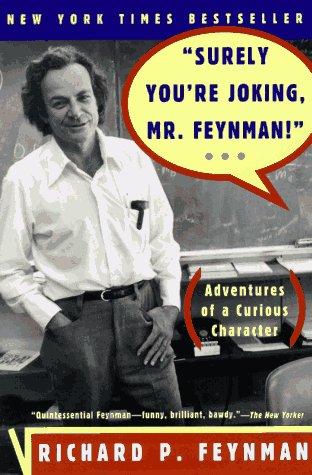
Surely You're Joking, Mr. Feynman!
Richard P. Feynman
