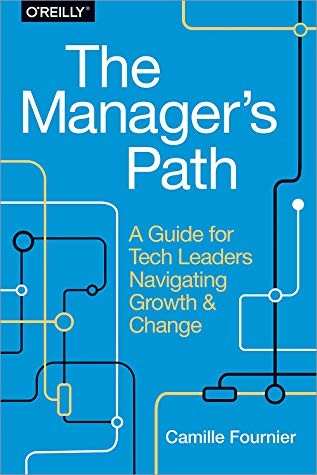
The Manager's Path by Camille Fournier is a 2017 business book about engineering management, career growth, leadership. Each level of engineering leadership requires a different skill set. What got you here won't get you to the next level — and recognizing that transition is the first challenge at every stage.
Summary
The Manager's Path is Camille Fournier's guide to the complete arc of engineering leadership, from tech lead to CTO. Each chapter addresses a different level of the hierarchy and the specific challenges that level introduces — making it unusually useful because you can read the chapter that matches where you are now and the one for where you're going next.
Fournier's central argument is that the skills that get you to each level are not the skills that success at the next level requires. Becoming a tech lead means giving up some individual contribution to create leverage for your team. Becoming an engineering manager means your output is now other people's output. Becoming a manager of managers means you are increasingly removed from the technical details and must lead through culture and systems rather than through direct judgment.
The book is practical and frank about the political realities of large organizations. Fournier writes about how to navigate a bad manager, how to manage someone who is more technically skilled than you are, how to handle the team member who is brilliant but difficult, and how to do a performance improvement plan without it feeling like a formality before a firing. These are the actual problems engineering managers face, and most management books don't touch them.
The later chapters on managing managers and the executive role are less detailed than the early chapters — understandably, since the experiences are rarer and harder to generalize. But the middle of the book, covering the transition from individual contributor to manager and the early years of managing a team, is among the most useful writing available on the subject. Fournier writes from genuine experience rather than theory, and the book reads that way.
Talk to The Manager's Path like its author wrote you back.
Get the ideas that fit your life — not generic summaries.
- Chat with the book
- Audiobook-style main ideas
- Adapts to your life and goals
- Helps you take action
Key takeaways
- 1.
Each level of engineering leadership requires a different skill set. What got you here won't get you to the next level — and recognizing that transition is the first challenge at every stage.
- 2.
The tech lead role is where many engineers first learn that their output is no longer just their own code. Managing your time so you create leverage rather than just staying productive is the central skill.
- 3.
1:1 meetings are the most important tool a manager has for understanding what's actually happening on their team. They should be regular, predictable, and primarily driven by the direct report's agenda.
- 4.
Performance management should not start with a PIP. If someone reaches a formal improvement plan without prior explicit feedback, the manager has already failed.
- 5.
Brilliant jerks — people who are technically excellent but corrosive to team culture — cost more than they produce. Most managers wait too long to act on this.
- 6.
Managing up is a skill. Understanding what your own manager needs from you, and delivering that proactively, is part of the job at every level.
- 7.
As you manage more managers, your job becomes about creating systems and culture that work without you in the room. The leverage is in what happens when you're absent.
- 8.
Good senior engineers create new senior engineers. This is partly technical mentorship and partly sponsorship — actively putting people in rooms and on projects where they can grow.
Discussion questions
Use these on your own, with a book club, or as chat starters in Superbook. Book club version, ready to copy or print →
- 1.
Fournier describes a different skill set at each level of the ladder. What skill do you need to develop most to operate effectively at the next level from where you are now?
- 2.
Think about the best tech lead you've worked with. What made them effective? How much of it was technical skill versus the softer skills Fournier describes?
- 3.
Have you ever been in a performance management situation — either as manager or as the person being managed — that could have been handled better? What would have required to catch it earlier?
- 4.
The book is direct about brilliant jerks costing more than they produce. Have you managed or worked alongside one? When did the organization finally act, and what did it cost to wait?
- 5.
Fournier says 1:1s should be primarily driven by the direct report's agenda. How do your current 1:1s actually work? Whose agenda dominates?
- 6.
What's something your manager needs from you right now that you haven't explicitly asked them about? How confident are you that you know what they actually need?
- 7.
The book covers managing people who are more technically skilled than you. Have you been in that situation? What made it work or not work?
- 8.
Fournier distinguishes between giving feedback in the moment and formal performance conversations. Where does your current organization default, and what gets lost in the gap?
- 9.
What does career growth look like for strong individual contributors in your organization? Is it genuinely valued, or is management the only visible path forward?
- 10.
As organizations grow, culture has to work without the founders in the room. What's a cultural belief in your organization that functions well — and one that only survives because of who's currently there?
- 11.
If you became manager of managers tomorrow, what's the first thing about your current management practice that would have to change?
Themes
Frequently asked questions
-
Is The Manager's Path worth reading?
Yes, particularly for software engineers transitioning into management and for engineering managers at any level who want a clear map of what the levels above them actually require. It's one of the most complete and practical books specifically focused on engineering management.
-
How long does it take to read The Manager's Path?
Around four to five hours for the 244-page book. Many engineers read the chapter relevant to their current level and bookmark the rest for later — it works well as a reference as well as a cover-to-cover read.
-
Does The Manager's Path apply outside software engineering?
The early chapters apply broadly. The later chapters, especially those covering principal engineer roles and CTO responsibilities, are specific to technical organizations. Managers in other domains will find the core management content useful but may find some chapters less relevant.
-
Who should read The Manager's Path?
Software engineers considering the management track, new engineering managers, and experienced engineering managers who want to think more clearly about what the next level requires. Also useful for CTOs who want a structured way to think about growing the managers beneath them.
-
What's the most actionable idea in The Manager's Path?
The case for treating 1:1s as primarily the direct report's meeting. Most managers run 1:1s as status updates or their own agenda items. Flipping that — and staying silent long enough to hear what the person actually wants to talk about — changes what you learn from those conversations.