Talk to The Marriage Plot like its author wrote you back.
Get the ideas that fit your life — not generic summaries.
- Chat with the book
- Audiobook-style main ideas
- Adapts to your life and goals
- Helps you take action
The Marriage Plot, in detail
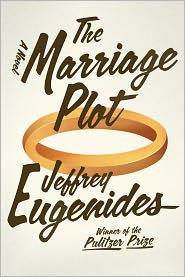
Madeleine Hanna graduates from Brown University in 1982 and is in love with two very different men: Leonard Bankhead, brilliant and bipolar, and Mitchell Grammaticus, a religious studies major searching for something larger than himself. The Marriage Plot is a campus novel that keeps happening after graduation, tracking three young people across their early twenties as they discover that the romantic plots they've absorbed from novels don't quite fit the lives they're actually living. Madeleine's thesis is on the marriage plot in Victorian fiction — the convention by which novels end when the woman accepts or rejects a proposal — and Eugenides uses that frame consciously, asking what a marriage plot looks like when the person at its center has read enough to know she's inside one.
The novel has three roughly equal threads. Madeleine's story is the romantic center: her relationship with Leonard, which is genuinely passionate and genuinely devastating, traces what it looks like to love someone whose mental illness is also inseparable from the person you fell for. Leonard's chapters follow his bipolar disorder with clinical detail and without romanticizing it — the lithium, the hospitalizations, the version of Leonard who is flat and functional versus the version who is terrifying and alive. Mitchell's thread takes him across India on a spiritual search, working for Mother Teresa's mission in Calcutta, trying to figure out what meaning looks like outside the frameworks he was given.
The novel's great strength is its intellectual texture. Eugenides clearly read Barthes and Derrida and Semiotics of Love along with his characters, and the ideas genuinely inform how the book behaves. But The Marriage Plot is also warmer and more emotionally direct than either The Virgin Suicides or Middlesex — this is the closest Eugenides has come to an autobiographical novel, and it shows in the specificity of the early-1980s Brown milieu. The weakness is that Mitchell's spiritual journey can feel like a separate, less urgent book. Some readers find his chapters the richest; others want more Madeleine and Leonard.
This is a novel for people who spent their twenties reading too much, loving people who weren't good for them, and wondering if their education prepared them for anything. Those who find campus novels navel-gazing or who are impatient with academic references may find the first third slow. But the Leonard sections are among the most honest writing about bipolar disorder in contemporary literary fiction.
The big ideas
- 1.
The marriage plot — the Victorian convention of courtship and resolution — survives in contemporary life not as a structure but as an expectation, and educated women in particular feel its pressure.
- 2.
Eugenides renders Leonard's bipolar disorder with rare precision: the manic Leonard and the lithium-flat Leonard are not metaphors but lived conditions, and loving one means accepting both.
- 3.
Madeleine's literary education is simultaneously her asset and her trap — she knows the plots she's in but cannot simply read her way out of them.
