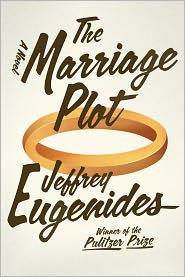
The Marriage Plot by Jeffrey Eugenides is a 2011 literary fiction book about love and literary theory, mental illness, coming of age. The marriage plot — the Victorian convention of courtship and resolution — survives in contemporary life not as a structure but as an expectation, and educated women in particular feel its pressure.
Summary
Madeleine Hanna graduates from Brown University in 1982 and is in love with two very different men: Leonard Bankhead, brilliant and bipolar, and Mitchell Grammaticus, a religious studies major searching for something larger than himself. The Marriage Plot is a campus novel that keeps happening after graduation, tracking three young people across their early twenties as they discover that the romantic plots they've absorbed from novels don't quite fit the lives they're actually living. Madeleine's thesis is on the marriage plot in Victorian fiction — the convention by which novels end when the woman accepts or rejects a proposal — and Eugenides uses that frame consciously, asking what a marriage plot looks like when the person at its center has read enough to know she's inside one.
The novel has three roughly equal threads. Madeleine's story is the romantic center: her relationship with Leonard, which is genuinely passionate and genuinely devastating, traces what it looks like to love someone whose mental illness is also inseparable from the person you fell for. Leonard's chapters follow his bipolar disorder with clinical detail and without romanticizing it — the lithium, the hospitalizations, the version of Leonard who is flat and functional versus the version who is terrifying and alive. Mitchell's thread takes him across India on a spiritual search, working for Mother Teresa's mission in Calcutta, trying to figure out what meaning looks like outside the frameworks he was given.
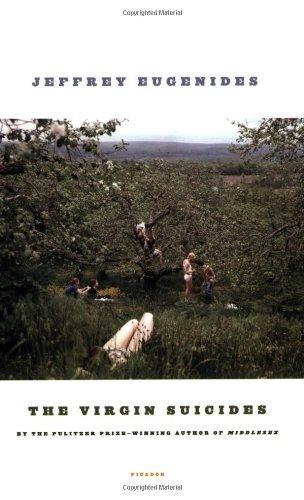
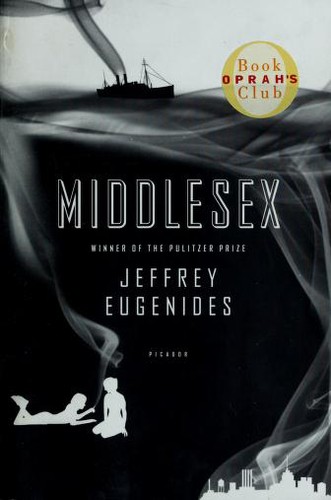
The novel's great strength is its intellectual texture. Eugenides clearly read Barthes and Derrida and Semiotics of Love along with his characters, and the ideas genuinely inform how the book behaves. But The Marriage Plot is also warmer and more emotionally direct than either The Virgin Suicides or Middlesex — this is the closest Eugenides has come to an autobiographical novel, and it shows in the specificity of the early-1980s Brown milieu. The weakness is that Mitchell's spiritual journey can feel like a separate, less urgent book. Some readers find his chapters the richest; others want more Madeleine and Leonard.
This is a novel for people who spent their twenties reading too much, loving people who weren't good for them, and wondering if their education prepared them for anything. Those who find campus novels navel-gazing or who are impatient with academic references may find the first third slow. But the Leonard sections are among the most honest writing about bipolar disorder in contemporary literary fiction.
Talk to The Marriage Plot like its author wrote you back.
Get the ideas that fit your life — not generic summaries.
- Chat with the book
- Audiobook-style main ideas
- Adapts to your life and goals
- Helps you take action
Key takeaways
- 1.
The marriage plot — the Victorian convention of courtship and resolution — survives in contemporary life not as a structure but as an expectation, and educated women in particular feel its pressure.
- 2.
Eugenides renders Leonard's bipolar disorder with rare precision: the manic Leonard and the lithium-flat Leonard are not metaphors but lived conditions, and loving one means accepting both.
- 3.
Madeleine's literary education is simultaneously her asset and her trap — she knows the plots she's in but cannot simply read her way out of them.
- 4.
Mitchell's spiritual search through India and Calcutta is the novel's most overtly philosophical thread, grappling with what secular meaning looks like in the absence of genuine faith.
- 5.
The early-1980s Brown setting anchors the novel in a specific intellectual moment — semiotics, French theory, deconstruction — that shaped a generation's relationship to text and meaning.
- 6.
The novel argues that the desire for romantic narrative is not culturally programmed away by education; it runs underneath theory and survives it.
- 7.
Eugenides treats the early-twenties period of life seriously — not as prologue to adulthood but as its own form of experience with its own valid difficulties.
- 8.
The ending resolves less than the marriage plot demands of it, which is either the novel's honest conclusion or its most frustrating feature, depending on what you brought to it.
Discussion questions
Use these on your own, with a book club, or as chat starters in Superbook. Book club version, ready to copy or print →
- 1.
Madeleine chooses Leonard over Mitchell in part because Leonard is more interesting, more alive. Does the novel endorse that choice, critique it, or simply show it?
- 2.
Leonard's bipolar disorder means that the person Madeleine loves is partly constituted by an illness. The novel asks whether that distinction is even coherent. Where do you come down?
- 3.
Mitchell is often read as the most autobiographical character — the earnest, spiritually restless intellectual. Is he the novel's moral center or its least interesting figure?
- 4.
The setting is Brown in the early 1980s, thick with French theory and semiotics. Does the academic context feel authentic to you, or does it feel like period costuming?
- 5.
Madeleine studies the marriage plot academically but lives inside one. Does her literary knowledge ever actually help her?
- 6.
The novel ends ambiguously. Did you feel that ambiguity was earned by the preceding 400 pages, or did it feel like evasion?
- 7.
Compare Madeleine to other literary heroines who are also readers — Emma Woodhouse, Isabel Archer, Dorothea Brooke. In what tradition does she belong, and what does Eugenides do differently?
- 8.
Mitchell's time working for Mother Teresa in Calcutta is one of the novel's more polarizing sections. Did you find it earned its place in the book?
- 9.
The novel was published in 2011 but set in 1982. Does the period matter? Could this story work in a contemporary setting?
- 10.
The title promises a marriage plot but the novel ends without one. Is that a kept promise or a broken one?
- 11.
Eugenides's three novels are very different from each other. How does The Marriage Plot fit with The Virgin Suicides and Middlesex as a body of work?
- 12.
Which of the three characters did you find most sympathetic, and did that change over the course of the novel?
Themes
Frequently asked questions
-
Is The Marriage Plot worth reading if I've already read Middlesex?
Yes, but it's a different experience. Middlesex is more ambitious in scope; The Marriage Plot is more intimate and emotionally direct. If you loved Middlesex for the epic immigrant saga, Marriage Plot's campus novel scale may feel smaller. If you loved the character work, you'll find it equally strong here.
-
Do you need to know French literary theory to enjoy the book?
No. Eugenides explains enough that you can follow the ideas without having read Barthes. Some readers find the theory sections slow; others find them genuinely interesting. The novel functions as a love story and a mental-illness narrative independent of the academic layer.
-
How does the novel handle bipolar disorder?
Carefully and honestly. Eugenides clearly did his research, and Leonard's illness is rendered with clinical detail and emotional specificity. The novel neither romanticizes mania nor reduces Leonard to his diagnosis. It's one of the most accurate depictions of bipolar disorder in literary fiction.
-
Who is the novel really about — Madeleine, Leonard, or Mitchell?
All three get roughly equal page time, but most readers experience it as Madeleine's story. She is the pivot around which the other two orbit, and the marriage plot conceit is hers. Mitchell's thread is the most self-contained and could almost be a separate novella.
-
Who shouldn't read The Marriage Plot?
Readers who find campus novels or literary-theory references insufferable will struggle with the first hundred pages. Those who want a clean romantic resolution will be dissatisfied by the ending. And if you're looking for Eugenides's most formally inventive work, Middlesex or The Virgin Suicides are better choices.