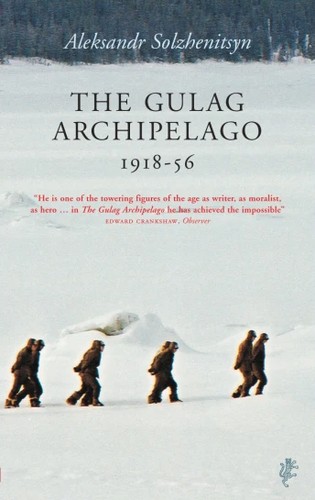
The Master and Margarita by Mikhail Bulgakov is a 1967 classics book about totalitarianism and creative freedom, cowardice and its consequences, devil as satirist. Woland's function is not simply evil — he exposes the cowardice, greed, and bad faith already present in the people he encounters, acting as a diagnostic instrument rather than a tempter.
Summary
The Master and Margarita is structured as a double narrative: one set in Moscow in the 1930s, where a figure named Woland (who is Satan) arrives with a retinue of demons and wreaks havoc on the Soviet literary and cultural establishment; and one set in Jerusalem around the time of the Crucifixion, where Pontius Pilate interrogates a wandering philosopher named Yeshua. The two storylines circle each other and eventually converge. The novel was written in secret during the Stalinist terror, never submitted for publication in Bulgakov's lifetime, and first published — in censored form — in 1966, over twenty-five years after his death.
What the novel is actually about is harder to compress. It's a satire of Soviet bureaucracy and cultural control, but the satire is funny and specific rather than allegorical and heavy-handed: the particular texture of communal apartments, literary unions, theatrical productions, and corrupt housing officials is rendered with the precision of someone who lived inside it for decades. It's also a love story, in which Margarita makes a pact with the devil to save the manuscript of the man she loves. And it's a philosophical exploration of cowardice — the Pilate sections return repeatedly to the question of what happens to a person who knows what is right and chooses not to act, and the novel's final lines are among the most haunting in twentieth-century fiction.
Bulgakov's prose is exuberant and shapeshifting — the comic sequences in Moscow are genuinely funny in a way that Soviet satirical fiction rarely is, and the transition from farce to genuine tragedy within a single chapter is handled with unusual deftness. The Jerusalem chapters are written in a different register entirely: spare, arid, and grave. The novel plays with multiple tones without losing coherence, which is part of what makes it feel like magic even in translation.
Readers who like their novels to add up cleanly — to have a single, extractable argument — will be frustrated by The Master and Margarita. It doesn't resolve into a thesis. It is strange in the way that only books written for no audience in particular tend to be strange: Bulgakov wrote it to survive, not to publish, and that freedom shows in every chapter.
Talk to The Master and Margarita like its author wrote you back.
Get the ideas that fit your life — not generic summaries.
- Chat with the book
- Audiobook-style main ideas
- Adapts to your life and goals
- Helps you take action
Key takeaways
- 1.
Woland's function is not simply evil — he exposes the cowardice, greed, and bad faith already present in the people he encounters, acting as a diagnostic instrument rather than a tempter.
- 2.
The Pilate sections function as a mirror for the main narrative: both involve a figure with power who chooses expediency over what they know to be just, and both pay the price for that choice across centuries.
- 3.
Cowardice is the novel's central sin. Pilate's failure to act on his private conviction is the wound that never heals; the Soviet characters' failures are its comic descendants.
- 4.
Margarita is one of Russian literature's most fully realized female characters — not a passive love interest but someone who actively drives the plot, makes real sacrifices, and negotiates with the devil on equal terms.
- 5.
The novel was written during the Stalinist terror in full knowledge that it could never be published — that specific condition of writing for no audience gives it an unusual moral freedom.
- 6.
Bulgakov's treatment of the Soviet literary establishment is precise and devastating: the Union of Soviet Writers, the housing committees, the literary journals appear not as abstractions but as specific institutions with their own logic of self-preservation and cruelty.
- 7.
The question of what happens to a suppressed artistic work — whether it can survive censorship, whether 'manuscripts don't burn' — is at the heart of the novel and gives it a dimension of wish fulfillment and genuine anguish simultaneously.
- 8.
The light and peace given to the Master at the novel's end is not heaven — it is something quieter and more ambiguous, a form of rest that the novel distinguishes carefully from redemption.
Discussion questions
Use these on your own, with a book club, or as chat starters in Superbook. Book club version, ready to copy or print →
- 1.
Woland is the novel's devil, but he punishes the corrupt and saves the lover. How do you interpret the moral logic of his actions — is he good, evil, or something outside that binary?
- 2.
The line 'cowardice is the greatest sin' appears in the Jerusalem chapters. Does the whole novel endorse that view, and who in the Moscow narrative exemplifies it most clearly?
- 3.
The Jerusalem sections are written in a completely different style from the Moscow sections. What does Bulgakov achieve by this — is it contrast, commentary, something else?
- 4.
Margarita agrees to serve as the hostess of Satan's ball in exchange for the Master's freedom. What does this choice say about love, and does the novel treat her sacrifice as noble or cautionary?
- 5.
The novel was written under Stalin and never submitted for publication. How much does knowing that biographical context change how you read it?
- 6.
'Manuscripts don't burn' is one of the novel's most famous lines. Does the novel believe this? Does it earn that belief, or is it wishful thinking?
- 7.
The Soviet characters are often presented as ridiculous buffoons. Does the comedy make the political critique stronger or does it let the system off too lightly?
- 8.
Pontius Pilate is given more psychological depth than almost any character in the novel except Margarita. Why do you think Bulgakov was so interested in him?
- 9.
The ending is ambiguous about whether the Master and Margarita have found peace, redemption, or something else entirely. What do you think they've been given?
- 10.
How does the novel's structure — alternating between two time periods and two narrative registers — affect the reading experience? Would a more conventional structure have served its themes?
- 11.
The Soviet literary bureaucrats are satirized mercilessly. Does Bulgakov's portrait feel dated or does it describe something persistent about how cultural institutions protect themselves?
- 12.
Several readers describe the novel as impossible to summarize. After reading it, why do you think that is — what resists compression?
Themes
Frequently asked questions
-
Is The Master and Margarita worth reading?
Yes, emphatically. It is one of the strangest, funniest, most moving novels of the twentieth century. The combination of sharp political satire, genuine philosophical depth, and narrative invention makes it impossible to categorize and difficult to put down. The Russian context helps but is not required.
-
Is The Master and Margarita hard to read?
Not in terms of prose difficulty, but the novel has a large cast and shifts between two time periods and multiple tones. The first fifty pages can feel disorienting as you get your bearings. Most readers find it clicks into place around chapter four or five and then moves with great momentum.
-
Which translation should I read?
The Mirra Ginsburg translation is readable but cut. The Michael Glenny translation is the classic English version. Richard Pevear and Larissa Volokhonsky's 1997 translation is the most complete and most highly regarded currently; it is the edition most commonly used in academic settings.
-
What is The Master and Margarita about, without spoilers?
Satan and his retinue arrive in Soviet Moscow and throw it into chaos, exposing the corruption, cowardice, and absurdity of the system. Meanwhile, a novelist and his lover navigate their own crisis, and an embedded story about Pontius Pilate explores what happens to people who know what is right and choose otherwise.
-
Who should not read The Master and Margarita?
Readers who need narrative tidiness — clear resolutions, clear moral categories, answers to the questions the novel raises. Bulgakov leaves many things deliberately unresolved. If you find ambiguity frustrating rather than generative, the novel's final chapters in particular will be unsatisfying.