The Meaning of It All: Thoughts of a Citizen-Scientist by Richard P. Feynman is a 1998 science book about science and religion, uncertainty, critical thinking. Doubt and uncertainty are not weaknesses of science but its most important features. Progress requires willingness to hold beliefs lightly and revise them when evidence demands.
Summary
The Meaning of It All collects three lectures Richard Feynman delivered at the University of Washington in 1963, published posthumously in 1998. They are the most direct statement of Feynman's views on the relationship between science and society — less technical than his physics lectures and more personal than his famous Caltech courses. He is plainspoken, occasionally digressive, and unusually willing to say he doesn't know.
The first lecture, "The Uncertainty of Science," is Feynman's case that doubt is not a weakness of science but its defining feature. Science is the organized suspicion of received wisdom. Its progress depends on the willingness to admit error and to hold conclusions lightly. He argues that this tolerance for uncertainty, which makes scientists uncomfortable in public discourse, is actually a moral as much as an epistemological virtue.
The second lecture, "The Uncertainty of Values," extends this to ethics and religion. Feynman respects religious experience but is skeptical of specific metaphysical claims. He argues that science and religion address different kinds of questions — science tells us how things work, religion addresses what to care about — but that many apparent conflicts arise from religious institutions making testable claims they can't support. He is harder on pseudoscience and astrology than on serious religion.
The third lecture, "This Unscientific Age," is the most polemical. Feynman is irritated by the exploitation of scientific prestige — the appeal to unnamed experts, the mystification of ordinary reasoning — and by the public's willingness to be awed rather than curious. He worries about democracy's vulnerability to demagoguery when citizens lose confidence in their own judgment. These concerns feel remarkably current. The three lectures together make a coherent argument: that the scientific attitude — skeptical, humble, willing to revise — is the same attitude democracy requires of its citizens.

Talk to The Meaning of It All: Thoughts of a Citizen-Scientist like its author wrote you back.
Get the ideas that fit your life — not generic summaries.
- Chat with the book
- Audiobook-style main ideas
- Adapts to your life and goals
- Helps you take action
Key takeaways
- 1.
Doubt and uncertainty are not weaknesses of science but its most important features. Progress requires willingness to hold beliefs lightly and revise them when evidence demands.
- 2.
The scientific method is not a procedure but an attitude: organized skepticism, checked by experiment and peer criticism, applied to any claim about how the world works.
- 3.
Feynman respects religious experience as a genuine human response to mystery, but he draws a sharp line at specific factual claims made on religious authority that conflict with evidence.
- 4.
Pseudoscience and the exploitation of scientific prestige — appeals to authority without showing your work — are more dangerous than simple ignorance because they borrow credibility they haven't earned.
- 5.
Citizens in a democracy need the same habits of mind as scientists: willingness to demand evidence, skepticism toward authority, and confidence that they can evaluate arguments themselves.
- 6.
The tolerance for uncertainty that science requires is emotionally demanding. Most human institutions prefer confident answers to honest doubt, which creates persistent pressure on scientists to overstate their certainty.
- 7.
Many conflicts between science and religion are conflicts between science and particular institutional claims, not with religious experience or moral frameworks as such.
Discussion questions
Use these on your own, with a book club, or as chat starters in Superbook. Book club version, ready to copy or print →
- 1.
Feynman argues doubt is a moral virtue, not just an epistemological one. Do you agree? Are there contexts where certainty is morally required?
- 2.
He draws a distinction between religious experience and religious institutional claims. Is that distinction sustainable in practice, or does it unravel when you try to apply it?
- 3.
Feynman is bothered by pseudoscience partly because it imitates scientific authority without earning it. What are current examples that would fit his description?
- 4.
He worries that citizens in democracy are losing confidence in their own rational judgment. Does that worry seem more or less justified today than in 1963?
- 5.
Science requires tolerating uncertainty; politics often rewards certainty and simplicity. Is that tension resolvable, or does democracy just have to manage it?
- 6.
Feynman says he finds religious experience real but can't convert it into specific factual claims. Is that an honest position or an evasion?
- 7.
He suggests that honest doubt is more intellectually courageous than false certainty. Where in your own life have you found doubt harder to sustain than belief?
- 8.
The lectures were delivered in 1963, during the Cold War and nuclear tension. How does that historical context shape his concerns about democracy and critical thinking?
- 9.
Feynman is sometimes accused of scientism — treating the scientific attitude as applicable to all domains of life. Does anything in the lectures support or refute that charge?
- 10.
His irritation with mystification and the exploitation of scientific prestige: does modern science communication suffer from the same problems he identified, or has it improved?
- 11.
If you had to identify one idea from these lectures that most needs to be heard right now, which would it be and why?
Themes
Frequently asked questions
-
What is The Meaning of It All about?
Three lectures Feynman gave in 1963 on the relationship between science, values, and democracy. The central argument is that scientific doubt — organized skepticism — is the same attitude that good citizens and free societies require.
-
Is this book difficult to read?
No. These are transcribed lectures, not papers, and Feynman speaks in plain colloquial language. The book is short — under two hundred pages — and reads quickly. No technical background is required.
-
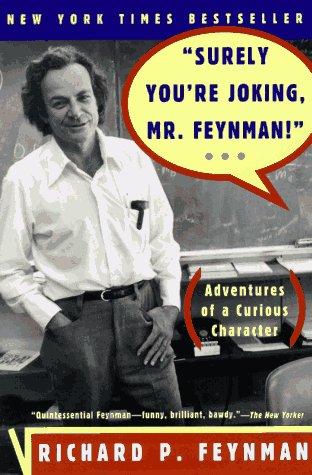
How does this compare to Surely You're Joking, Mr. Feynman?
Surely You're Joking is personal and anecdotal — the story of Feynman's life and personality. The Meaning of It All is more explicitly argumentative, addressing science, religion, and democracy directly. Together they give a fuller picture of how he thought.
-
Does Feynman criticize religion?
He is critical of specific factual claims made on religious authority and of pseudoscience generally. He is more sympathetic to religious experience and moral frameworks, and he avoids the polemical tone of later popular atheism.
-
Is the book dated, given it was delivered in 1963?
Some passages reflect Cold War concerns, but the core arguments about doubt, pseudoscience, and democratic reasoning feel contemporary, in some respects more urgent now than they did then.