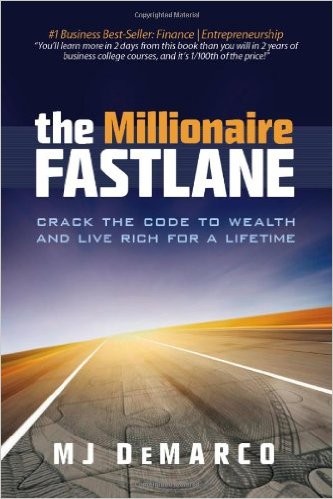
The Millionaire Fastlane by MJ DeMarco is a 2011 self-help book about entrepreneurship, wealth building, business ownership. The conventional Slowlane — save, invest, retire at 65 — trades your most valuable decades for security at the end. It is a legitimate path but not a path to wealth or early financial freedom.
Summary
The Millionaire Fastlane is MJ DeMarco's argument that conventional financial advice — work for forty years, save 10 percent, invest in index funds, retire at 65 — is not a path to wealth but a path to a modestly funded old age, and that genuine financial freedom requires building a business rather than an investment portfolio. DeMarco, who built and sold an internet company in his early thirties, presents what he calls the "Fastlane" — creating a scalable business with significant leverage — as the only realistic path to substantial wealth before conventional retirement age.
DeMarco organizes his framework around three "roadmaps": the Sidewalk (living paycheck to paycheck, focused on immediate consumption), the Slowlane (following conventional advice, saving and investing over decades), and the Fastlane (building a business with the potential for significant leverage and scale). His critique of the Slowlane is that it trades the best years of your life for financial security at the end of it — a trade he considers a poor one. The Fastlane trades financial security for the possibility of financial freedom while you are young and healthy enough to enjoy it.
The Fastlane framework centers on what DeMarco calls the "CENTS" commandments: Control (control your income and equity), Entry (if it's easy to enter, competition erodes returns), Need (solve real problems for real people), Time (income detached from your time), and Scale (serve a large audience). Businesses that meet these criteria can grow without requiring the owner's proportional time and can be sold for multiples of earnings. Businesses that don't — self-employment, professional practices, local services — are Slowlane income even if they pay well.
The book is written with a combative edge that some readers find refreshing and others find off-putting. DeMarco is dismissive of conventional financial advice, skeptical of most "passive income" claims that don't involve genuine business ownership, and openly critical of the financial media and the investment industry. The practical content on business building is less detailed than on critique — the book is better at arguing why to pursue the Fastlane than at guiding how to build a specific business.
Talk to The Millionaire Fastlane like its author wrote you back.
Get the ideas that fit your life — not generic summaries.
- Chat with the book
- Audiobook-style main ideas
- Adapts to your life and goals
- Helps you take action
Key takeaways
- 1.
The conventional Slowlane — save, invest, retire at 65 — trades your most valuable decades for security at the end. It is a legitimate path but not a path to wealth or early financial freedom.
- 2.
Wealth requires leverage: systems, people, or capital that generate returns without requiring proportional time. Employment and self-employment provide none of this.
- 3.
The CENTS framework identifies businesses with Fastlane potential: Control, Entry barriers, solving a Need, Time-decoupled income, and Scalability.
- 4.
The best business ideas solve real problems for real people — they come from genuine need, not from ideas that seem clever in the abstract.
- 5.
Most 'passive income' claims are not passive. Genuine passive income requires upfront work to build a system, then ongoing maintenance. It is not income without effort.
- 6.
Business equity — building something you can sell — is a fundamentally different vehicle than salary. The sale of a business compresses decades of income into a single transaction.
- 7.
The process of building a business requires tolerating extended periods without guaranteed income. The emotional and psychological preparation for that is as important as the business strategy.
- 8.
Most financial success is achieved not through superior talent but through superior processes and consistency. The habits and systems you build determine the outcome more than your initial endowments.
Discussion questions
Use these on your own, with a book club, or as chat starters in Superbook. Book club version, ready to copy or print →
- 1.
DeMarco's central claim is that conventional financial advice (save, invest, retire at 65) is not a path to early financial freedom. Do you find that critique persuasive, or does it mischaracterize what the Slowlane can achieve?
- 2.
The Fastlane framework requires building a scalable business. How realistic is that path for most people, and what kinds of people is it genuinely suited for?
- 3.
DeMarco dismisses most self-employment and professional practices as Slowlane income. Do you agree with that characterization, or is high-income professional work a viable alternative path?
- 4.
The CENTS framework identifies businesses with scalable potential. Which businesses you have observed or been part of would pass the CENTS test, and which would fail?
- 5.
DeMarco argues that the best business ideas come from solving real problems you personally encounter. What problems do you encounter regularly that no one is solving well?
- 6.
The book trades the certainty of the Slowlane for the possibility of the Fastlane. How do you think about that tradeoff given your own risk tolerance, family situation, and financial cushion?
- 7.
DeMarco is a self-made internet entrepreneur from the early 2000s. How much of his story is replicable in today's more saturated digital environment?
- 8.
The combative tone — dismissing conventional advice as 'BS' — is a deliberate style choice. Does that tone make the argument more persuasive, less, or does it just attract a certain kind of reader?
- 9.
Most Fastlane businesses fail. DeMarco acknowledges this but frames failure as tuition. Is that framing honest about the risks, or does it underweight the real cost of entrepreneurial failure?
- 10.
DeMarco says the Slowlane works — it just takes forty years. Is that actually a problem if you end up financially comfortable? What does your answer reveal about what you're actually optimizing for?
- 11.
The book is more effective at critiquing conventional advice than at guiding specific business building. What would you need beyond this book to actually pursue the Fastlane?
- 12.
DeMarco sold his business and became financially independent in his early thirties. If you achieved that at the same age, what would you do with your time?
Themes
Frequently asked questions
-
Is The Millionaire Fastlane anti-frugality?
Not exactly. DeMarco's critique is not of frugality per se but of the premise that frugality plus index investing over forty years is the path to significant wealth. He argues that frugality in service of a business-building strategy is useful; frugality as an end in itself just produces a slow path to a comfortable retirement.
-
Do I have to start a business to apply The Millionaire Fastlane?
The book's Fastlane framework specifically requires business ownership with leverage and scale. DeMarco explicitly says employment and self-employment are Slowlane regardless of income. If you do not want to build and potentially sell a scalable business, the book's core prescription does not apply, though the financial education framework has standalone value.
-
Is this a good book for someone who has never started a business?
As a motivational reframe and philosophical challenge to conventional financial thinking, yes. As a practical guide to starting a specific business, it is too general. DeMarco argues the case for entrepreneurship and identifies criteria for good businesses, but does not provide sector-specific guidance or execution detail.
-
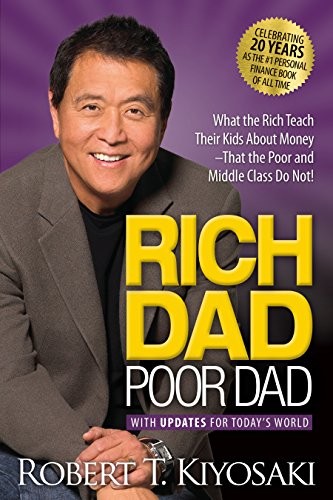
How does The Millionaire Fastlane compare to Rich Dad Poor Dad?
Similar themes: both argue for business ownership and passive income over employment. DeMarco is more specific about what makes a business Fastlane-worthy (the CENTS criteria) and more critical of passive income claims that don't involve genuine equity. Rich Dad Poor Dad focuses more on real estate and financial education broadly. Both are better as motivational reframes than as specific how-to guides.
-
Is the Fastlane still viable in today's markets?
DeMarco's examples are mostly from internet businesses in the early 2000s. The principles — solve real problems, build leverage, own equity — remain valid. The specific opportunities have shifted; the current environment for content creation, SaaS, and e-commerce offers different Fastlane paths than the directory/marketplace businesses of DeMarco's era. The framework requires updating but is not obsolete.