Economics · Book club
The Misbehavior of Markets book club questions
Here are 11 book club questions for The Misbehavior of Markets by Benoit Mandelbrot, ordered to open easily and end somewhere worth arguing about. Copy them, print them, or bring them up one at a time.
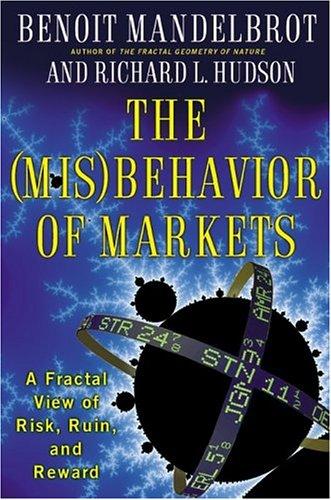
Benoit Mandelbrot, the mathematician who discovered fractal geometry, spent decades arguing that standard financial theory systematically underestimates the riskiness of markets.
Benoit Mandelbrot · 2004 · 6h 15m
Full summary and key takeaways →The 11 questions
- 1.
Mandelbrot argues that standard risk models are not just imprecise but fundamentally miscalibrated. If financial professionals know this, why do they continue using them?
- 2.
The 1987 crash was, under standard models, a near-impossibility. Does the existence of such events change how you personally think about the risk in your own financial decisions?
- 3.
Mandelbrot says markets have memory — volatility clusters. Have you observed this pattern in your own experience following markets, and how does it change what risk management should look like?
- 4.
The book distinguishes mild randomness from wild randomness. Which domains in your professional or personal life involve wild randomness that is often treated as mild?
- 5.
If fractal models are more accurate than bell-curve models, why hasn't the financial industry adopted them? Mandelbrot's answer is essentially institutional inertia and self-interest — does that seem like the full story?
- 6.
Diversification is one of the most widely recommended investment strategies. Mandelbrot qualifies it significantly. How much does his argument change your view of a diversified portfolio?
- 7.
The book predates the 2008 financial crisis. How much of what happened in 2008 do you think Mandelbrot's framework explains that standard models missed?
- 8.
Black-Scholes is used even though its assumptions are known to be false. What other widely used models or frameworks in your field are you using despite knowing their assumptions are wrong?
- 9.
Mandelbrot is contemptuous of the financial academy. Does his outsider position strengthen or weaken his argument for you?
- 10.
The practical implication of Mandelbrot's framework is that financial institutions should hold much more capital as a buffer. What would markets look like if they did?
- 11.
What does the concept of wild randomness suggest about the predictability of your own career or financial trajectory over a ten-year horizon?
How to run the discussion
- Pick six to eight, not all of them. An hour of real discussion covers fewer questions than anyone expects, and racing the list is what makes a book club feel like homework.
- Open with what people noticed, not what they concluded. Asking for a verdict first hardens opinions before anyone has heard each other.
- Let the disagreement run. The questions below that split a room are the ones worth the time; the ones everyone answers the same way can be skipped.
- Ask the quiet person a specific question. A direct, narrow question is far easier to answer than an open invitation to contribute.
Themes worth steering toward
If the conversation stalls, these are the threads that usually restart it.
Common questions
What are good book club questions for The Misbehavior of Markets?
Here are 11 book club questions for The Misbehavior of Markets by Benoit Mandelbrot, ordered to open easily and end somewhere worth arguing about. The strongest openers ask what each reader noticed rather than what they concluded, and the discussion usually turns on risk, financial markets, fractal geometry.
How long should a book club discussion of The Misbehavior of Markets last?
Most groups run 60 to 90 minutes of actual discussion. That is roughly six to eight questions, not all of them, so pick the ones that suit your group rather than working down the list in order.
What are the main themes in The Misbehavior of Markets?
Risk, Financial markets, Fractal geometry, Probability, Market theory. Those are the threads most likely to divide a room, which makes them the useful places to steer a discussion that has gone quiet.
Picking the next one? See books like The Misbehavior of Markets or questions for other book club picks.
