The One Thing by Gary Keller and Jay Papasan is a 2013 self-help book about focus, prioritization, productivity. The Focusing Question — 'What's the one thing I can do such that by doing it everything else will be easier or unnecessary?' — is the most powerful prioritization tool in the book.
Summary
The One Thing is Gary Keller's argument that extraordinary results come not from doing more things but from doing fewer things better — specifically, from identifying the single most important thing at any given time and doing that before anything else. Keller built the largest real estate company in the world and attributes much of that success to the discipline of asking one focusing question: "What's the one thing I can do such that by doing it everything else will be easier or unnecessary?"
The book opens by attacking several myths that Keller believes are actively harming how people work: that everything matters equally, that multitasking is a viable strategy, that willpower is always available, that a balanced life is possible all the time, and that big results require big ambition rather than focused effort. His counter to each is the same: narrow down, focus up, go deep.
The central tool is the Focusing Question, applied recursively. You ask it at the level of your life, then your year, then your month, then your week, then your day. The answers form a domino chain — each small action creates conditions for the next. Keller argues that the biggest mistake people make is working hard on the wrong things: not because they lack discipline, but because they've never clearly identified the one action that unlocks everything else.
The final third deals with implementation: time blocking, protecting your One Thing from interruptions, building habits around it, and organizing your life to make the focused work sustainable. Keller is direct that a wildly focused life will feel unbalanced in the short term. He argues that exceptional results require counterbalancing — accepting imbalance in some areas to achieve extraordinary results in others. The book is best read as a provocation to examine what you're actually optimizing for, not as a system to follow.
Talk to The One Thing like its author wrote you back.
Get the ideas that fit your life — not generic summaries.
- Chat with the book
- Audiobook-style main ideas
- Adapts to your life and goals
- Helps you take action
Key takeaways
- 1.
The Focusing Question — 'What's the one thing I can do such that by doing it everything else will be easier or unnecessary?' — is the most powerful prioritization tool in the book.
- 2.
Multitasking is a myth. Dividing attention across tasks produces diluted results on each; sequential focus on single tasks produces superior outcomes.
- 3.
Willpower is a depletable resource. Do your most important work first, when your willpower reserve is freshest, not after the day has ground it down.
- 4.
Time blocking is not scheduling — it's protecting time for the One Thing before other demands fill the calendar. Block first, then let others book around it.
- 5.
The domino effect: small focused actions set in motion chains of larger results. You don't need a big move; you need the right first move.
- 6.
Balance is a myth in the short term. Extraordinary results in any one area require deliberate imbalance — accepting that other areas will get less attention temporarily.
- 7.
Success requires a purpose, a priority, and a productive action. Without all three aligned, effort disperses.
- 8.
Accountability is built around the One Thing, not around a full task list. The question each day is not 'Did I get everything done?' but 'Did I do my One Thing?'
Discussion questions
Use these on your own, with a book club, or as chat starters in Superbook. Book club version, ready to copy or print →
- 1.
What is your One Thing right now — the single action that would make everything else easier or unnecessary in the area of life you most want to improve?
- 2.
Keller argues that multitasking is not just inefficient but impossible. Do you experience switching costs in your own work? What does the first ten minutes back in a task feel like?
- 3.
He attacks the idea that everything on a to-do list matters equally. Look at your current list: which three items, if done, would make the others less important?
- 4.
Keller says to time-block the One Thing before the day's demands arrive. What would you need to change about your calendar to do that starting next week?
- 5.
The book argues that big success requires accepting imbalance. What are you currently refusing to deprioritize that might be preventing a breakthrough elsewhere?
- 6.
Where in your life have you seen the domino effect in action — a small action that cascaded into something much larger?
- 7.
Keller says willpower is like a muscle that fatigues. At what point in your day does your decision quality noticeably degrade?
- 8.
Who in your professional life do you think asks the Focusing Question implicitly, even if they've never read the book? What does their daily behavior look like?
- 9.
The book distinguishes purpose (the why), priority (the what), and productive action (the how). Which of these three is least clear in your current work?
- 10.
Keller says 'going small' is counterintuitive but produces big results. What's the smallest daily action you could take that would compound most in your most important goal?
- 11.
How would your relationships change if you began applying the Focusing Question to your personal life — picking one person or relationship to invest in most deeply right now?
- 12.
What habit would most support your One Thing, and what specifically is preventing you from building it?
Themes
Frequently asked questions
-
Is The One Thing worth reading?
Yes if you struggle with prioritization and feel spread thin across too many competing obligations. The Focusing Question alone is worth the read. Some readers find the repetition excessive — the core argument could fit in a long essay — but the examples and implementation chapters add practical value.
-
How long does it take to read The One Thing?
About four to five hours at average pace for the roughly 240-page book. The chapters are short and the writing is breezy. Many readers finish it in a weekend.
-
What is the main idea of The One Thing?
Identify the single most leveraged action in any area of your life and do it first, every day. Extraordinary results don't come from doing more — they come from doing the most important thing consistently.
-
Who should read The One Thing?
People who feel productive but not effective — busy but not making meaningful progress on what matters most. Also useful for entrepreneurs and managers who need to align team effort around fewer, higher-leverage priorities.
-
What's the difference between The One Thing and Essentialism?
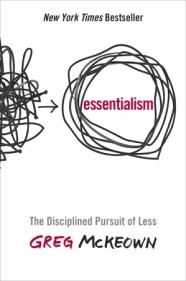
Both argue for doing less to achieve more. Essentialism is broader, covering how to identify and protect what's essential across all areas of life. The One Thing is more tactical, focused on the daily practice of identifying and executing the single most leveraged action.