Philosophy · Book club
The Open Society and Its Enemies book club questions
Here are 12 book club questions for The Open Society and Its Enemies by Karl Popper, ordered to open easily and end somewhere worth arguing about. Copy them, print them, or bring them up one at a time.
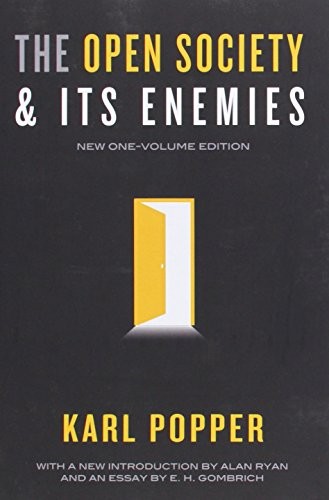
Karl Popper wrote The Open Society and Its Enemies during World War II, and the wartime context is inseparable from its argument.
Karl Popper · 1945 · 16h 45m
Full summary and key takeaways →The 12 questions
- 1.
Popper argues that Plato's ideal state is totalitarian at heart. Does reading the Republic as a political blueprint rather than a philosophical exercise change how you assess it?
- 2.
What does Popper mean by historicism, and can you think of contemporary movements that fit his definition?
- 3.
The paradox of tolerance states that unlimited tolerance must lead to the disappearance of tolerance. How should an open society draw that line in practice?
- 4.
Popper distinguishes piecemeal social engineering from utopian social engineering. Is that distinction meaningful when the problems are large-scale, like climate change or poverty?
- 5.
His critique of Marx distinguishes between Marx's intentions and the consequences of his theory. Is that a fair way to evaluate a political thinker?
- 6.
Popper defends liberal democracy procedurally: it allows bad rulers to be removed without violence. Is that a sufficient defense, or does democracy need a stronger substantive justification?
- 7.
The book was written in response to fascism and Nazism. Does it map onto the political threats you see in the world today, or does it miss something?
- 8.
Popper accuses Hegel of obscurantism — deliberate vagueness to make ideas impossible to falsify. Is that a fair characterization, or does it miss what Hegel was doing?
- 9.
The open society idea assumes that tolerating dissent is better in the long run than suppressing it. Are there domains — public health, national security — where you'd push back on that?
- 10.
Popper's own politics were center-left. Does his critique of socialism sit in tension with his political sympathies, or does he thread the needle convincingly?
- 11.
Which argument in the book felt most dated, and which felt most urgent given the political moment you're reading it in?
- 12.
Popper places enormous weight on the freedom to criticize. What institutions or norms in your own society do you rely on to preserve that freedom?
How to run the discussion
- Pick six to eight, not all of them. An hour of real discussion covers fewer questions than anyone expects, and racing the list is what makes a book club feel like homework.
- Open with what people noticed, not what they concluded. Asking for a verdict first hardens opinions before anyone has heard each other.
- Let the disagreement run. The questions below that split a room are the ones worth the time; the ones everyone answers the same way can be skipped.
- Ask the quiet person a specific question. A direct, narrow question is far easier to answer than an open invitation to contribute.
Themes worth steering toward
If the conversation stalls, these are the threads that usually restart it.
Common questions
What are good book club questions for The Open Society and Its Enemies?
Here are 12 book club questions for The Open Society and Its Enemies by Karl Popper, ordered to open easily and end somewhere worth arguing about. The strongest openers ask what each reader noticed rather than what they concluded, and the discussion usually turns on democracy, totalitarianism, critical rationalism.
How long should a book club discussion of The Open Society and Its Enemies last?
Most groups run 60 to 90 minutes of actual discussion. That is roughly six to eight questions, not all of them, so pick the ones that suit your group rather than working down the list in order.
What are the main themes in The Open Society and Its Enemies?
Democracy, Totalitarianism, Critical rationalism, Political freedom, Historical determinism. Those are the threads most likely to divide a room, which makes them the useful places to steer a discussion that has gone quiet.
Picking the next one? See books like The Open Society and Its Enemies or questions for other book club picks.
