Summary
Suzanne Simard is the forest ecologist who discovered that trees communicate and share resources through underground mycorrhizal fungal networks — the research that gave rise to the concept of the "mother tree" and, at several removes, Peter Wohlleben's popular writing on the subject. Finding the Mother Tree is simultaneously a scientific autobiography and a first-person account of the research that reshaped our understanding of forest ecosystems. It is a more serious and personal book than Wohlleben's, and more deeply grounded in the difficulty of doing science inside hostile institutions.
Simard grew up in a logging family in British Columbia and spent her early career trying to reconcile her love of forests with the economics of industrial forestry. Her research began as a practical question — why did planted forests fail when neighboring natural forests thrived? — and led her to discover that the mycorrhizal networks connecting tree roots were not just passive plumbing but active conduits for carbon, water, and defense signals. The industry resisted her findings, her supervisors dismissed them, and her papers faced institutional pushback that she documents in detail.
The personal narrative carries as much weight as the science. Simard describes working through two cancer diagnoses while conducting field research, navigating a field dominated by men who were skeptical of her methods and conclusions, and raising daughters while leading research expeditions in remote forest. These threads are woven into the scientific story rather than separated from it, which gives the book an unusual texture among popular science writing.
The core scientific contribution — that mother trees, the oldest and largest trees in a stand, are disproportionately connected to younger trees through fungal networks and appear to direct carbon to seedlings, especially their own offspring — is presented with appropriate caveats about what is established and what is still being investigated. Simard is more careful than popularizations of her work, and more interesting as a result. This is a book about what it actually takes to overturn established consensus in a field where the wrong answer has economic and political consequences.
Talk to Finding the Mother Tree: Discovering the Wisdom of the Forest like its author wrote you back.
Get the ideas that fit your life — not generic summaries.
- Chat with the book
- Audiobook-style main ideas
- Adapts to your life and goals
- Helps you take action
Key takeaways
- 1.
Mother trees — the largest, oldest trees in a forest — are hubs in the mycorrhizal network and are disproportionately connected to younger trees, including their own offspring.
- 2.
Simard's key experiment used radioactive carbon isotopes to trace carbon moving through mycorrhizal networks between birch and fir trees, demonstrating bidirectional flow.
- 3.
Industrial clear-cutting that removes mother trees damages the fungal network in ways that impair the regeneration of the entire forest community, not just the felled trees.
- 4.
Trees can recognize their own kin — seedlings genetically related to themselves — and appear to provide more carbon support to kin than to unrelated seedlings through root connections.
- 5.
The mycorrhizal network also transmits defense signals: trees under attack by insects release chemical cues that travel through fungal connections and prime neighboring trees' defenses.
- 6.
Simard's research faced sustained institutional resistance from the British Columbia forestry establishment, which had economic and political reasons to reject findings that complicated clear-cutting practices.
- 7.
Old-growth forests have more complex and robust mycorrhizal networks than recently established forests. Network complexity appears to correlate with ecosystem resilience.
- 8.
The book argues that forest management should treat forests as communities with interdependent members rather than as collections of individual trees to be optimized for yield.
Discussion questions
Use these on your own, with a book club, or as chat starters in Superbook.
- 1.
Simard describes institutional resistance to her research from the forestry industry. How do you evaluate the role of economic interests in shaping which scientific findings get accepted?
- 2.
The mother tree concept has been widely popularized in ways that Simard herself sometimes finds oversimplified. What is lost when scientific findings are translated into popular metaphors?
- 3.
Simard's research was partly motivated by personal observation — she grew up in forests and noticed things that didn't match the industry's model. What role should observational intuition play in scientific hypothesis generation?
- 4.
The book interweaves scientific memoir with the science itself. Did that approach help you understand the research, or did the personal narrative distract from the findings?
- 5.
Simard argues that clear-cutting practices are harmful based on her network research. Is that a scientific claim, a policy claim, or both? How should scientists communicate claims that have direct policy implications?
- 6.
The concept of tree 'kin recognition' is among the more surprising claims in the book. How much evidence do you think is needed before accepting a finding that challenges basic assumptions about plant cognition?
- 7.
Simard worked through cancer diagnoses while conducting field research. How does reading about that context change how you think about who does science and under what conditions?
- 8.
Finding the Mother Tree and The Hidden Life of Trees cover some of the same research. How did reading Simard's firsthand account compare to Wohlleben's popularization?
- 9.
The book describes specific experiments — isotope tracing, root severing, canopy removal — in some detail. Did that specificity make the findings more or less credible to you?
- 10.
Simard's work has influenced forestry policy in British Columbia. What would it take to implement her recommendations at scale in a way that is also economically viable for timber communities?
- 11.
The personal and professional threads of the book are tightly interwoven. Do you think that's an effective way to write about science, or does it risk making the science seem less objective?
- 12.
What is the one thing from this book you most want to look for the next time you walk through a forest?
Themes
Frequently asked questions
-
Is Finding the Mother Tree a science book or a memoir?
Both. Simard interweaves the scientific story — decades of research on mycorrhizal networks and forest communication — with personal memoir covering family history, cancer, fieldwork, and institutional conflict. The two threads reinforce each other.
-
Do I need a science background to read this book?
No. Simard explains the relevant ecology and mycology clearly for non-specialists. The technical material is accessible, and the personal narrative provides context that makes the science easier to follow.
-
How does this book relate to The Hidden Life of Trees?
Simard's research is a primary source for much of what Wohlleben describes. Her book is more rigorous, more personal, and more specific about the actual experiments and their limitations. If you've read Wohlleben and want the source material, this is it.
-
What is a mother tree?
Simard's term for the oldest and largest trees in a forest stand, which are disproportionately connected to other trees through mycorrhizal fungal networks and appear to share carbon and defense signals with younger trees in the community.
-
Is the science in this book accepted by the scientific community?
Simard's core findings on mycorrhizal carbon transfer are well-established. More recent claims about kin recognition and directed carbon transfer to offspring are supported by her own experiments but are still subject to independent replication and debate in the scientific literature.
Similar books
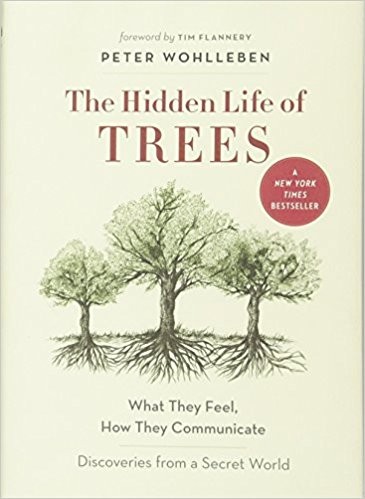
The Hidden Life of Trees
Peter Wohlleben
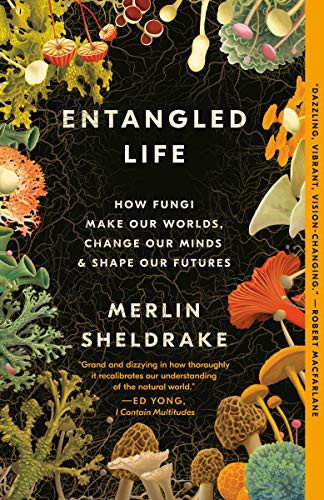
Entangled Life: How Fungi Make Our Worlds, Change Our Minds and Shape Our Futures
Merlin Sheldrake
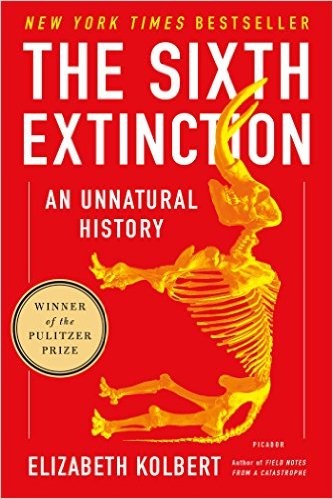
The Sixth Extinction: An Unnatural History
Elizabeth Kolbert
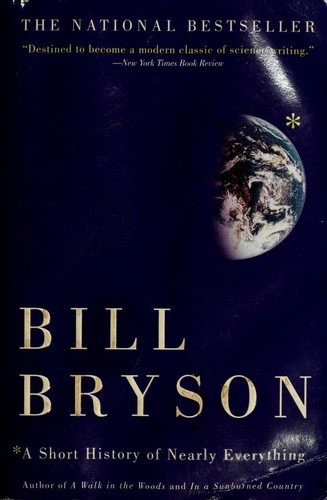
A Short History of Nearly Everything
Bill Bryson
