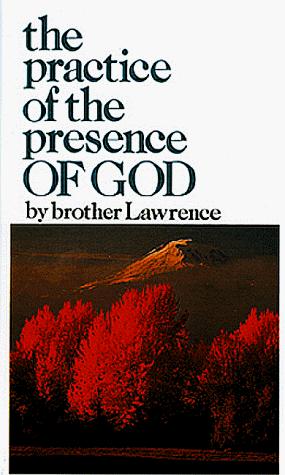
The Practice of the Presence of God by Brother Lawrence is a 1692 religion & spirituality book about prayer, contemplation, ordinary life. Continuous awareness of God is not limited to formal prayer. Brother Lawrence maintained it while washing dishes, cooking, and moving through every ordinary task.
Summary
The Practice of the Presence of God is a short collection of conversations and letters recorded by a French Carmelite friar named Brother Lawrence of the Resurrection, compiled and published posthumously in 1692. Lawrence lived as a lay brother in a Paris monastery for most of his adult life, working primarily in the kitchen and later as a cobbler. The book has been continuously in print for over three centuries and has been read across denominational lines as a practical guide to a particular form of continuous awareness — the attempt to maintain unbroken consciousness of God's presence throughout the ordinary activity of the day.
The core idea is simple enough to state in a sentence: Lawrence learned to carry his attention to God not only during formal prayers but in every task — washing dishes, preparing meals, moving through the routines of monastery life. He found that formal prayer periods and kitchen work became indistinguishable over time, because both were conducted in the same posture of recollected attention. The discipline, he reports, was difficult at first and required constant return from distraction, but became more natural over years until it was the default mode of his experience rather than an effortful addition.
What makes the book unusual is Lawrence's insistence that this form of practice is not reserved for the spiritually advanced or for those with time for formal contemplation. He explicitly addresses busy people, distracted people, and people who find conventional devotional methods unhelpful. The kitchen, he says repeatedly, is as good a place as any chapel. Whether washing pots or receiving communion, the interior act is the same. This democratizing impulse — holiness as available in ordinary work rather than requiring withdrawal from it — is the reason the book survived its immediate Carmelite context and has been embraced by Protestant, Catholic, and secular readers alike.
The book is genuinely short — most editions are under a hundred pages — and its simplicity is both its strength and its limitation. Lawrence reports his experience but doesn't provide a technique. Readers looking for a method will find a disposition; readers looking for a disposition will find it described with unusual clarity and warmth. The letters in particular have an immediacy that formal treatises lack.
Talk to The Practice of the Presence of God like its author wrote you back.
Get the ideas that fit your life — not generic summaries.
- Chat with the book
- Audiobook-style main ideas
- Adapts to your life and goals
- Helps you take action
Key takeaways
- 1.
Continuous awareness of God is not limited to formal prayer. Brother Lawrence maintained it while washing dishes, cooking, and moving through every ordinary task.
- 2.
The practice requires constant return from distraction at first. Lawrence describes early years of repeated failure and recollection before the posture became more natural.
- 3.
Formal prayer periods and ordinary work can become experientially identical if both are conducted with the same interior attention. Lawrence stopped distinguishing between them.
- 4.
This form of practice is available to anyone, not only to contemplatives with free time. The kitchen, Lawrence insists, is as good a place as any chapel.
- 5.
Fidelity to small acts is itself the practice. Lawrence did not look for grand spiritual experiences; he looked for the same quality of presence in the smallest action.
- 6.
Lawrence reports that he had initially struggled with scruples and fear of God's judgment, and that accepting God's mercy — rather than trying to earn his way — freed him to simply remain in attention.
- 7.
The practice improves the quality of work. Lawrence found that doing ordinary tasks in the presence of God made him more careful and more at peace, not less efficient.
- 8.
Longing for God in the absence of felt consolation is itself a form of the practice. Lawrence distinguishes the exercise of attention from dependence on feeling its rewards.
Discussion questions
Use these on your own, with a book club, or as chat starters in Superbook. Book club version, ready to copy or print →
- 1.
Lawrence maintained awareness of God while washing dishes. What would it mean for you to bring that quality of attention — fully present, fully recollected — to the most mundane parts of your day?
- 2.
He argues that the kitchen is as good as the chapel. What does that claim ask of you in terms of how you value different kinds of time and activity?
- 3.
Lawrence describes years of failure and constant return before the practice became more natural. What does that timeline suggest about the kind of change he's describing — and how does it compare to the timelines of other skills you've developed?
- 4.
The book is often read by people outside the Catholic tradition, including secular readers. What is it in Lawrence's account that translates across that gap, and what doesn't?
- 5.
Lawrence says he stopped distinguishing between prayer time and work time. Is that collapse of categories appealing or unsettling to you — and what does your reaction reveal?
- 6.
He insists the practice is available to busy people, not only to contemplatives. Do you believe him — or does the monastery context he describes quietly undercut that claim?
- 7.
Lawrence reports that accepting God's mercy, rather than trying to earn favor, was the shift that freed him. What parallel might exist for someone who isn't working within a religious framework?
- 8.
The book describes a practice of attention. Contemporary secular practices — mindfulness, flow states, deliberate practice — also describe varieties of attention. What does Lawrence's account add, or how does it differ?
- 9.
Lawrence is described as a rough, awkward person who felt unfit for monastic life. Does that self-presentation make his account more or less credible?
- 10.
The text was compiled after Lawrence's death by a superior who admired him. How might that mediation affect what we receive — what might have been shaped or emphasized in the transmission?
- 11.
What would you need to give up — mentally, practically — to attempt the kind of continuous recollection Lawrence describes, even in a modest secular form?
- 12.
Lawrence rarely discusses doctrine. The book is almost entirely about practice and interior experience. What does that emphasis suggest about where he thinks spiritual life actually lives?
Themes
Frequently asked questions
-
What is The Practice of the Presence of God about?
It describes Brother Lawrence's practice of maintaining continuous awareness of God throughout his daily work — washing dishes, cooking, whatever the task. He argues this unbroken interior attention is available to anyone and is the core of the spiritual life.
-
How long does it take to read?
Most editions are under a hundred pages and take about an hour. Some editions include letters only; others include both the conversations and the letters. Even the longest versions can be read in a single sitting.
-
Is The Practice of the Presence of God just for Catholics?
No. It has been read widely across Protestant, Catholic, and non-religious traditions since the seventeenth century. The practical emphasis on attention and presence translates across denominational lines. William James cited it; contemporary mindfulness teachers have noted parallels.
-
What is the main practice Lawrence describes?
He returns, again and again, to a single gesture: in the middle of whatever you are doing, recollect yourself and turn your attention toward God. Not a formal prayer, not a formula — just a renewed orientation. The practice is the discipline of constantly returning from distraction.
-
Does the book give a technique?
Not exactly. Lawrence describes a disposition more than a method. Readers looking for step-by-step instructions will find the book frustrating; readers willing to sit with a description of an interior posture and find their own way into it will find it genuinely useful.